A modern aircraft is a flying data center, generating a massive amount of information on every single flight. Now, multiply that by an entire fleet, and you’re facing a mountain of data. The challenge isn’t a lack of information; it’s turning that data into clear, actionable insights. Without the right systems, this data can become overwhelming noise, hiding critical trends and potential issues. True operational control comes from having a single source of truth. This is where the discipline of air fleet management becomes essential, providing the framework and tools to transform complex data into decisive, value-driven action.
When you hear "fleet management," you might picture a company tracking its delivery trucks. In aviation, the concept is similar but operates on a much more complex and critical scale. Air fleet management is the comprehensive process of overseeing every single asset related to your aircraft. This includes tracking flight hours, scheduling intricate maintenance tasks, managing crew qualifications, and ensuring all regulatory paperwork is in order. The primary goal is to ensure your entire operation runs smoothly, safely, and efficiently. It’s about maintaining a constant state of readiness and compliance, preventing costly disruptions before they can ground a flight or create a safety risk that could tarnish your reputation.
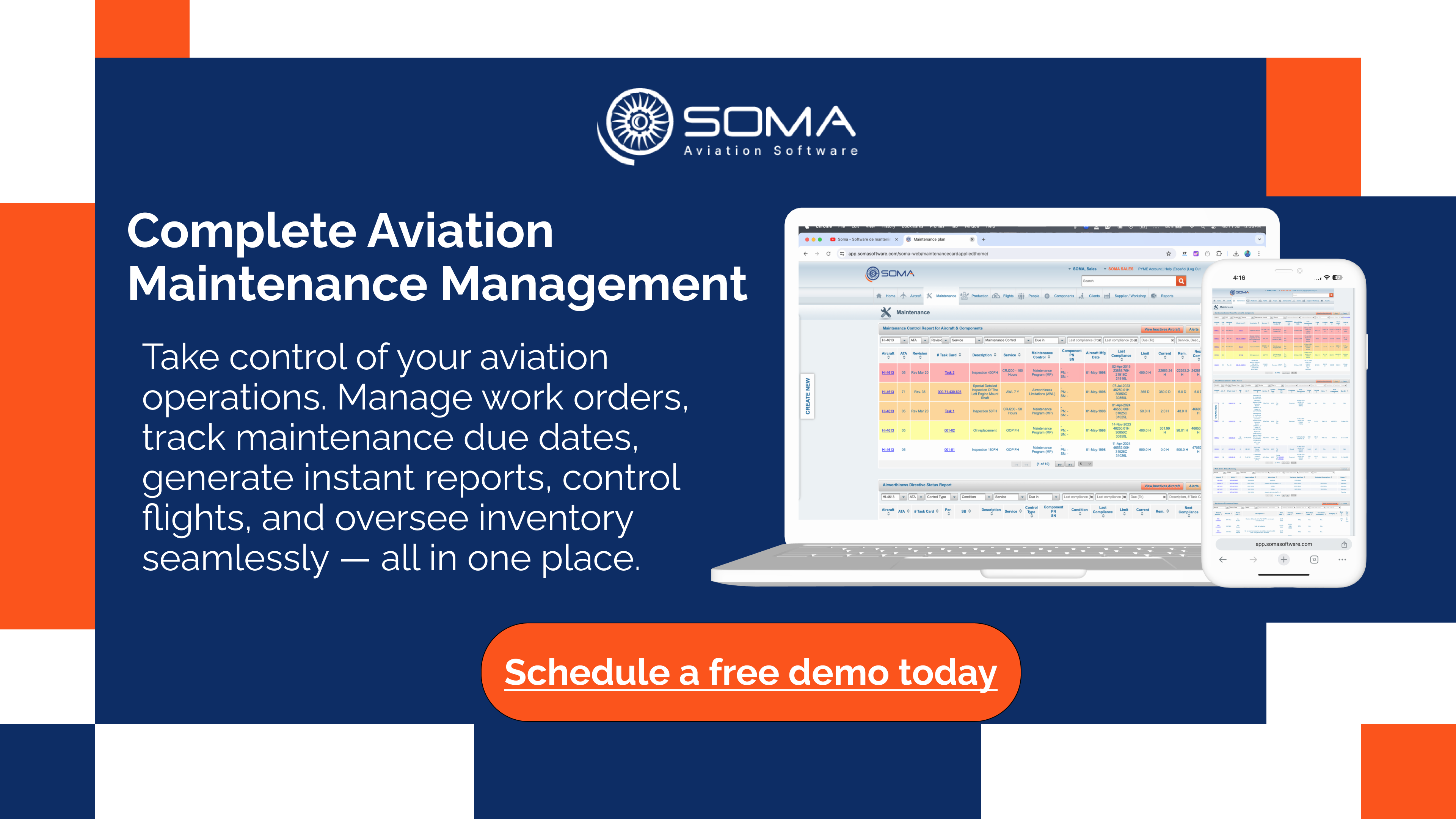
Truly effective management isn't just about reacting to issues as they arise; it's about proactive optimization. It involves using data to make informed decisions that keep your aircraft in the air and your operations profitable. This is where having a robust, all-in-one system for aircraft maintenance management becomes essential. By centralizing all this information, you gain a clear, real-time view of your fleet's health and performance. An integrated platform like SOMA Software delivers predictive insights, allowing you to streamline complex processes, minimize risks, and ensure every component of your operation is working in perfect harmony to keep your fleet compliant and flying.
So, what exactly makes up a modern aviation fleet? It’s easy to assume it’s just the collection of airplanes an airline or operator owns, but the reality is far more intricate. A true fleet encompasses every single asset required to support flight operations, both in the air and on the ground. Think of it as a complex ecosystem where each part, no matter how small, has a direct impact on the health of the whole organism. A single missing tool or a malfunctioning piece of ground equipment can have a ripple effect, causing delays and operational headaches. Understanding this interconnectedness is the first step toward managing your fleet effectively.
While the aircraft are obviously the stars of the show, they can’t function in a vacuum. The fleet includes a wide array of ground support equipment (GSE), such as baggage carts, de-icing vehicles, fuel trucks, passenger stairs, and tugs. A breakdown in any of these can halt ground operations and directly impact on-time performance. Beyond the moving vehicles, the fleet also consists of non-moving assets like specialized tools and a vast inventory of spare parts. Proper purchasing and inventory control is crucial; without the right part on hand when needed, an aircraft could be grounded for days, leading to significant revenue loss and logistical nightmares.
The term "air fleet" itself often carries a sense of organized command and strategic purpose. Historically, it referred to a nation's military aircraft operating under a single authority. This definition underscores an important concept for commercial aviation: a fleet is not just a random assortment of assets but a structured group that must be managed cohesively. To achieve operational excellence, you need a unified strategy that breaks down departmental silos. This means your maintenance planning must align perfectly with your flight operations schedule, and both must be supported by your logistics and inventory teams, all working from a single source of truth.
In the fast-paced world of aviation, efficiency and accuracy are the cornerstones of any successful operation. From crew management to aircraft maintenance, every minute counts. That's why the ability to access critical information instantly becomes a determining factor for success in the industry.
Discover how instant aircraft reports are transforming fleet management and enabling operators to make informed decisions in an instant, in this short video.
The fleet manager is the strategic leader at the heart of aviation operations. Their job is to oversee the entire lifecycle of every asset—not just the planes, but also ground support vehicles, spare parts, and specialized tools. The ultimate goal is to keep aircraft ready for flight, minimize operational costs, and ensure everything runs smoothly and safely. This includes managing fuel consumption by optimizing flight routes and speeds, as well as handling pilot and crew scheduling to ensure everyone is certified and well-rested. Effective purchasing and inventory control is crucial for keeping maintenance on schedule and avoiding costly delays.
Being a fleet manager is no small feat. They are constantly juggling complex tasks while adhering to some of the strictest regulations in any industry. One of the biggest hurdles is the massive amount of data generated by modern aircraft; sifting through all this information to find what’s truly important can feel like searching for a needle in a haystack. On top of that, they have to contend with unpredictable external factors like severe weather or air traffic control issues that can throw a wrench in the most carefully laid plans. Staying compliant and ensuring every aircraft is safe and ready to fly requires turning that mountain of data into clear, actionable insights, which is where modern aircraft maintenance management software becomes indispensable.
In an environment where every minute counts, the ability to access critical information instantly is essential.
Imagine this scenario: a fleet of airplanes on the ground, awaiting their next mission. The clock ticks relentlessly, and every passing minute represents a potential loss of revenue and efficiency. In such a dynamic environment, the ability to know the overall status of each aircraft in a matter of seconds is simply invaluable.
So, how do you get that instant, fleet-wide visibility? It’s not magic; it’s technology. Modern fleet management relies on a suite of integrated tools that collect, process, and present data in a way that’s easy to act on. These systems move operations away from reactive problem-solving and toward proactive, data-driven management. By centralizing information and automating key processes, you can get a clear picture of your fleet’s health and status at any moment. This allows you to anticipate needs, streamline workflows, and ensure every aircraft is ready for its mission. Let's look at the core technologies that make this possible.
At its most basic level, effective fleet management starts with knowing where your assets are. Modern GPS tracking provides real-time data on each aircraft's location, speed, and even fuel consumption, giving you a live operational map. This isn't just about dots on a screen; it's about having the foundational data for smarter logistics and scheduling. Paired with geo-fencing, which creates virtual perimeters around specific locations like airports or maintenance hangars, this technology becomes even more powerful. You can receive automatic alerts when an aircraft enters or leaves a designated zone, helping you improve security, monitor turnaround times, and automate operational logs for more efficient flight operations.
Safety and efficiency are two sides of the same coin in aviation. Pilot behavior monitoring systems provide objective data on how aircraft are being operated during flight. By tracking key metrics, these tools help identify trends that could indicate a need for additional training or adjustments to standard operating procedures. This isn't about micromanaging pilots; it's about fostering a culture of continuous improvement and reinforcing the highest safety standards across the fleet. Analyzing this data helps you ensure operational consistency, reduce unnecessary wear on aircraft components, and maintain a proactive stance on safety culture, which is the bedrock of any successful aviation organization.
Waiting for something to break is no longer a viable maintenance strategy. Smart maintenance planning uses data on aircraft usage and component lifecycles to predict when service will be needed. This allows you to schedule inspections and repairs proactively, turning potential unplanned downtime into scheduled, manageable events. By analyzing flight hours, cycles, and real-time diagnostic data, you can move from a reactive to a predictive maintenance model. This approach not only enhances safety and compliance but also optimizes resource allocation, ensuring that technicians and parts are ready when needed. An integrated aircraft maintenance management system is crucial for making this predictive power a reality for your fleet.
With so much data coming from different parts of the operation, it’s easy to get overwhelmed. A centralized fleet dashboard solves this by consolidating all your critical information into one accessible interface. This single source of truth brings together everything from flight schedules and maintenance status to parts inventory and compliance documents. Instead of chasing information across different systems or spreadsheets, your team has a unified view of the entire fleet. This comprehensive overview, often accessible via mobile apps like the SOMA ControlHUB App, empowers managers to make faster, more informed decisions, identify potential issues before they escalate, and keep the entire operation running smoothly.
Why are these reports so important? The answer lies in informed decision-making. With the ability to know the status of each aircraft instantly, fleet managers can make critical decisions faster and more accurately. From crew assignment to scheduling maintenance, every action is based on real-time updated data. But, besides, you can also achieve the next benefits:
Effective fleet management directly impacts your bottom line by lowering operational costs. When you have a clear, real-time view of your fleet, you can save significantly on parts, fuel, and maintenance. A single grounded aircraft can cost an airline hundreds of thousands of dollars in lost revenue and associated expenses. A robust system for purchasing and inventory control prevents overstocking or part shortages, while optimized maintenance scheduling keeps aircraft in the air. By streamlining these processes, you move from a reactive, costly approach to a proactive, financially sound strategy that keeps your fleet profitable and flying.
In aviation, safety isn't just a priority; it's a fundamental responsibility. Airlines have a legal and moral duty to protect their passengers and crew. A comprehensive fleet management system is your best ally in fulfilling this duty. It serves as the backbone for your safety protocols by maintaining meticulous, accessible records for every aircraft. This ensures that all required maintenance checks, component lifecycles, and safety directives are tracked and completed on time. With a solid system for aircraft maintenance management, you can confidently demonstrate compliance and, more importantly, ensure that every flight operates under the highest safety standards.
Beyond financial and safety metrics, modern fleet management plays a crucial role in sustainability. As the industry moves toward a greener future, your operational choices matter. Smart fleet management can significantly reduce fuel consumption and emissions, demonstrating a tangible commitment to environmental stewardship. This is achieved by optimizing flight plans, ensuring engines are running at peak efficiency through predictive maintenance, and reducing unnecessary weight on board. By fine-tuning your flight operations, you not only meet evolving environmental regulations but also build a stronger brand reputation as a responsible operator in the global community.
Learn how the technology behind instant reports works and how operators can leverage this tool to improve fleet management. Discover the key data included in these reports and how it is used to make informed decisions.
When we talk about fleet management, it’s easy to picture dots moving across a map. But the reality is far more complex and dynamic. Effective fleet management encompasses a wide range of interconnected activities that touch every aspect of your operation, from the aircraft itself to the people who fly it and the parts that keep it safe. It’s about creating a seamless flow of information and processes that work together to ensure safety, compliance, and efficiency. Let’s look at the key functions that make up the full scope of modern aviation fleet management.
Think of an aircraft's life as a complete story, from its first day of service to its last. Asset lifecycle management is the practice of overseeing that entire journey. It involves tracking an aircraft's financial value, monitoring its usage through flight hours and cycles, and documenting its complete maintenance history. This long-term view is critical for making smart decisions about upgrades, sales, or retirement. Alongside this, configuration management acts as the aircraft's detailed biography, keeping a precise record of every component, from the engines down to the smallest serialized part. This ensures that you always know the exact build of each aircraft, which is fundamental for safety and regulatory compliance.
If asset management is the long-term story, operational oversight is the day-to-day action. This is where you keep your finger on the pulse of the fleet's current performance and readiness. It involves actively monitoring critical metrics like flight hours, aircraft availability, and reliability trends. By keeping a close watch on these data points, you can see how well your fleet is performing and identify potential issues before they lead to unexpected downtime. Effective flight operations management provides the visibility needed to optimize schedules, improve dispatch reliability, and ensure your aircraft are flying as much as possible, all while maintaining the highest safety standards.
Your fleet is nothing without the skilled professionals who operate and service it. Pilot and crew management is the complex, human-centric side of aviation logistics. This function involves much more than just creating a schedule; it's about ensuring every crew member has the correct and current training, certifications, and medical clearances for their assigned roles. It also means meticulously tracking duty hours and rest periods to comply with strict fatigue management regulations. A breakdown here can ground a flight just as easily as a mechanical issue, making robust crew management an essential component of a smooth and legally compliant operation.
An aircraft is only as reliable as the parts it's made of and the instructions used to maintain it. This is where inventory control and technical publications come in. The goal of aircraft inventory management is to strike a perfect balance: having the necessary spare parts on hand to prevent delays without tying up excessive capital in overstocked inventory. At the same time, technical publications management ensures your maintenance teams have instant access to the latest manuals, service bulletins, and airworthiness directives. Having a single source for aircraft document management is crucial for ensuring all maintenance is performed correctly, safely, and in accordance with manufacturer and regulatory standards.
Finally, comprehensive fleet management involves preparing for and managing significant financial and risk-related factors. Fuel is consistently one of the largest variable costs for any operator, so fuel management is a top priority. This involves analyzing consumption data to optimize flight routes and operational procedures, ultimately saving money and reducing environmental impact. On the risk side, accident and insurance management is about being prepared for worst-case scenarios. This means having clear, established procedures for incident response and maintaining immaculate records to facilitate insurance claims and investigations, proving your commitment to safety and due diligence.
Ready to take your fleet management to the next level with instant reports? Schedule a meeting with our team of experts at SOMA and discover how our solution can transform your air operation. Contact us today to schedule a personalized demonstration.
What's the difference between air fleet management and just tracking my planes? Tracking your planes is only one small piece of the puzzle. True air fleet management is a comprehensive approach that oversees every single asset and process related to your operation. This includes not just the aircraft, but also ground support equipment, spare parts inventory, and even crew qualifications. It’s about creating a unified system where maintenance, flight schedules, and logistics all work together from a single source of truth to ensure safety, compliance, and profitability.
Why is a "single source of truth" so important in aviation? In aviation, information is often spread across different departments and systems, which can lead to miscommunication, delays, and safety risks. A single source of truth, like a centralized fleet dashboard, brings all your critical data together in one place. This means your maintenance team, flight operations, and inventory managers are all looking at the same real-time information, allowing for faster, more accurate decisions and preventing issues before they can ground an aircraft.
My company is small. Do I still need a comprehensive fleet management system? Absolutely. The principles of safety, efficiency, and compliance apply to operations of all sizes. A scalable fleet management system helps you establish solid operational habits from the start. It ensures you maintain meticulous records, stay on top of maintenance schedules, and manage your assets effectively. This not only prevents costly mistakes but also builds a strong foundation for future growth.
How does smart maintenance planning actually save money? Smart maintenance planning shifts you from a reactive to a predictive model. Instead of waiting for a component to fail unexpectedly (which often leads to expensive, unscheduled downtime and emergency repairs), the system uses data to forecast when maintenance will be needed. This allows you to schedule repairs during planned downtime, ensure parts are already in stock, and optimize your technician's time, which significantly reduces overall operational costs and keeps your aircraft flying.
Is this kind of software just for fleet managers? While fleet managers are central users, the benefits extend to your entire team. Maintenance technicians can use mobile apps to access technical documents and log their work directly from the hangar. Pilots and crew schedulers can manage certifications and duty times more effectively. Even your finance department benefits from more accurate data on asset lifecycle costs and operational expenses. It’s a tool that streamlines workflows across the organization.