
For any aviation operator, the ultimate goals are maximizing fleet availability and ensuring complete safety. However, inefficiency comes with a steep price tag, from costly flight delays to aircraft-on-ground (AOG) situations caused by poor inventory planning. These are not just operational headaches; they directly erode your bottom line. Investing in a system that optimizes scheduling, automates manual tasks, and provides predictive insights is a direct strategy to reduce these costs. A comprehensive SaaS technical content management for flight operations connects your maintenance, inventory, and flight scheduling, giving you the visibility needed to protect your financial performance from preventable disruptions and keep your aircraft flying.
In a highly regulated and competitive environment like aviation, selecting the right platform to manage your operation is not just a matter of efficiency—it’s about safety, regulatory compliance, and operational continuity. Yet many organizations still face common challenges: manual processes, outdated systems, or solutions that do not adapt to their real-world needs.
This article provides a practical guide based on real-world experience and the key criteria that make a difference when choosing a digital tool specialized in fleet management.
The shift toward modern, cloud-based software in aviation isn't just about keeping up with trends; it's a direct response to intense operational pressures. As the industry expands, the old ways of managing complex processes with spreadsheets or outdated systems are no longer sustainable. The demand for greater efficiency, tighter turnarounds, and flawless compliance is pushing operators to find smarter digital solutions. This change is driven by very real challenges that impact everything from ground operations to the bottom line, making the adoption of new technology a matter of strategic necessity.
The core challenge for any aviation operator is balancing growth with performance. As more people fly, the entire operational chain feels the strain. Airlines and MROs are tasked with servicing more aircraft and turning them around faster without compromising safety. This environment requires a level of coordination and real-time data sharing that legacy systems simply can't provide. The industry is recognizing that to manage its operations effectively, it needs tools built for the speed and scale of modern aviation, moving away from manual processes and toward integrated, cloud-based platforms.
A steady increase in global air travel puts immense pressure on every aspect of flight and maintenance operations. More flights mean more schedules to manage, more maintenance checks to perform, and more data to track. This volume can quickly overwhelm teams relying on disconnected systems, leading to communication breakdowns and potential errors. To handle this growth, organizations need a centralized system that provides a single source of truth, ensuring that every department, from planning to the hangar floor, is working with the same up-to-date information and can adapt quickly to changes.
In aviation, time on the ground is a critical metric. Faster aircraft turnarounds are essential for maintaining tight schedules and maximizing fleet utilization. Every step, from disembarking passengers to refueling, catering, and final maintenance checks, must be executed with precision. Delays create a costly ripple effect across the network. This is where real-time communication and streamlined workflows become invaluable. Modern software, like a dedicated production app, gives ground crews and technicians the instant information they need to coordinate tasks efficiently and get aircraft back in the air on time.
Inefficiency in aviation comes with a steep price tag. Every minute a flight is delayed can cost an airline hundreds of dollars in fuel, crew salaries, and passenger compensation. These costs add up quickly and can significantly erode profit margins. Beyond delays, inefficient processes in maintenance or inventory management lead to wasted resources, excess stock, and higher operational overhead. Investing in a system that optimizes scheduling, automates manual tasks, and provides predictive insights isn't just about convenience; it's a direct strategy to reduce operational costs and protect your financial performance from preventable disruptions.
The industry's widespread adoption of new technology is reflected in the market's rapid expansion. The global aviation cloud software market is projected to grow substantially, potentially reaching over $20 billion by 2033. This growth isn't just a number; it signifies a fundamental shift in how the industry operates. Airlines, MROs, and operators are moving beyond basic digital tools and investing in comprehensive solutions that manage the entire lifecycle of their assets. This trend underscores the recognized value of integrated platforms in ensuring compliance, improving safety, and driving operational excellence across the board.
When you start looking for a digital solution, you'll find a wide range of software types, each designed to solve different problems. Some are highly specialized for a single function, while others offer an all-in-one approach. Understanding this ecosystem is the first step toward identifying what your operation truly needs. From keeping aircraft airworthy to managing flight schedules and inventory, the right software brings clarity and control to your most critical processes. Let's break down the main categories you'll encounter and what they do.
At the heart of any safe and compliant fleet is a robust system for managing maintenance. An aircraft maintenance management system is the digital backbone for your entire MRO process. It's designed to track maintenance schedules, manage work orders, ensure regulatory compliance, and maintain detailed historical records for each aircraft. These systems are crucial for optimizing maintenance planning, preventing unexpected downtime, and providing auditors with the documentation they need. By centralizing all maintenance-related data, you create a transparent and efficient environment where technicians have clear instructions and managers have full visibility over the fleet's health.
Efficient flight operations depend on seamless coordination between scheduling, crewing, and dispatch. Flight operations software is built to streamline these complex logistics. It helps airlines and operators create optimal flight schedules, manage crew rosters while adhering to duty time regulations, and facilitate real-time communication between the air and the ground. With features like flight tracking and automated notifications, these platforms ensure that everyone involved has the most current information, allowing for quick adjustments in response to weather, air traffic, or technical issues. This level of control is essential for maintaining on-time performance and operational stability.
For airlines and operators involved in air freight, a Cargo Management System (CMS) is a specialized tool for handling the business side of logistics. According to industry experts, a CMS helps manage everything from setting up flight schedules and rates to handling bookings and tracking shipments. These systems are designed to optimize cargo capacity, manage pricing, and streamline the documentation process required for shipping goods by air. By automating these commercial and operational tasks, a CMS allows cargo carriers to maximize revenue, improve customer service, and ensure the smooth flow of freight through their network.
Enterprise Resource Planning (ERP) systems are broad platforms designed to manage core business processes across an entire organization. For aviation, key ERP modules often include finance, HR, and procurement. While some operators adapt generic ERPs, the aviation industry has unique needs that often require a more specialized approach. For instance, managing aircraft parts requires a sophisticated purchasing and inventory system that can track part serial numbers, airworthiness directives, and repair histories. An all-in-one aviation software often integrates these ERP-like functions in a way that is tailored specifically for fleet management, connecting financials and inventory directly to maintenance and flight operations.
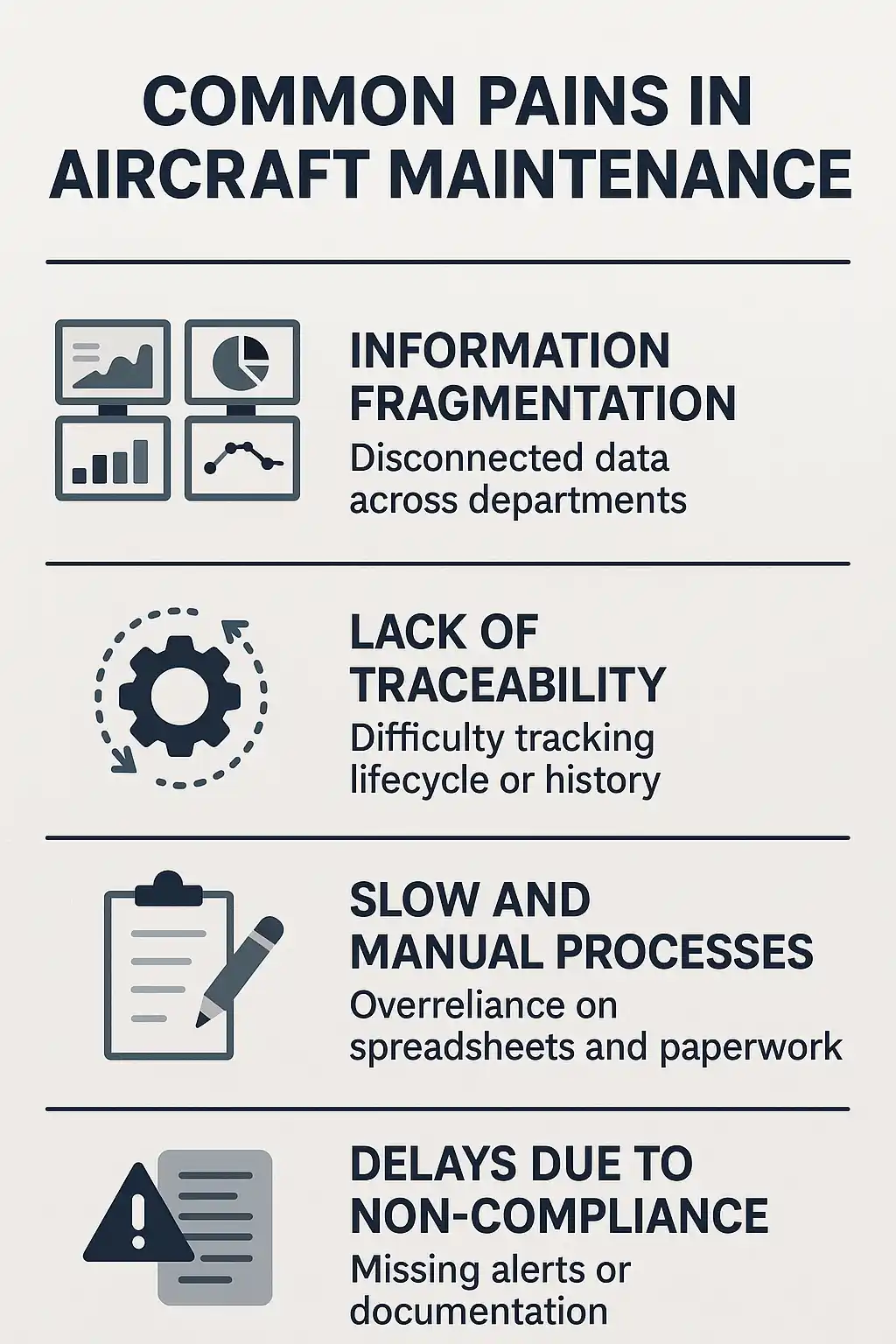
Here are the main obstacles organizations face when they lack a system aligned with their operations:
Whether it’s a regional airline, a flight school, or an MRO, the solution must be flexible enough to configure for various operational environments. SOMA, for instance, allows for module customization for helicopters, executive aviation, or air ambulance services.
It is critical to have tools that help you easily comply with regulations such as EASA, FAA, or local authorities. Features like electronic signatures, digital certificates, and automated compliance alerts make a major difference.
A robust aviation solution should cover all critical areas:
The licensing model should grow with your operation. SOMA charges per aircraft, not per user, facilitating expansion without unexpected budget surprises—perfect for companies seeking a scalable SaaS solution.
Organizations such as LANHSA and MASAir have optimized their operations thanks to a centralized system that provides them with full fleet visibility. A major differentiator has been SOMA's personalized support throughout the implementation process.
When you're evaluating aviation software, it's easy to get lost in a long list of features. The key is to focus on core capabilities that directly address the biggest operational hurdles. Modern software should act as a central nervous system for your entire operation, connecting disparate functions into a single, cohesive unit. It’s not just about digitizing paperwork; it’s about creating a smarter, more responsive, and compliant organization. From managing your crew to predicting maintenance needs, the right platform provides the visibility and control necessary to keep your fleet flying safely and efficiently. These tools are designed to give you a clear, real-time picture of your operations, so you can move from reacting to problems to proactively preventing them.
Your aircraft are only one part of the equation; your people are the other. Effective management of flight crews, ground staff, and technicians is fundamental to a smooth and compliant operation. Modern software moves beyond simple rosters, offering integrated tools that handle everything from scheduling and compliance tracking to real-time communication. This ensures that your team is not only in the right place at the right time but also fully qualified and prepared for their duties. By centralizing crew management, you can reduce administrative overhead, minimize the risk of human error, and empower your team with the information they need to perform their jobs effectively.
A core function of any robust aviation platform is managing your crew's schedules and qualifications. The software should automatically track flight hours, duty times, and rest periods to ensure you always remain compliant with regulations from bodies like the FAA and EASA. This helps you avoid crew fatigue and prevents costly regulatory penalties. Beyond just tracking hours, the system should also manage training records and certifications, alerting you when renewals are due. This automates a complex and critical task, freeing up your team to focus on core business activities like flight planning and passenger service instead of getting bogged down in administrative work.
In aviation, work doesn’t just happen at a desk. Technicians, pilots, and production managers need access to critical information on the hangar floor or the flight line. Dedicated mobile applications are essential for connecting your team to the central system in real time. For example, the SOMA Production App allows mechanics to receive work orders, report findings, and sign off on tasks directly from a tablet. This eliminates the need for paper-based processes, reduces the chance of data entry errors, and accelerates turnaround times by ensuring information flows instantly between the maintenance team and production control.
Fuel is one of the largest variable costs for any operator, and even small efficiencies can lead to significant savings. Modern software provides tools for comprehensive fuel management, giving you a complete overview of your flight operations from a single dashboard. This includes planning optimal fuel loads based on flight plans, weather, and aircraft weight, as well as tracking actual consumption post-flight. By analyzing this data over time, you can identify trends, spot anomalies, and implement strategies to reduce fuel burn across your fleet, directly impacting your operational profitability and environmental footprint.
The foundation of a safe and reliable fleet is a rock-solid maintenance program. Modern software transforms maintenance from a reactive, schedule-based activity into a proactive, data-driven strategy. By integrating maintenance planning, inventory control, and technical documentation, these platforms ensure that every aircraft is airworthy and every action is traceable. This holistic approach not only enhances safety but also minimizes costly aircraft-on-ground (AOG) situations. It provides a single source of truth for the entire technical history of your fleet, making audits smoother and operational planning more accurate.
The next frontier in aircraft maintenance is moving from preventive to predictive. Instead of performing maintenance on a fixed schedule, AI-powered software analyzes historical data, sensor readings, and performance trends to predict when a component is likely to fail. This allows you to address potential issues before they cause an unexpected disruption. By connecting with other maintenance programs and tracking problems in real time, the system helps you schedule repairs during planned downtime, maximizing aircraft availability and reducing the costs associated with unscheduled maintenance events.
An AOG situation is often caused by not having the right part at the right time. An integrated purchasing and inventory control system solves this by linking your stockroom directly to your maintenance schedule. When a work order is created, the system can automatically check for part availability, create a picklist, or even generate a purchase order if the item is out of stock. This ensures that technicians have the components they need to complete their work without delay. It also optimizes stock levels, preventing overstocking of expensive parts while ensuring critical spares are always on hand.
A truly comprehensive aviation software solution extends beyond the technical aspects of fleet management to include key business functions. After all, whether you're a charter operator, an MRO, or an airline, you're running a business that needs to manage customer relationships and financial performance. Integrating these functions into your operational platform creates a seamless flow of information, from initial customer contact to final invoicing. This ensures that your commercial activities are perfectly aligned with your operational capabilities, leading to better customer satisfaction and improved profitability.
For charter operators, MROs, and other service-oriented aviation businesses, managing client relationships is just as important as managing aircraft. An integrated CRM allows you to track customer interactions, manage contracts, and generate quotes all within the same system you use for flight and maintenance operations. This provides a 360-degree view of your clients, enabling you to offer more personalized service and identify new business opportunities. When your sales team can see real-time aircraft availability and maintenance schedules, they can make smarter commitments and set accurate expectations, building trust and long-term loyalty.
In an industry where safety and security are paramount, the way your data is handled is not a secondary concern—it's a primary one. Modern aviation software must be built on a foundation of robust security protocols to protect sensitive operational, financial, and personal information. This includes everything from controlling who can access the system to ensuring the physical location of your data complies with international regulations. A breach in data security can have severe consequences, including operational disruptions, financial loss, and damage to your reputation.
Your operational data is one of your most valuable assets, and protecting it is critical. Top-tier software ensures this with features like multi-factor authentication, role-based access controls, and end-to-end encryption. Furthermore, with regulations like GDPR, knowing where your data is physically stored is essential. Leading platforms offer data residency options, allowing you to keep your data within a specific geographic region to comply with local laws. Regular security audits and penetration testing are also hallmarks of a secure system, giving you confidence that your information is protected against evolving threats.
While ground operations and maintenance are foundational to safety, the right software also plays a direct role in the cockpit. Digital tools are increasingly used to reinforce standardized procedures, improve situational awareness, and ensure that flight crews have immediate access to critical information when they need it most. By replacing cumbersome paper-based processes with streamlined digital workflows, modern aviation software helps reduce the risk of human error during all phases of flight. This digital support system acts as a crucial co-pilot, helping crews manage their workload and adhere to best practices, especially during high-pressure situations.
The pre-flight checklist is a cornerstone of aviation safety, and digitizing it through an Electronic Flight Bag (EFB) adds another layer of reliability. Digital checklists ensure that no step is accidentally missed and can require confirmation before proceeding to the next item. This creates a clear, auditable record of procedural adherence. Beyond checklists, integrated communication tools ensure seamless contact between the flight crew, cabin, and ground control. Real-time updates on weather, flight plans, or technical issues can be pushed directly to the cockpit, ensuring everyone is operating with the most current information.
In an emergency, quick and accurate access to information can make all the difference. Modern aviation software ensures that pilots have immediate access to the aircraft's specific emergency procedures and performance data through their EFBs. Instead of flipping through a thick manual, crews can instantly pull up the relevant protocol for any given situation. This allows them to focus their attention on flying the aircraft and managing the event. The system can also facilitate communication with maintenance and operations centers, providing them with real-time flight data to help them prepare for the aircraft's arrival and support the crew from the ground.
Selecting a new software platform is a major decision that will impact your entire organization for years to come. To make the right choice, you need a clear framework for evaluating your options. This isn't just about comparing feature lists; it's about finding a partner whose solution aligns with your specific operational needs, compliance requirements, and future growth plans. A structured approach will help you cut through the marketing noise and make an objective decision based on what truly matters for your business. By defining your criteria upfront, you can confidently compare vendors and select a system that will deliver real value.
One of the first decisions you'll face is whether to choose a cloud-based Software-as-a-Service (SaaS) solution or a traditional on-premise system. On-premise software is installed on your own servers, which requires a significant upfront investment in hardware and ongoing IT management. In contrast, SaaS solutions are hosted by the vendor and accessed via the internet. This model offers predictable monthly or annual fees, eliminates the need for you to manage servers, and ensures you always have the latest version of the software. For most operators, the flexibility, scalability, and lower total cost of ownership make SaaS the more modern and practical choice.
To compare different software vendors objectively, create a scoring system based on your organization's unique priorities. Start by listing the key criteria that matter most to you. These might include specific features (like helicopter-specific modules), regulatory compliance (EASA, FAA), integration capabilities, mobile app functionality, and pricing model (per aircraft vs. per user). Then, assign a weight to each criterion based on its importance. As you evaluate each vendor, score them on each point. This simple but effective method provides a clear, data-driven way to see which provider best matches your needs and helps you justify your final decision to stakeholders.
Once you've chosen a software vendor, the next step is to plan for the financial investment and the implementation process. A successful transition requires more than just signing a contract; it demands careful budgeting, a realistic timeline, and a clear adoption strategy that gets your entire team on board. Understanding the total cost of ownership and the steps involved in going live will help you set proper expectations and ensure a smooth rollout. A well-planned implementation minimizes disruption to your daily operations and accelerates your time-to-value, allowing you to reap the benefits of your new system sooner.
The financial models for SaaS and on-premise software are fundamentally different. An on-premise solution is typically a Capital Expense (CapEx), involving a large, one-time purchase of licenses and hardware. A SaaS solution, on the other hand, is an Operational Expense (OpEx), with recurring subscription fees. The SaaS model is often more budget-friendly, as it avoids a massive upfront cost and provides predictable monthly or annual expenses. With the aviation SaaS market projected to grow significantly, this flexible payment structure is becoming the industry standard, allowing operators to scale their investment as their fleet grows.
When budgeting for new software, it's crucial to look beyond the subscription or license fee. The total cost of implementation includes several other factors. You'll need to account for potential costs associated with data migration from your old system, configuration of the software to match your specific workflows, and comprehensive training for all users, from technicians to administrators. Some vendors may also charge for premium support or specific customizations. Creating a detailed budget that includes these items will prevent unexpected expenses and ensure you have the resources needed for a successful launch.
The time it takes to implement a new aviation software system can vary widely, from a few weeks to several months. The timeline depends on factors like the size and complexity of your fleet, the amount of historical data that needs to be migrated, and the level of customization required. A typical implementation process is broken into phases: an initial discovery and planning phase, system configuration and setup, data migration and validation, user training, and finally, the go-live date. Working closely with your vendor to establish a realistic project plan with clear milestones is key to keeping the process on track.
A smooth adoption process is critical to maximizing the return on your software investment. First, assemble a dedicated project team with representatives from maintenance, operations, and management to champion the transition. Second, work with your vendor to define clear objectives and a detailed migration plan. Third, prioritize user training; ensure everyone feels confident using the new system before it goes live. Consider a phased rollout, perhaps starting with one aircraft type or department, to work out any kinks. Finally, establish a feedback loop to gather input from users post-launch and work with your vendor to make continuous improvements.
Digital transformation is not a trend—it’s a strategic imperative. The right software not only addresses today’s challenges but also:
An aircraft maintenance software isn’t just a tool—it’s a strategic asset. Make sure you choose a platform that grows with you, supports you every step of the way, and delivers results from day one.
Managing a fleet shouldn’t involve depending on spreadsheets, worrying about regulatory compliance, or dealing with unexpected downtimes.
With SOMA Software, you gain total control—integrating all key areas of your technical operation into one intelligent, intuitive platform.
Our aviation experts will guide you through a personalized demo, tailored to your specific operation, so you can see exactly how SOMA helps you operate more efficiently, faster, and with complete confidence.
🚀 Book your personalized demo today and experience what a truly optimized workflow looks like.
Because your mission is to keep airplanes in the air.
Our mission is to make that easier.
Why choose an integrated platform over separate, specialized tools? Using separate software for maintenance, inventory, and flight operations often creates information silos. When these systems don't communicate, departments work with different data, leading to miscommunication and costly mistakes. An integrated platform acts as a single source of truth, ensuring that your maintenance planners, inventory managers, and flight schedulers are all on the same page. This gives you a complete, real-time view of your entire operation, which is essential for making smart, coordinated decisions.
We're a smaller operation. Is this type of software affordable and scalable for us? Absolutely. Modern aviation software is no longer just for major airlines. Many providers, including SOMA, offer flexible pricing models designed to grow with your business. For example, a per-aircraft pricing structure means your investment is directly tied to the size of your fleet. This makes advanced technology accessible and allows you to scale your capabilities as you expand, without facing a massive upfront cost or unpredictable fees.
How does this software practically help prevent costly AOG situations? An Aircraft on Ground (AOG) event is often a failure of planning. An integrated system tackles this directly by connecting your maintenance schedule with your inventory. When a future maintenance task is planned, the software automatically checks if the required parts are in stock and can trigger a purchase order if they are not. This ensures technicians have what they need, when they need it. It also uses data to help predict component failures, allowing you to schedule replacements during planned downtime instead of reacting to an unexpected crisis.
Our team is resistant to change. What does the adoption process look like? A successful transition is less about the technology and more about the people. A good software partner will guide you through a structured adoption process. This typically starts with a project team from your own organization to champion the change. It includes comprehensive training tailored to different roles, from mechanics to managers, so everyone feels confident before the system goes live. The goal is not just to install software, but to ensure it becomes a tool that makes everyone's job easier.
What's the real difference between a cloud-based (SaaS) system and the on-premise software we might have now? The key difference is in cost, maintenance, and accessibility. With an on-premise system, you buy the software licenses upfront and are responsible for hosting it on your own servers, which includes managing all security, updates, and hardware. A cloud-based or SaaS solution is provided as a service for a predictable subscription fee. The vendor handles all the IT infrastructure, security, and updates, so you always have the latest version. It also means your team can securely access the system from anywhere with an internet connection.