Your aviation operation is a complex system where every department relies on the next. The software connecting them all is your aviation maintenance software. But even the most advanced features can't solve every problem. This is where exceptional customer service comes in. Think of it as the expert guidance for your aviation client services. It's the human element that ensures your entire operation runs smoothly and safely. This is exactly why customer service is important in aviation industry. It’s not just an add-on; it’s the critical support that guarantees operational continuity and compliance.
This article will explain why customer service matters in aviation maintenance software. It will cover its impact on daily operations. We will also consider the features and support when choosing a solution.
When we talk about customer service in aviation, our minds usually jump to the passenger experience—the friendly gate agent, the attentive flight attendant, or the helpful representative at the baggage claim. This is, without a doubt, a critical part of the equation. It’s the public-facing side of the business that builds brand reputation and fosters loyalty. However, there’s another side to customer service that is just as vital, though it happens almost entirely behind the scenes. This is the internal customer service that exists between operational departments. Think about it: the maintenance team is a service provider to the flight operations crew, ensuring aircraft are airworthy. The purchasing department serves the maintenance team by supplying necessary parts. Each department is a customer of another, and the quality of their interaction directly impacts the entire airline’s efficiency and safety.
This internal ecosystem is where the magic really happens. When these teams can communicate and collaborate seamlessly, the whole operation runs like a well-oiled machine. Fewer delays, quicker turnarounds, and better resource management are all byproducts of strong internal service. This operational excellence doesn't just stay behind the curtain; it has a direct and tangible effect on the passenger experience. A flight that departs on time because of efficient maintenance scheduling is a win for customer service. An airline that avoids cancellations because its inventory control is precise is delivering top-tier service. Ultimately, exceptional passenger service is impossible to sustain without an equally exceptional foundation of internal, operational service supporting it.
The passenger journey is made up of dozens of small interactions, and each one is an opportunity to build trust and loyalty. From the moment a customer books a ticket to the second they retrieve their luggage, their perception of the airline is being shaped. A positive experience doesn't just end with a single pleasant trip; it creates a ripple effect. Happy passengers are more likely to become repeat customers and, just as importantly, recommend the airline to friends, family, and colleagues. In an industry where travelers have plenty of choices, this kind of organic marketing is invaluable. It all comes down to making people feel valued and cared for at every step.
In aviation, excellent customer service is just as fundamental as safety and on-time performance. It’s a core pillar that defines an airline's public image and shapes how travelers feel about their entire journey. While technical precision ensures a flight gets from point A to point B, it’s the human touch that makes the experience memorable and positive. According to industry experts, this focus on service is what shapes how people view the airline and its brand. A strong reputation isn't built on advertising alone; it's forged through consistently positive interactions that show passengers they are the top priority, making them feel secure and respected throughout their travels.
A single positive experience can be the deciding factor that turns a one-time passenger into a lifelong loyal customer. When travelers feel that an airline has gone the extra mile for them—whether by accommodating a special request, resolving an issue with a smile, or simply providing a comfortable and pleasant flight—they remember it. This positive association makes them far more likely to choose that same airline for their future travel needs. Furthermore, these satisfied customers often become powerful brand advocates, sharing their good experiences through word-of-mouth and online reviews, which directly contributes to the airline's growth and positive reputation.
The responsibility for delivering great passenger service rests on the shoulders of a diverse team of front-line professionals. These are the people who represent the airline at every key touchpoint of the passenger journey. Their roles are varied, but their collective goal is the same: to ensure a smooth, safe, and pleasant experience for every traveler. From the initial booking process to the final wave goodbye at the arrival gate, these employees are the face of the airline. Their professionalism, empathy, and efficiency are what bring the company's service promises to life, making them indispensable assets in a competitive industry.
The passenger experience begins long before anyone steps foot in an airport. It starts with reservations and ticketing agents, who are often the very first point of contact. A smooth and helpful booking process sets a positive tone for the entire trip. Once at the airport, the check-in counter staff take over. As noted by the GMR Aero Academy, these roles are part of a continuous chain of passenger care. Whether they are tagging bags, printing boarding passes, or answering last-minute questions, their ability to be efficient and friendly under pressure is crucial for getting the journey off to a great start and minimizing stress for travelers.
As passengers move through the airport, they interact with gate agents, who manage the boarding process and are the primary source of information about delays or gate changes. Once on board, the in-flight crew takes over, ensuring both safety and comfort. Upon landing, arrival and baggage retrieval staff provide the final touchpoint. Well-trained staff in these roles can calmly handle issues like flight delays or misplaced luggage, effectively solving problems before they escalate. This is where operational efficiency becomes critical. When back-end processes like flight operations are running smoothly, there are fewer disruptions for front-line staff to manage, allowing them to focus on providing a truly positive passenger experience.
While we often associate customer service with comfort and convenience, in aviation, it plays a much deeper, more critical role: ensuring passenger safety. The same employees who serve drinks and check boarding passes are also highly trained safety professionals. Their responsibilities extend far beyond simple hospitality. They are the first responders in the sky, equipped to handle everything from minor turbulence to serious medical emergencies. Their ability to remain calm, communicate clearly, and act decisively under pressure is a non-negotiable aspect of their job, providing a vital layer of security and reassurance for everyone on board.
Customer service in aviation is fundamentally about managing the human experience, especially during stressful situations. Flight attendants and ground staff are trained to do more than just be polite; they must stay calm and give clear instructions during emergencies. Whether it's de-escalating a tense situation with an anxious passenger, providing first aid for a medical issue, or reassuring travelers during unexpected turbulence, their composure is key. This ability to manage crises effectively not only helps maintain order but also reinforces a sense of safety and trust, proving that their role is as much about protection as it is about service.
Exceptional service isn't the result of a few standout employees; it's the product of a deeply ingrained company culture where excellence is the standard for everyone. This culture starts from the top down, with leadership championing the importance of every customer interaction, both internal and external. It means investing in continuous training, empowering employees to solve problems, and fostering an environment of mutual respect. When every team member—from the C-suite to the maintenance hangar to the boarding gate—is aligned with a service-first mindset, the result is an operation that consistently exceeds expectations and stands out from the competition.
At its heart, great service is built on a foundation of empathy and mutual respect. It’s about airline staff putting themselves in the passengers' shoes—understanding their anxieties, anticipating their needs, and treating them with genuine kindness. This empathetic approach helps build a strong connection and makes travelers feel seen and valued. In turn, when passengers feel respected, they are more likely to be patient and cooperative, creating a more pleasant environment for everyone. This cycle of respect is what helps airlines stand out from their competitors and keep customers coming back, proving that human connection is a powerful business tool.
It’s a simple truth: happy, supported employees provide better service. When staff feel valued and are equipped with the right tools to do their jobs effectively, their satisfaction translates directly into a more positive attitude toward customers. An empowered employee who isn't bogged down by inefficient processes or internal friction can focus their energy on problem-solving and creating a great passenger experience. For example, giving maintenance teams intuitive digital tools like the SOMA Production App reduces their daily frustrations and allows them to work more efficiently. This sense of competence and reduced stress has a ripple effect, contributing to a healthier, more positive work culture that ultimately benefits the customer.
Customer service in the aviation maintenance software sector goes beyond answering questions or providing a help desk. The best service providers know what users need. They respond quickly to problems and help users with software setup and troubleshooting. In the aviation industry, these service aspects can greatly impact efficiency and lead to expensive downtime.
High-quality customer service often includes:
Choosing a software supplier with great client support can make it easier to switch to and manage a complex system. Strong support increases the team's confidence in using the software. It also ensures that any problems are small and quickly fixed.
Customer Service as a Driver of Operational Efficiency
When software providers give good support, maintenance teams can focus on important tasks. They do not have to solve problems on their own. For example, if a critical update or technical problem occurs, direct access to skilled support can fix issues quickly.
This responsive service helps reduce downtime and operational delays, keeping aircraft in the air and revenue flowing. In industries like aviation, where every minute counts, customer service becomes a strategic efficiency driver.

Choosing the right aviation maintenance software is not just about finding the right features. It is also about finding software that meets the specific needs of the airline. Here are the core features every aviation maintenance software should offer:
These technical features are important, but we must remember that customer service quality matters too. It affects how well teams can use and implement these features. A smooth user experience is best when strong support is available. This support helps users troubleshoot, train, and use the software effectively for the best results.
Top-tier aviation maintenance software is only as good as the support system behind it. The best predictive maintenance tools and real-time tracking features are not useful if users struggle to use them.
Exceptional customer service ensures that users fully maximize each feature. A skilled support team can give personalized advice. They help maintenance crews set up inventory alerts. They also guide operators through complex data analytics for compliance reporting.
Aircraft maintenance can be broadly categorized into several types, each with unique software needs to ensure maximum efficiency. Here’s a breakdown of the significant types and how maintenance software supports each:
Maintenance activities differ depending on the type of work. Routine line maintenance may take a few hours. Complete overhauls can take several days or even weeks.
Aviation maintenance software optimizes these timeframes by providing real-time data, coordinating resources, and scheduling tasks efficiently. The software can lower how often and how long checks for preventive maintenance take. It helps catch and fix minor issues before they become bigger problems.
Proactive customer service is very important for long-term success with aviation maintenance software. This includes regular check-ins and ongoing monitoring.
Proactive support is more than just reacting to problems. It means finding potential bottlenecks or small issues. These could cause big disruptions if not addressed. By working closely with users, support teams can address minor issues before they escalate, keeping operations smooth and consistent.
Moreover, proactive support can often include:
A successful software implementation goes hand-in-hand with thorough training and continuous support. When the software provider gives thorough onboarding and user training, teams can quickly learn to use the system well. After the initial setup, ongoing support and training help users stay updated on best practices. This ensures that as software features change, the airline gets more value from the software.
Training should cover:

Choosing the best aviation maintenance software involves assessing the features and quality of customer support. Here are some factors to consider when evaluating customer service in software solutions:
Great customer service brings together all these factors. This creates a smooth support experience. It helps users make the most of the software.
Reliable customer service is more than just an operational support function; it invests in long-term operational success. When customer service is a priority, airlines can better anticipate and manage issues, reduce operational costs, and maximize uptime. Great customer service turns aviation maintenance software from just a tool into a vital asset. This asset improves every part of an airline’s operations.
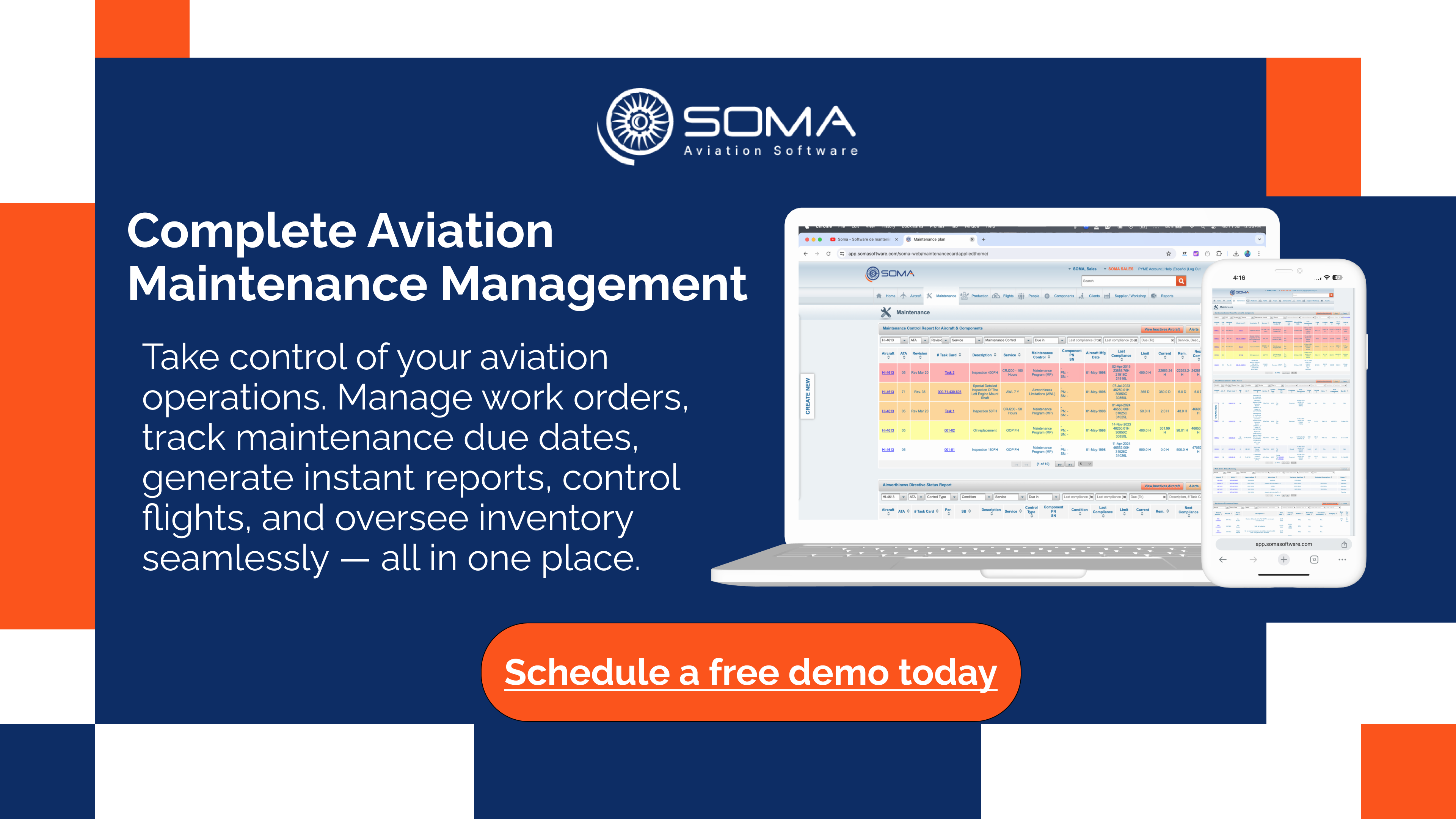
SOMA Software is dedicated to providing top-notch customer service for airlines seeking reliable aviation maintenance solutions. From the initial setup to regular use, SOMA’s support team is available 24/7. This ensures users get expert help whenever they need it. SOMA Software has onboarding specialists who help new clients set up the software to meet their needs.
SOMA quickly solves problems and stops potential issues. It does this by watching system performance and sending timely updates to users.
SOMA Software’s commitment to customer service translates directly into measurable value for airlines. SOMA's Aviation Maintenance Software improves efficiency and return on investment. It does this by reducing response times and ensuring uptime.
It also helps airlines use all the software features effectively. For airlines prioritizing reliability and seamless operations, SOMA Software stands out as the choice for aviation maintenance management backed by industry-leading support.
My team is focused on keeping planes in the air. Why should we care about the customer service from our software provider? Think of your software's customer service team as an extension of your own crew. Their job is to make your job easier. When support is excellent, your team spends less time troubleshooting software and more time on their actual maintenance tasks. Good service ensures you can use the software to its full potential, helping you streamline workflows, prevent delays, and maintain compliance without extra headaches. It's not just IT help; it's operational support.
How does good customer service for aviation software actually impact our bottom line? Great customer service directly contributes to financial efficiency. When a support team helps you resolve an issue quickly, they are minimizing expensive aircraft downtime. Proactive support can even help you spot potential problems and optimize maintenance schedules, preventing costly last-minute repairs. It also ensures your team uses the software correctly for compliance reporting, which helps you avoid significant fines. Ultimately, it turns your software from a simple expense into an asset that saves you money.
We've had trouble getting our team to adopt new software in the past. How does customer service help with that? This is a common challenge, and it's where a strong support team makes all the difference. The best providers don't just hand you the software and a manual. They partner with you through onboarding, offering personalized training that is tailored to your specific operations. This hands-on guidance helps your team feel confident and capable from the start. Continuous support ensures that as your needs evolve, you have an expert to call on, which makes the software a permanent and valuable part of your workflow.
What's the difference between "proactive" and "reactive" support, and why does it matter for my operations? Reactive support is what most of us are used to: you have a problem, and you call for help to fix it. Proactive support, on the other hand, aims to prevent problems from ever happening. A proactive service provider monitors system performance, alerts you to potential issues, and offers insights to optimize your processes. In aviation, where preventing a disruption is always better than managing one, this forward-thinking approach is essential for maintaining smooth and uninterrupted operations.
What should I look for when evaluating a software provider's customer service? Beyond just promising good service, look for concrete evidence. Ask about their team's aviation industry experience, not just their technical skills. Inquire about their availability, especially if you run a 24/7 operation. See if they offer multiple ways to get in touch, like phone, email, and chat. It's also a great sign if they provide a dedicated account manager who can truly learn your business. These factors indicate a company that treats support as a core part of their product, not an afterthought.