Airline crew scheduling software is a specialized platform that constructs compliant crew rosters in accordance with FAA duty-time and rest requirements. It replaces manual processes with real-time visibility into crew availability, helping operations teams respond to disruptions without grounding aircraft. For regional airlines operating on thin margins, these tools reduce costly scheduling conflicts and fatigue-related risks while ensuring every flight is staffed with a legal and fit crew.
SOMA Software provides airline crew scheduling software purpose-built for mid-sized operators with 10 to 30 aircraft. Unlike enterprise platforms designed for global carriers, SOMA delivers the features regional airlines actually need without unnecessary complexity or cost. By consolidating crew tracking, compliance monitoring, and flight operations into a single interface, SOMA helps teams eliminate manual errors and maintain regulatory compliance across every route.
Manual scheduling is susceptible to data-entry mistakes that cascade into operational failures. A miskeyed departure time or an overlooked duty limit can result in a crew member exceeding legal work hours, leading to fatigue-related safety risks or last-minute cancellations. Paper-based systems also make it difficult to see cross-fleet availability when a pilot calls in sick or a maintenance delay shifts the afternoon schedule.
Airline crew scheduling software provides a single source of truth for all crew data. Operations managers gain real-time visibility into who is available, qualified, and legal to fly at any moment. This flight operations management approach closes the gaps that legacy systems leave open. With automated duty-time tracking and instant conflict detection, teams can build rosters that comply with FAA Part 121 and Part 135 rules without manual cross-referencing.
Fleet management requires synchronizing flight schedules, crew availability, and aircraft maintenance status simultaneously. When a morning delay ripples through the day's schedule, operations teams need to reassign crew members across multiple flights while respecting duty limits and rest requirements. Without integrated software, this coordination becomes a manual juggling act that strains even experienced dispatchers.
Dedicated scheduling platforms surface risks early and recommend crew movements that keep the operation moving. They link directly to maintenance data so a crew member is never assigned to an aircraft that is due for a check. This level of flight operations coordination turns a potential day of cascading delays into manageable adjustments, keeping aircraft on schedule and passengers satisfied.
Aviation operates under stringent regulatory frameworks at both federal and international levels. The FAA mandates specific rest periods and duty limits for all commercial flight crews. SOMA Software has received government certification from the Aruba Civil Aviation Department confirming compliance with AUA-OPS 1.920, demonstrating the platform's capacity to meet rigorous regulatory standards. Modern scheduling tools codify these rules into the system, issuing alerts when a proposed assignment would violate a limit. This automated compliance monitoring allows regional operators to focus on safe flight operations rather than manual hour-counting.
Effective airline crew scheduling software must address three core operational needs: regulatory compliance across multiple flight types, audit-ready documentation for safety inspections, and real-time visibility into crew availability. SOMA Software's platform integrates these capabilities directly, building FAA rest rules and Part 121/135 distinctions into the scheduling engine so compliance is automatic rather than reactive.
| Requirement | Manual / Spreadsheet | Enterprise Platform | Purpose-Built Solution (SOMA) |
|---|---|---|---|
| FAA Part 121/135 rule enforcement | Manual lookup per assignment | Automatic, but configured for large carriers | Configurable per operation type; mixed 121/135 support |
| Implementation timeline | N/A (existing process) | 6 to 12 months | 4 to 8 weeks |
| Audit trail generation | Paper files or manual logging | Comprehensive but complex to extract | One-click compliance reports aligned with AS9100 |
| Disruption recovery | Manual phone calls and desk coordination | Automated but requires dedicated IT support | AI-assisted recovery with mobile crew notifications |
| Fleet size fit | Any size, but error-prone at scale | Optimized for 50+ aircraft fleets | Optimized for 10 to 30 aircraft operations |
The FAA applies different rest and duty regulations depending on the type of operation. Part 121 rules govern scheduled air carriers with complex crew structures, while 14 CFR Part 135 Subpart F covers on-demand charter and commuter operations. Many mid-sized operators run both scheduled and charter flights, which means the scheduling system must apply the correct rule set per assignment automatically. A platform that cannot distinguish between these frameworks exposes the operator to compliance risk and potential fines.
SOMA Software's airline crew scheduling module allows teams to configure rule sets for each flight type. When a crew member is assigned to a Part 135 charter rotation, the system applies the appropriate rest calculation. This eliminates the error-prone practice of manually tracking which rules apply to which flight, ensuring every departure staffs a legally compliant crew.
Every crew assignment, schedule change, and duty-time adjustment must be documented for regulatory audits. SOMA Software has delivered over 500 aviation projects and maintains the audit infrastructure to support rigorous inspection processes. Digital scheduling platforms create immutable audit trails that capture every scheduling decision with timestamps and user attribution. When an FAA inspector or third-party auditor requests crew records, operations managers can generate comprehensive reports in minutes rather than digging through filing cabinets.
These audit trails serve a dual purpose. They demonstrate the operator's commitment to regulatory compliance and provide internal data for identifying scheduling patterns that may lead to fatigue risks. SOMA's platform generates compliance reports that align with AS9100 aerospace quality standards, giving operators documented proof of their safety management processes.
SOMA Software applies AI and automation to airline crew scheduling by analyzing historical patterns, maintenance schedules, and real-time disruptions to recommend optimal crew assignments. The platform's predictive engine identifies compliance risks before they materialize, giving operations teams time to adjust rosters proactively. SOMA's aeronautical engineers configure these automated workflows to match each operator's specific operational profile.
Building a crew roster requires solving a multi-dimensional puzzle. Each assignment must satisfy FAA duty limits, union contract provisions, training currency requirements, and crewmember preferences while covering every flight segment. AI-powered scheduling engines evaluate these constraints in seconds, producing rosters that maximize operational efficiency without compromising safety or compliance.
SOMA Software's platform uses constraint-based optimization to find the best crew-to-flight match for every segment. The system considers where crew members are based, what aircraft types they are qualified to fly, and how the assignment affects their remaining duty time. This aviation crew optimization capability reduces the manual workload on scheduling teams and produces rosters that minimize deadhead costs and overnight expenses. The AI also accommodates crew training schedules and vacation requests, building operational realities directly into every roster cycle.
AI's most valuable contribution to crew scheduling may be its capacity to detect compliance risks before they trigger violations. The system monitors every crew member's projected duty time against upcoming flight segments and flags potential exceedances before the schedule is finalized. If a flight delay pushes a pilot toward the legal duty limit, the platform alerts the operations team and suggests replacement options.
SOMA Software's platform tracks these compliance and operational metrics continuously:
This constant monitoring ensures that no detail escapes the team's attention. Automated alerts give schedulers the information they need to keep operations compliant and safe without manual cross-checking of every data point.
Flight operations face constant disruptions: weather events close airspace, mechanical issues ground aircraft, crew members reach duty limits mid-rotation. When disruptions occur, operations teams need rapid reassignment solutions that respect all regulatory constraints. AI-driven scheduling engines produce recovery rosters in minutes, evaluating every available crew member against the current operational picture to find legal and efficient replacements.
SOMA Software helps operators achieve this stability by following a systematic approach with six stages:
This systematic approach gives mid-sized airlines capabilities that rival those of major carriers, at a fraction of the complexity and cost of enterprise solutions.
SOMA Software provides a purpose-built alternative to enterprise platforms that overcomplicate crew scheduling for regional operators. With 4 to 8 week implementation timelines and aeronautical engineers who serve as operational partners. SOMA delivers the workflow automation that mid-sized airlines need without the overhead that makes enterprise tools impractical for smaller fleets.
Many scheduling platforms are engineered for global airlines managing hundreds of aircraft and thousands of crew members. For regional operators running 10 to 30 aircraft, these enterprise solutions introduce unnecessary complexity and cost. The ideal platform is one that offers enterprise-grade compliance features without the overhead of systems designed for major carriers. SOMA Software's platform is built specifically for this segment, providing the compliance automation and operational visibility that mid-sized operators require.
The best platforms present a unified view of crew availability, aircraft status, and maintenance scheduling in a single interface. This eliminates the need for operations managers to toggle between disparate systems to answer basic questions about fleet status. SOMA's all-in-one design connects Aircraft Maintenance Management with flight operations, so crew assignments automatically account for aircraft availability and upcoming maintenance events.
Implementation speed directly affects an operator's return on investment. Traditional enterprise scheduling deployments can stretch six to twelve months, during which the airline continues operating with the inefficient manual processes they sought to replace. SOMA Software delivers 4 to 8 week implementations by focusing on the workflows that matter most to regional operators. This rapid deployment model minimizes operational disruption while delivering measurable improvements in scheduling accuracy and compliance coverage.
The scheduling platform must also integrate with the operator's existing technology stack. Native connections to maintenance tracking, inventory management, and document control systems reduce manual data entry and the errors that accompany it. When a crew member is assigned to a flight, the system should automatically verify that the aircraft has no pending maintenance issues and that required parts are available. SOMA's integrated module architecture handles these cross-functional checks natively, without third-party middleware or custom API development.
The depth of aviation expertise behind a scheduling platform matters as much as the software itself. SOMA Software's team of aeronautical engineers serves as operational partners, not just technical support. These domain experts understand FAA compliance frameworks, maintenance workflows, and the operational realities of regional aviation. They help operators configure workflows that align with industry best practices and regulatory requirements, and they stay engaged as the operator's fleet and regulatory environment evolve.
This engineering-led partnership model is a core differentiator. When regulatory changes occur such as amended Part 117 flight time limitations or updated rest requirements, the SOMA team helps operators adapt their scheduling workflows accordingly. The government certification from the Aruba Civil Aviation Department validates this approach, confirming SOMA as an advanced system capable of supporting maintenance, engineering, and flight operations under AUA-OPS 1.920.
SOMA Software integrates airline crew scheduling with Aircraft Maintenance Management and inventory control in a single interface. This eliminates the manual handoffs between departments that introduce errors and slow down decision-making. When a crew scheduler assigns pilots to a flight, the system automatically checks that the aircraft is available. The required maintenance is current, and the necessary parts are in stock.
This integrated approach also strengthens regulatory compliance. The platform tracks flight time, duty periods, and rest requirements against FAA regulations in real time, alerting operations managers when an assignment would exceed legal limits. By consolidating all operational data into one platform, SOMA helps teams maintain the comprehensive documentation that safety audits require.
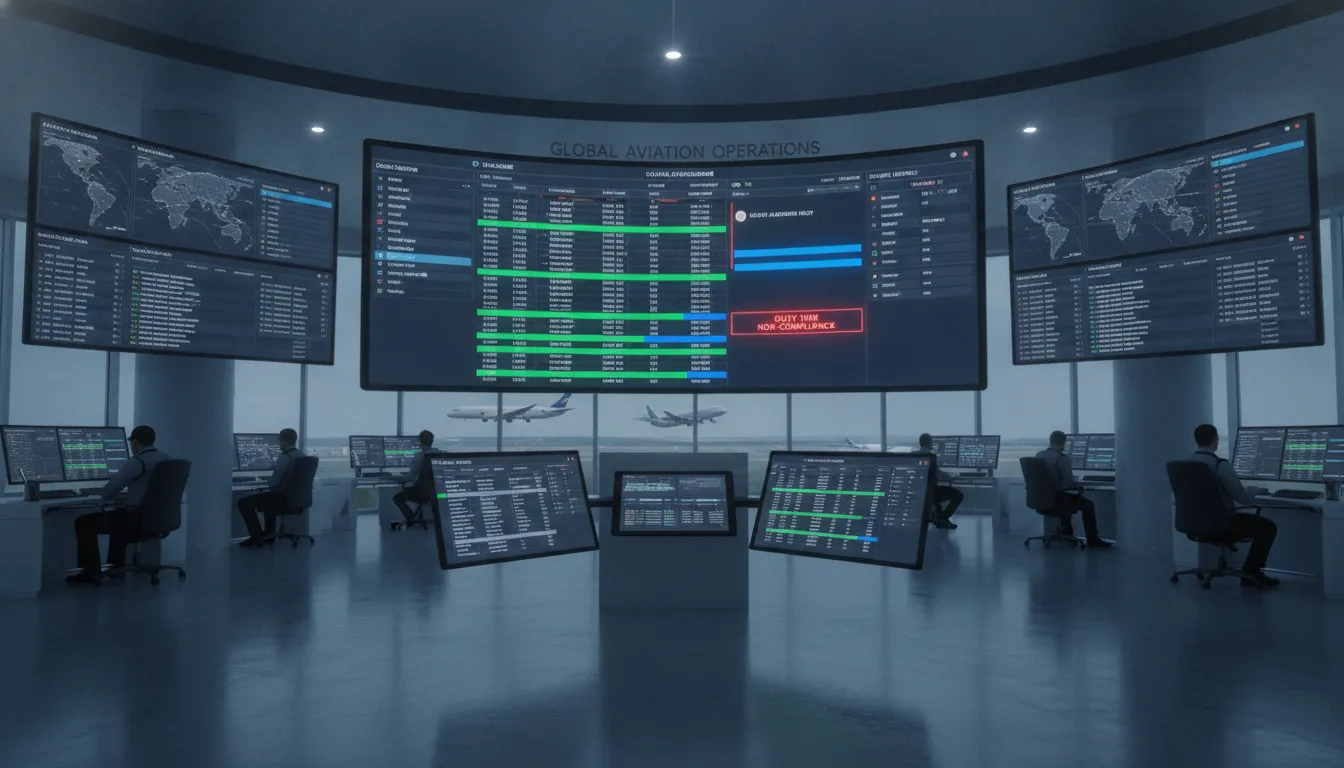
Enterprise scheduling systems impose complexity and cost that do not scale for regional operators. SOMA Software is purpose-built for airlines and MRO facilities with 10 to 30 aircraft, providing the compliance automation and operational visibility they need without enterprise overhead. The platform scales as the operator grows, adding capacity and functionality without requiring migration to a new system.
The platform includes intelligent alerts for inventory shortages, upcoming maintenance events, and regulatory changes. These notifications help operations teams stay ahead of disruptions rather than reacting to them. With over 500 aviation projects implemented across 8 countries, SOMA has refined its platform for the specific workflows and compliance requirements that regional operators face daily.
SOMA's 4 to 8 week implementation timeline allows operators to transition from manual or legacy scheduling to a fully digital workflow with minimal operational disruption. The implementation team handles data migration, workflow configuration, and staff training so the operator sees immediate improvements in scheduling accuracy and compliance coverage.
What sets SOMA apart is the ongoing partnership model. Every operator works with a team of aeronautical engineers who understand the daily realities of aircraft maintenance and flight operations. These experts help configure the platform for each operator's specific regulatory environment, fleet composition, and operational workflows. The result is a scheduling system that reflects how your operation actually works, supported by people who understand why it works that way.
Modern scheduling systems help operations teams reassign crew members rapidly when delays or cancellations occur. These tools identify available crew members who meet all duty-time and qualification requirements, then propose legal reassignments. Real-time notifications keep affected staff informed of schedule changes, reducing communication delays that compound operational disruptions.
Mobile applications give pilots and cabin crew real-time access to their schedules from any location. Crew members can view upcoming assignments, pick up open trips, bid on preferred routes, and request time off through the mobile interface. This self-service capability reduces the administrative burden on scheduling teams while improving crew satisfaction through greater schedule visibility and flexibility.
Implementation timelines vary based on airline size, data volume, and workflow complexity. Enterprise platform deployments often require six to twelve months. Platforms designed for regional operators offer faster timelines. SOMA Software achieves implementation in four to eight weeks by focusing on the workflows and compliance requirements specific to mid-sized operators, allowing teams to transition from manual processes rapidly.
Yes. Several platforms are now purpose-built for mid-sized and regional operators. These tools provide the compliance automation and operational visibility of enterprise systems without the complexity and cost that make them impractical for smaller fleets. Regional operators can now access the same AI-driven optimization and real-time monitoring capabilities that major carriers use.
Integrated platforms like SOMA Software connect crew scheduling directly with aircraft maintenance management. When a scheduler assigns crew to a flight, the system automatically verifies the aircraft's maintenance status. This prevents assignments to aircraft with pending inspections or open work orders and ensures that crew and aircraft availability are synchronized in real time.
Regional and mid-sized operators face unique scheduling challenges that off-the-shelf enterprise tools were not designed to solve. SOMA Software provides the specialized airline crew scheduling platform your operations team needs to reduce delays, maintain compliance, and keep every flight staffed with legal, qualified crew members. Start your free trial today and discover how SOMA's aeronautical-engineering-led approach transforms crew scheduling for mid-sized aviation operators.