Paper maintenance logs can look manageable until a page is misplaced, handwriting is unclear, or a damaged record is needed during an audit or maintenance decision. For airlines, MROs, and CAMO teams, these gaps create more than administrative friction: they make it harder to preserve reliable continuing-airworthiness data across the fleet.
Digital aircraft maintenance records are electronic records that capture, store, and manage maintenance history in a controlled system. When supported by an appropriate software management program and compliant electronic recordkeeping practices, they provide a more searchable, durable foundation for maintenance oversight than paper files alone.
The transition is not simply a matter of scanning old documents. It requires understanding what the digital record must contain, how it should be controlled, and how teams will use it in daily operations. Ready to move your fleet to digital records? Contact SOMA Software to discuss a transition plan tailored to your operation.
Digital aircraft maintenance records are electronic records that capture, store, organize, and manage an aircraft's maintenance history. Instead of relying on binders, loose worksheets, and handwritten logbook entries, maintenance teams use a controlled system to record inspections. Work orders, component changes, task sign-offs, supporting documents, and other continuing airworthiness data.
The difference is more than replacing paper with a screen. A purpose-built system connects each maintenance event to the aircraft, asset, component, task, and responsible person. Authorized users can retrieve the current record without searching through physical files or disconnected spreadsheets. That gives maintenance directors, CAMO teams, MROs, and operations managers a clearer view of what has been completed, what is due, and which records require attention.
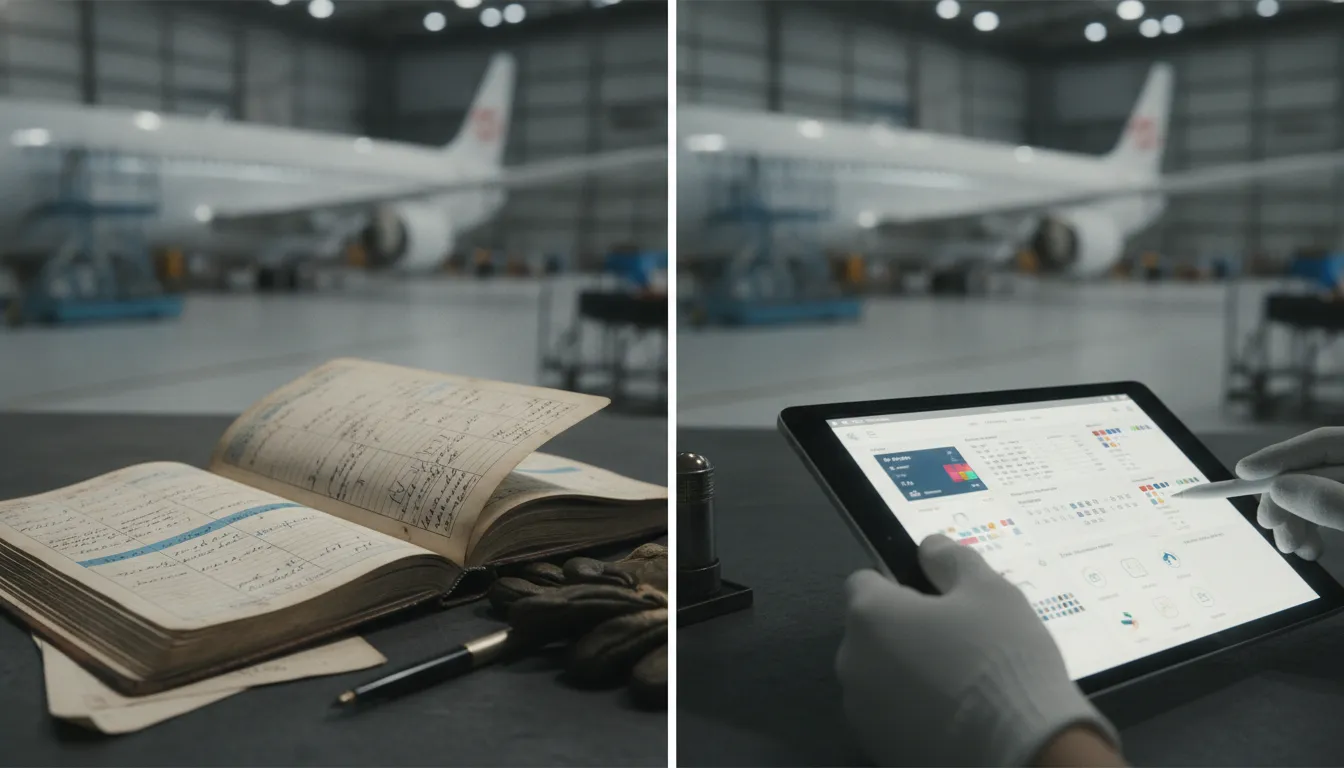
Paper logs can be lost, damaged, or separated from the aircraft or work package. Their long-term reliability can also be affected by physical deterioration and illegible handwriting, creating risks for data integrity and continuing airworthiness. The European Union Aviation Safety Agency identifies physical damage, misplacement, and handwriting legibility as weaknesses of traditional paper-based maintenance records. Read the EASA review of digital solutions.
Electronic records provide a structured alternative to paper files. Searchable fields, role-based access, audit trails, and linked documents make it easier to trace an event from the original maintenance action through review and approval.
| Characteristic | Paper logs | Digital records |
|---|---|---|
| Search speed | Manual file-by-file search | Instant keyword and field search |
| Physical durability | Susceptible to moisture, tearing, and aging | Protected by encrypted backups and redundancy |
| Audit trail integrity | Vulnerable to lost or altered pages | Immutable time-stamped audit log |
| Remote access | Requires physical file retrieval | Available to authorized users from any location |
| Regulatory acceptance | Traditional, accepted by all authorities | Accepted when system meets FAA AC 120-78B / EASA standards |
The exact controls depend on the system and the operator's approved procedures, so digitization should be treated as a records-management and compliance project, not simply a document-scanning exercise.
FAA guidance recognizes that modern maintenance activities involve managing software and electronic records. AC 43-216A provides guidance for software management programs and compliance related to continued airworthiness. It also points operators to AC 120-78 for guidance on electronic signatures, electronic recordkeeping, and electronic manuals. Electronic signatures and recordkeeping are therefore implemented within the applicable regulatory framework. Including the operator's approved procedures and OpSpecs, rather than treated as an informal replacement for a handwritten sign-off.
For operators planning a transition, the practical question is whether the system preserves record integrity, controls access, supports traceability, and fits the organization's approved processes. A structured aircraft maintenance planning software approach can help connect historical records with ongoing maintenance planning without forcing teams to manage another isolated archive.
Paper maintenance logs can look manageable until a team needs to prove what happened to an aircraft, component, or task. The risk is not limited to slow data entry. Paper records can deteriorate physically, be misplaced, or become difficult to interpret when handwriting is illegible. The European Union Aviation Safety Agency identifies these weaknesses as threats to the long-term integrity of maintenance data.
An unclear entry can force a technician, planner, or CAMO professional to spend time reconstructing maintenance history. A missing page can leave uncertainty around task completion, component status, or required follow-up. Moisture, handling, and repeated transport between hangars, offices, and aircraft can damage the original record. When the source document cannot be trusted or found quickly, the organization may need to pause a release decision while staff verify the facts elsewhere.
That delay can contribute to an aircraft remaining grounded, especially when maintenance control cannot confirm that an inspection, rectification, or sign-off was completed correctly. It also creates avoidable pressure during shift handovers and maintenance planning. A record that exists but cannot be read or retrieved at the right moment has limited operational value.
The wider compliance impact is significant. Oxmaint reports that documentation gaps account for 73% of audit findings and estimates the global annual cost of MRO non-compliance at $4.1 billion. These figures put a practical cost on a problem maintenance leaders already recognize: incomplete or inconsistent records make it harder to demonstrate that work was performed under controlled procedures.
Moving to digital maintenance record management does not replace technical judgment or sound procedures. It gives maintenance and CAMO teams a more reliable way to capture, organize, search, and review the evidence behind those procedures. Operators can reduce their dependence on fragile paper files and respond to operational or audit questions with records that are available when they are needed.
Aviation authorities do not treat digitization as a shortcut around maintenance controls. They focus on whether an operator can preserve the integrity, traceability, accessibility, and security of each record. For airlines, MROs, and CAMO teams, the practical question is not simply whether a file is electronic. It is whether the system and procedures can demonstrate continued airworthiness during routine oversight, an audit, or an investigation.
FAA guidance recognizes that modern maintenance activities involve software and electronic records. AC 43-216A addresses software management programs and compliance with applicable continued-airworthiness requirements when software is used during maintenance activities. It also points operators toward AC 120-78 for guidance on electronic signatures, electronic recordkeeping, and electronic manuals. Read the FAA guidance on software management and electronic records.
Under AC 120-78B, an electronic signature is acceptable when it is controlled within an appropriate recordkeeping framework. That means the operator needs more than a scanned signature or an editable spreadsheet. The process should identify who performed or approved the work, preserve the record against unauthorized changes. Maintain an audit trail, and make the information available to authorized personnel when required. Operators should also document their procedures and ensure that personnel understand how electronic approvals are issued and protected.
The FAA's 2026 Part 145 Digital Records Amendment moves the industry further toward paperless operations by accepting electronic records without requiring a paper backup. This does not remove the responsibility to maintain reliable records. It reinforces the need for a dependable system, documented controls, access management, backup and recovery practices, and a clear retention policy. Operators should confirm the amendment's effective requirements and implementation details with their accountable regulatory and quality teams before changing procedures.
EASA and ICAO share the same underlying direction: maintenance data must remain accurate, traceable, retrievable, and protected throughout its required retention period. Regulatory alignment therefore depends on governance as much as technology. A system should support controlled workflows for work orders, inspections, component history, deferred defects, approvals. And revisions, while allowing auditors to follow the record from its origin to its current status.
SOMA Software brings an engineering-led approach to FAA, EASA, and ICAO compliance needs. Its platform is designed for aviation operators that need practical controls across maintenance, fleet, inventory, and document workflows, rather than a generic document repository. Before selecting a system, maintenance leaders should map their authority-specific procedures, retention obligations, signature controls, and audit evidence requirements. That assessment provides the foundation for implementing digital aircraft maintenance records without weakening technical oversight.
Moving from paper files to digital aircraft maintenance records is a controlled operational change, not simply a scanning project. Treat the transition as a records-integrity program with clear ownership, validation, and training at every stage.
Digital aircraft maintenance records are electronic records that capture, organize, preserve, and retrieve an aircraft's maintenance history. A suitable system can replace scattered paper files and disconnected spreadsheets with controlled records for inspections, work orders, components, deferred defects, and approvals. The system should support traceability, access control, reliable retention, and workflows that match the operator's maintenance and continuing-airworthiness procedures.
Electronic records reduce the operational problems associated with damaged pages, misplaced documents, and illegible handwriting. They can also reduce data-entry errors, automate compliance tracking, and give maintenance directors real-time visibility into aircraft status, supporting faster decisions. These benefits are documented in EASA's review of digital solutions for aviation maintenance: EASA research.
They can be, provided the operator's system, procedures, controls, and approvals meet the applicable requirements. FAA guidance addresses electronic recordkeeping and electronic signatures, including the need for appropriate software management and compliance processes. FAA AC 43-216A references AC 120-78 for electronic signatures, electronic recordkeeping, and electronic manuals. Operators should validate their implementation against their approved procedures and applicable OpSpecs: FAA AC 43-216A.
Begin by defining which records must be retained, auditing their condition and completeness, and mapping current approval and review workflows. Then select a system that supports your maintenance, CAMO, inventory, and audit requirements. Plan the migration in controlled batches, verify imported history, train each user group, and run a monitored transition before retiring a paper process. Standardized electronic formats also make it easier to transfer maintenance history between operators and owners.
A clear digital records workflow can help your maintenance team organize aircraft history and approach the transition with greater confidence. When you are ready to discuss the right next step for your operation, request a personalized quote from SOMA Software or ask about starting a free trial. The SOMA team can help you evaluate how digital record management fits your maintenance processes.