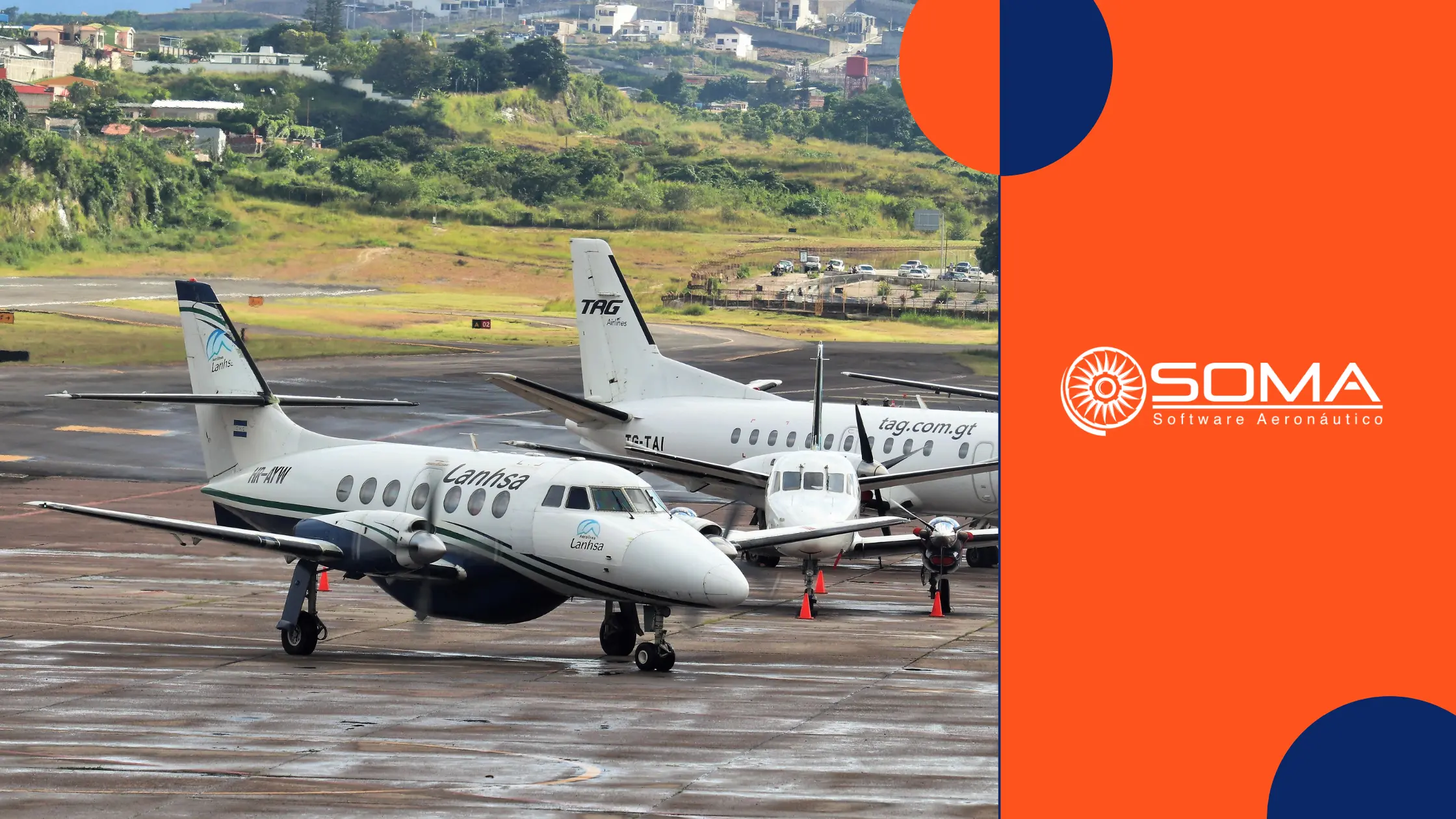
The name Lanhsa tells two very different stories in aviation. One is a cautionary tale of an airline that ceased operations after a catastrophic failure—a stark reminder of the devastating cost of operational gaps. The other is a story of transformation. It’s about a different airline, Aerolinea Lanhsa, that moved away from error-prone spreadsheets to an automated system. They chose a path of proactive control and safety for the entire lanhsa fleet. This contrast highlights a crucial choice every operator faces: will your systems create risk, or will they build a foundation for reliability and peace of mind?
Watch this short video to learn in first hand what Eddy Arbizú - Quality Maintenance Manager @ LANHSA Airliens had to say about their 6 year-long relationship with SOMA Software.
Before implementing SOMA, LANHSA Airlines faced significant challenges in managing their maintenance. They relied on spreadsheets to control their operations—a precise tool, but one prone to human error. Constantly updating and manipulating data caused headaches, affecting the handling of work orders, maintenance reports, inventory control, and logistics.
The story of Aerolínea Lanhsa serves as a powerful and sobering reminder of the razor-thin margins in aviation and the devastating consequences of operational gaps. What begins as a promising regional venture can unravel quickly when foundational processes are not robust enough to support safe and reliable operations. This isn't just a story about one airline; it's a case study on the critical importance of foresight, diligence, and having the right systems in place. For any operator, maintenance manager, or executive, the events that unfolded offer profound lessons on risk, responsibility, and the non-negotiable nature of safety compliance in our industry.
Aerolínea Lanhsa, or Línea Aérea Nacional de Honduras S.A., began as a regional carrier in 2011, operating from its main hub at Golosón International Airport in La Ceiba. For over a decade, it was a fixture in the region's transportation network. However, its history was cut short when "the airline stopped flying in April 2025" following a catastrophic accident. This abrupt end highlights a harsh reality: longevity in aviation is earned every single day. Managing a fleet, even a small one, requires a perfectly synchronized system of flight operations, maintenance scheduling, and inventory control to ensure every departure is as safe as the last. When those systems have gaps, the foundation of the entire operation is at risk.
Catastrophic failures rarely happen in a vacuum. More often, they are preceded by a series of smaller incidents and red flags that form an alarming pattern. In 2022, a Lanhsa BAe Jetstream 31 had its "right landing gear break while landing in Roatán." While all passengers and crew were safe, the plane was a total loss. This event should have been a massive wake-up call, pointing directly to potential lapses in the airline's aircraft maintenance management program. Instead, the pattern of risk culminated in the ultimate tragedy when "Aerolínea Lanhsa Flight 018 crashed into the sea shortly after taking off," killing 13 people. This was not just an incident; it was a catastrophe that served as a final, devastating reminder of the human cost of safety failures.
The story of Aerolínea Lanhsa is more than just a historical account; it's a critical learning opportunity for the entire aviation community. Moving from the "what" to the "why" is essential for preventing similar tragedies. The airline's reliance on outdated and inefficient systems for managing its most critical functions created an environment where risk could grow unchecked. As the provided testimonial from LANHSA's Quality Maintenance Manager highlights, many operators start with manual systems. The key is recognizing when those systems are no longer sufficient and are actively creating danger. This is where we can draw direct lines between specific operational challenges and the need for modern, integrated solutions that prioritize safety above all else.
A reactive approach to maintenance—fixing things only after they break—is one of the most dangerous strategies in aviation. Before adopting a modern solution, LANHSA Airlines "relied on spreadsheets to control their operations—a precise tool, but one prone to human error." This manual approach creates immense friction, as "constantly updating and manipulating data caused headaches, affecting the handling of work orders, maintenance reports, inventory control, and logistics." An integrated platform eliminates these data silos, providing a single source of truth. This allows teams to see the full picture, from purchasing and inventory to work order execution, turning data into predictive insights rather than historical headaches.
An aircraft is only as airworthy as its records prove it to be. In the eyes of regulators, if it isn't documented, it didn't happen. The final outcome for Lanhsa was its complete shutdown following the crash of Flight 018. In the aftermath of such an event, investigators conduct a top-to-bottom review of all records. A fragmented documentation system makes it nearly impossible to demonstrate compliance and can hide systemic issues. A robust aircraft document management system digitizes and centralizes everything from maintenance logs to compliance certificates. This ensures that records are secure, accessible, and auditable at a moment's notice, providing a transparent and trustworthy account of an aircraft's history and airworthiness.
The introduction of SOMA drastically changed the situation. This automated software aircraft management solution generates alerts, automatic reports, and automatic tasks, sending them directly to the application or users' email. SOMA's simplicity and effectiveness have allowed LANHSA Airlines to focus on planning and executing the required work for their fleet, reducing costs and downtime. Now, the team can concentrate on growing the business, ensuring their planes fully comply with regulations.
One of the main attractions of SOMA for LANHSA Airlines was its user-friendly interface. It's not necessary for an aeronautical engineer to use the platform, which facilitates its adoption by any team member. Additionally, SOMA offers a variety of automatic reports generated in seconds, enabling quick and well-informed decision-making. This feature is particularly useful for presenting reports to management and regulators and for internal evaluations of inspection times and component performance.

Since implementing SOMA, LANHSA Airlines has experienced several positive changes:
- Simplified fleet management
- Exclusive focus on aircraft maintenance
- Precise tracking of aircraft components
These benefits have eliminated many problems associated with using spreadsheets, motivating LANHSA Airlines to continue using SOMA year after year as their trusted aircraft maintenance software.
LANHSA Airlines confidently recommends SOMA, an aviation maintenance software, to other airlines. The power and advantages of SOMA over spreadsheets or internally developed software are clear. With 19 years in the market, SOMA has proven to provide effective solutions for all aspects of aircraft maintenance.
SOMA presents itself as a comprehensive and reliable solution for airlines looking to optimize their maintenance and logistics. LANHSA Airlines' experience is a testament to how this software can transform operations, reduce costs, and allow a clear focus on business growth. If your airline faces similar challenges, consider SOMA as your next step towards efficiency and peace of mind in aircraft maintenance, click here to schedule a meeting with our team.
What's the main difference between the two "Lanhsa" airlines mentioned? The blog post discusses two separate airlines to make a point about safety systems. The first, Aerolínea Lanhsa, is a real airline that ceased operations after a tragic accident, highlighting the severe risks of operational failures. The second, LANHSA Airlines, is a current SOMA customer that successfully transitioned from manual spreadsheets to our automated software, improving its safety and efficiency. They represent two very different outcomes based on their approach to maintenance management.
Why are spreadsheets considered risky for managing aircraft maintenance? While spreadsheets are useful tools, they are not designed for the complex demands of aviation maintenance. They rely heavily on manual data entry, which makes them prone to human error. A single typo or an outdated file can lead to missed inspections, incorrect parts tracking, or compliance gaps. This creates unnecessary risk and can lead to significant safety issues, as well as operational headaches for your team.
How does SOMA Software help prevent the kinds of problems Aerolínea Lanhsa faced? SOMA provides a centralized, automated system that replaces fragmented spreadsheets. It creates a single source of truth for all maintenance activities, from scheduling tasks and managing inventory to tracking component life and maintaining digital records. By automating alerts, reports, and work orders, SOMA helps ensure that critical maintenance is never missed and that all records are accurate and audit-ready. This proactive approach directly addresses the systemic gaps that can lead to catastrophic failures.
Is SOMA difficult for my team to learn and use? Not at all. We designed SOMA with a user-friendly interface specifically so that you don't need to be an engineer to use it effectively. As the LANHSA Airlines team found, its simplicity allows everyone, from technicians to managers, to adopt the platform quickly. This ease of use ensures your team can focus on their actual work instead of struggling with complicated software.
Besides safety, what are the main business benefits of using SOMA? While safety is the top priority, our customers also see significant business improvements. By automating routine tasks and providing clear insights into operations, SOMA helps reduce aircraft downtime and lower maintenance costs. Teams can manage inventory more efficiently, track component performance to make better purchasing decisions, and generate reports for management in seconds. This allows you to run a more streamlined, cost-effective operation and focus on growing your business.