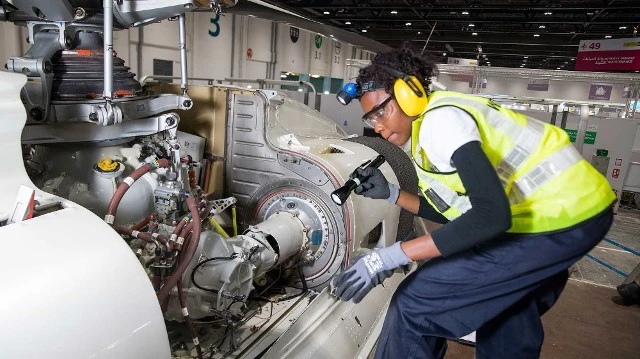
Taking on an Aircraft Maintenance Program is a serious task. You're in charge of every single check and repair, and you know that Quality Control and the Civil Aviation Authority will be watching. But where do you start? It all comes back to one thing: understanding the true AMM meaning. In AMM aviation, this stands for the Aircraft Maintenance Manual. This isn't just a guide; it's the definitive rulebook from the manufacturer. Every action your team takes is governed by the AMM to ensure safety, airworthiness, and full compliance with regulations.
It is noteworthy that since 2013, with the publication of Annex 19 by ICAO, the Aeronautical Industry has framed Operational Safety as its primary focus. The effective control of an aircraft maintenance program plays a significant role in this regard. To implement effective Aircraft Maintenance Program Control, there is much to grasp. In this post, I will begin based on my experience with what I personally consider essential – the starting point – and detail it by addressing three key questions:
In aviation, the acronym AMM stands for Aircraft Maintenance Manual. Think of it as the official, comprehensive instruction book for a specific aircraft, issued directly by the manufacturer. This document is the primary source of technical data for every maintenance activity, from simple checks to complex repairs. Its purpose is to ensure the continued airworthiness and safe operation of the aircraft. According to aviation resource Satair, the AMM provides the essential technical data needed to perform maintenance safely and effectively. For maintenance engineers and technicians, this manual isn't just a suggestion—it's the definitive guide that outlines the exact procedures, standards, and troubleshooting steps required to keep an aircraft in top condition.
The AMM is a legally significant document, forming a core part of the Instructions for Continued Airworthiness (ICA) that manufacturers must provide. This means that before starting any maintenance task, personnel are required to consult the relevant AMM to ensure they are following the approved procedures. Given the size and complexity of these manuals, ensuring your team has instant access to the correct, up-to-date version is a major operational challenge. This is where modern aircraft document management systems become invaluable, centralizing critical information and eliminating the risk of using outdated data. Ultimately, the AMM formally specifies how every maintenance action should be performed to maintain the aircraft's integrity and compliance.
It is imperative to understand that every aircraft has a Maintenance Manual (AMM - Aircraft Maintenance Manual). This is not the sole manual for an aircraft; there is a list that can be accessed through technical publications for the fleet. This is where navigation begins to execute a proper Maintenance Program. It is also essential to note that manufacturers typically structure their maintenance manuals consistently, regardless of the aircraft model.
For instance, Boeing utilizes the Maintenance Planning Document (MPD) under the structure of Volumes to segregate instructions for various checks.
Similarly, Airbus (for fixed-wing aircraft) imparts maintenance program instructions through an MPD, usually organized into sections such as systems, zones, structures, and airworthiness limitations. Manufacturers like Bombardier have their maintenance planning manual (MPM), while smaller aircraft manufacturers like Cessna or Diamond use the Aircraft Maintenance Manual (AMM) or the Service Manual (SM) for instructions, with specific focus on Chapters or Sections 04, 05, and 12.
This consistent philosophy can also be observed with Bell helicopters (rotary-wing), where the manufacturer typically directs us to Chapters 04, 05, and 12 of its Maintenance Manual (MM).
Defining precisely how each manufacturer operates is impossible, but as we become familiar with their philosophies, navigation through their manuals becomes more seamless. A good analytical ability is crucial to cross-reference details in the manual, as they often refer to documentation separate from the manual we are extracting information from. Access to up-to-date technical publications is also essential for effective program control.
Personally, I define this in four simple items:
There is a defined set of controls for aircraft, and while I can't detail tips for the analysis and control of each in this post, I will share my experience in subsequent weekly publications. However, as mentioned earlier, the manufacturer's manual typically guides us to the following necessary documents for a proper maintenance program. Paying attention to local and design authority regulations is crucial.
At this point, to avoid extending the post, we could initiate a small list to provide an overview of the universe we need to be familiar with to properly control our aircraft.
With these three questions, I conclude my post, hoping that these tools are helpful to our community.
Holymar Ruiz, Chief Engineer at SOMA Software
Keeping up with the detailed instructions in an Aircraft Maintenance Manual (AMM) is a massive undertaking. Between tracking service checks, component life limits, structural inspections, and airworthiness directives, the risk of human error is always present. This is where dedicated software becomes an essential partner for any maintenance team. Instead of relying on spreadsheets or paper records, a digital solution centralizes all your maintenance data, creating a single source of truth for your entire fleet. This ensures that every task, from routine checks to major overhauls, is tracked, scheduled, and documented correctly.
Modern aviation software, like our all-in-one aircraft maintenance management platform, automates these complex processes. It can send alerts for upcoming maintenance, flag overdue tasks, and generate comprehensive reports for audits in just a few clicks. By integrating regulatory requirements directly into the system, you can be confident that your operations remain compliant with standards from authorities like the FAA and EASA. This not only simplifies the management of your AMM but also provides predictive insights that help prevent disruptions and keep your aircraft safely in the air.
While in our world, AMM stands for Aircraft Maintenance Manual, the acronym pops up in completely different fields. If you’ve ever seen it used in another context and wondered what it meant, you’re not alone. To clear up any confusion, let's explore some of the other common meanings of AMM you might encounter outside of aviation.
In the fast-evolving world of cryptocurrency, AMM stands for Automated Market Maker. It’s a type of decentralized exchange protocol that relies on a mathematical formula to price assets. Instead of the traditional market model where buyers and sellers create orders that are then matched, an AMM system allows digital assets to be traded automatically and without permission by using liquidity pools. Think of it as a robotic market maker that is always ready to quote a price between two assets.
An Automated Market Maker functions by allowing users to trade against a pool of tokens in a smart contract. These pools are funded by other users, known as liquidity providers, who deposit their own assets. When someone wants to make a trade, they simply interact with the smart contract, which calculates the transaction price based on a specific formula. This approach removes the need for a direct counterparty for every trade, creating a more seamless and constantly available trading environment.
People who provide tokens to a liquidity pool are called Liquidity Providers (LPs). In return for supplying the pool with assets, they earn passive income in the form of transaction fees from the trades that occur in their pool. However, being an LP isn’t without risk. The primary risk is "impermanent loss," which happens when the price of the deposited tokens changes compared to what they would have been worth if the LP had simply held them in their own wallet. It’s a complex concept that every potential LP needs to understand before contributing to a pool.
Shifting gears to the medical field, AMM is an acronym for Antidepressant Medication Management. This is a performance measure used in healthcare to track how consistently adult patients with major depression adhere to their treatment plan. Specifically, it evaluates whether patients are taking their antidepressant medication regularly during the first few months of treatment, which is a critical period for effectiveness. This metric helps healthcare organizations assess the quality of care they provide for mental health conditions.
Beyond the highly specific worlds of aviation, crypto, and healthcare, AMM has a few other meanings you might stumble across in different contexts.
In military and defense terminology, AMM is often used as an abbreviation for "antimissile (missile)." This refers to technology or weaponry designed to intercept and destroy incoming missiles before they reach their target. It’s a key component of modern defense systems, and you’ll likely see this definition used in discussions about national security and military hardware.
Like many acronyms, AMM has also found its way into informal internet slang. According to some online communities, "amm" can be used as a shorthand for "amusement" or as a way to express that someone is the "best person ever." While you probably won't see this usage in a professional setting, it’s a good example of how language evolves in online spaces.
What is an Aircraft Maintenance Manual (AMM) and why is it so important? The Aircraft Maintenance Manual, or AMM, is the official instruction book from the aircraft manufacturer. It contains all the approved procedures, standards, and technical data needed to perform every maintenance task on a specific aircraft. Its importance can't be overstated; following the AMM is a legal requirement to ensure the aircraft remains airworthy, safe, and compliant with aviation regulations. It's the single source of truth for your maintenance team.
I'm new to maintenance program analysis. Where do I even begin? First, understand that the AMM is your primary guide, but it's part of a larger library of technical publications from the manufacturer. Start by identifying the correct manual for your aircraft model, which could be an AMM, a Maintenance Planning Document (MPD), or a Service Manual (SM). Then, focus on understanding the manufacturer's structure for scheduled and unscheduled maintenance, paying close attention to airworthiness limitations, component controls, and structural inspections.
Are all aircraft maintenance manuals structured the same way? While the exact layout varies between manufacturers like Boeing, Airbus, or Bell, they generally follow a consistent philosophy. You'll often find key maintenance program instructions in specific documents or sections, such as an MPD or chapters 4, 5, and 12 of the AMM. As you gain experience with a manufacturer's documentation, you'll find it becomes easier to locate the information you need, even across different aircraft models.
Besides the main maintenance manual, what other documents do I need to track? A complete maintenance program goes beyond just the AMM. You must also monitor Airworthiness Directives (ADs) from aviation authorities, Service Bulletins (SBs) from the manufacturer, and any Supplemental Type Certificates (STCs) that modify the aircraft. Additionally, it's critical to keep a detailed record of all repairs and any on-condition components to ensure total compliance and operational oversight.
How can software help manage all the requirements in the AMM? Trying to track every task, inspection, and component life limit from the AMM using manual methods is incredibly challenging and prone to error. Aviation maintenance software automates this entire process. It centralizes your data, sends alerts for upcoming maintenance, tracks compliance with regulations, and generates reports for audits. This not only simplifies AMM compliance but also helps you proactively manage your fleet's health and prevent disruptions.