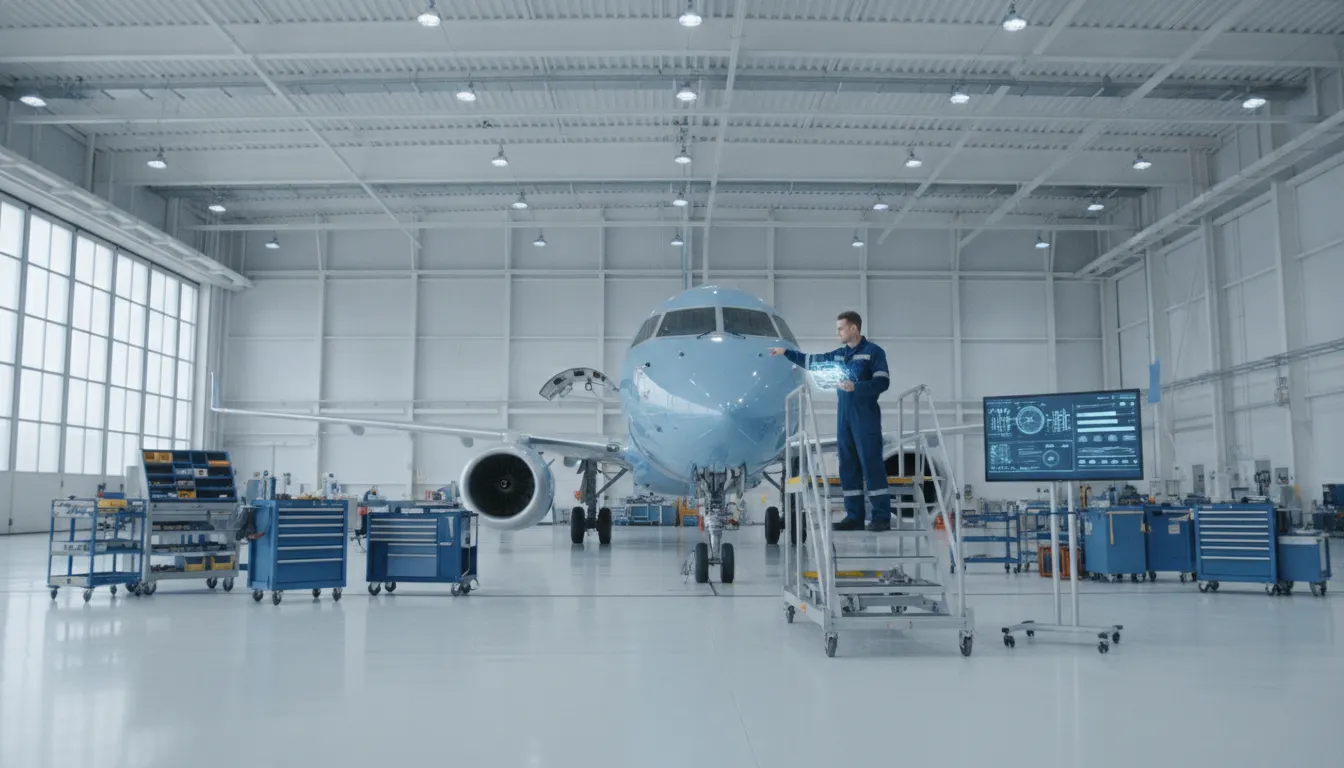
Paper logbooks and disconnected spreadsheets can hide overdue tasks, duplicate data entry. And make it difficult to see the current status of an aircraft across maintenance, operations, and engineering teams. As fleets grow, the administrative burden also grows, leaving less time for the decisions that protect airworthiness and availability.
Aircraft maintenance tracking software centralizes aircraft records, automates maintenance due calculations, and gives teams current visibility into flight hours, cycles, component limits, and compliance actions. By reducing manual entry and error rates, digital tracking can improve productivity and operational control, as documented in the IATA guidance on paperless aircraft operations.
The right platform is more than a digital filing cabinet. It connects maintenance data to the workflows your team already uses, helping maintenance directors, operations managers, and CAMO professionals act on reliable information. Understanding what these systems track, and how they fit into a broader maintenance program, is the first step toward choosing one that supports your operation.
Aircraft maintenance tracking software is a digital system for monitoring the maintenance status, compliance obligations, and remaining life of aircraft and components. It turns operational data into a current view of what is due, what is approaching its limit, and what requires engineering attention. For operators replacing paper records or disconnected spreadsheets, an aircraft maintenance tracking system provides a more structured way to protect continuing airworthiness.
The software typically records the utilization and maintenance parameters that drive an aircraft's maintenance program:
When these inputs are maintained consistently, automated tracking can provide real-time visibility into fleet airworthiness and component life limits. It can also alert maintenance and operations teams before a requirement becomes an operational disruption. This is especially valuable for fleets where records, utilization updates, and planning decisions previously lived in separate files.
A dedicated tracking solution concentrates on the status and timing of maintenance requirements. It answers questions such as: When is the next inspection due? Which aircraft is nearing a cycle or hour threshold? How much life remains on a controlled component? It may be the right starting point for an operator that needs reliable visibility without replacing every operational process at once.
A full MRO enterprise resource planning system usually covers a wider operational scope, such as work orders, labor planning, procurement, inventory, document control, and financial or production workflows. The distinction is not that one category is universally better. The appropriate choice depends on whether the immediate problem is maintenance forecasting and compliance visibility. Or whether the organization needs an integrated system for executing and managing the complete maintenance operation.
| Capability | Dedicated Tracking Software | Full MRO ERP |
|---|---|---|
| Due-date calculations (hours, cycles, calendar) | Core function | Core function |
| Component life-limit monitoring | Core function | Core function |
| Work order creation and assignment | Limited or manual | Fully integrated |
| Inventory and procurement management | Not included | Fully integrated |
| Labor planning and technician scheduling | Not included | Included |
| Financial and production control | Not included | Included |
| Implementation complexity | Low to moderate | Moderate to high |
| Typical deployment timeline | Weeks | Months |
For many mid-sized airlines, MROs, and charter operators, the decision should begin with the data they must control today and the workflows they expect to connect next. A platform that combines tracking with broader maintenance capabilities can support that progression without forcing engineering teams to manage another isolated record system.
Paper logbooks and disconnected spreadsheets can appear inexpensive because they avoid a software subscription. Their real cost emerges in the work required to keep records complete, accurate, available, and ready for review. Every manual entry, duplicated spreadsheet update, and handoff between maintenance, operations, and inventory creates another opportunity for information to become incomplete or inconsistent.
Technicians and planners must record flight hours, cycles, defects, work performed, and follow-up requirements across multiple documents. A missed entry or transcription error can distort the maintenance picture, especially when several people update separate files. IATA guidance on paperless aircraft operations reports that digital processes can improve safety, quality, and compliance metrics by reducing manual data-entry errors in logbooks. Read the IATA guidance on paperless technical operations.
Paper records can be misplaced, damaged, or separated from the aircraft or work package they support. Spreadsheet files can also be overwritten, duplicated, or stored on individual computers without a reliable history of changes. These gaps make it harder to reconstruct what happened, who completed an action, and whether a requirement was addressed. EASA guidance cited by the European Aviation Maintenance Training Committee states that electronic recordkeeping provides superior data integrity to manual paper logs through a secure audit trail of maintenance activities. Review the EASA electronic recordkeeping guidance.
When information is scattered, maintenance teams spend time searching for records, reconciling versions, preparing status summaries, and manually checking upcoming requirements. That overhead reduces the time available for planning and production control. IATA identifies increased productivity and reduced administrative effort as benefits of moving from paper logbooks to digital systems. The impact is practical: a shared maintenance record gives authorized teams a consistent view instead of requiring them to assemble one before every decision.
Poor visibility can also delay parts coordination and maintenance planning, increasing the risk of avoidable downtime. Moving to a team of aeronautical engineers and a purpose-built digital workflow is not simply a technology upgrade. It is a way to strengthen record integrity, reduce repetitive administration, and give maintenance leaders better information before small documentation problems become operational disruptions.
The right platform should give maintenance and operations teams one dependable view of what is due. Why it is due, and whether the organization is ready to complete it. Evaluate each capability against your actual fleet, maintenance program, approval workflows, and parts operation rather than selecting software based on a feature checklist alone.
Component control needs more than an installation date. The platform should maintain the history and current status of serialized parts, including life limits, accumulated utilization, removals, installations, and replacement planning. Electronic tracking enables more precise monitoring of serialized component life limits and history, supporting compliance with life-limited component requirements (EASA electronic recordkeeping guidance).
Inventory integration makes that information operational. When a component or consumable is due, planners should be able to see whether the required part is available, serviceable, reserved, or on order. Maintenance tracking and inventory systems that synchronize planning with parts availability help ensure materials are ready when tasks are due, reducing avoidable aircraft downtime (industry analysis).
For operators comparing platforms, centralized maintenance tracking should connect these workflows rather than creating another isolated database. The strongest option gives maintenance control, engineering, inventory, and operations the same current information while preserving the traceability required for safe, compliant decisions.
Regulatory compliance depends on more than completing maintenance tasks. Operators must also demonstrate who performed each action, which records support it, and whether the data remained accurate throughout the aircraft's service history. Digital maintenance tracking creates a structured record that makes those responsibilities visible and easier to verify.
Electronic signatures are a central part of a defensible digital record. EASA guidance states that electronic document and record systems used in continuing airworthiness must support rigorous controls for electronic signatures and electronic workflows. A compliant process should verify the technician's identity and provide non-repudiation, so each maintenance action can be traced to the authorized person who completed it.
That traceability changes the audit conversation. Instead of searching through folders, reconciling handwriting, or relying on separate spreadsheets, an engineering team can present a connected history of work orders, approvals, findings, and corrective actions. The audit trail should be tamper-resistant, preserve the sequence of changes, and make unauthorized alterations apparent. EASA electronic recordkeeping guidance also identifies secure audit trails as a foundation for stronger data integrity than manual paper logs. Read the EASA electronic recordkeeping guidance.
Digital tracking also supports compliance between audits. Automated airworthiness directive and service bulletin tracking can organize applicable requirements, due dates, recurring actions, and completion evidence in one controlled workflow. When the system connects these obligations to aircraft, components, and work orders, maintenance planners can identify approaching deadlines before they become operational or regulatory risks.
This structure is especially valuable across a mixed fleet, where requirements and component histories may vary by aircraft or configuration. Maintaining one consistent data model helps preserve data integrity across the fleet, reducing the chance that a deadline, life limit, or supporting record is overlooked during handoffs.
Digital platforms can standardize maintenance reporting, making fleet status updates easier to prepare for internal leaders, owners, MRO partners, and regulatory bodies. IATA guidance notes that standardized reporting capabilities streamline communication about fleet status with internal stakeholders and external regulators.
The result is a stronger audit posture: evidence is organized continuously, not assembled under deadline pressure. Engineers and compliance teams can spend less time reconstructing records and more time evaluating risk, resolving findings, and keeping aircraft operational.
Choosing aircraft maintenance tracking software is only the first step. The operational value comes from connecting maintenance records with the teams and workflows that use them every day. A platform that combines maintenance, flight operations, inventory, and document control gives managers one operating picture instead of asking them to reconcile data across separate point solutions.
With an integrated system, a work order, component status, compliance deadline, and parts requirement can be viewed in the same workflow. Real-time airworthiness data gives operations leaders better visibility into fleet availability, while integrated inventory management helps prevent part shortages during scheduled maintenance. This reduces the handoffs that create delays and makes it easier to identify constraints before they affect an aircraft's schedule.
Maintenance tracking must work where maintenance happens. Mobile access allows technicians to review assigned work, update records, and capture progress from the hangar floor rather than waiting to return to a desktop terminal. That keeps information current for maintenance control, planning, and operations teams without adding a separate mobile workflow that has to be reconciled later.
Cloud-based deployment also removes the need for on-premises IT infrastructure. Operators can access the system through a managed online environment, reducing the local hardware and maintenance burden associated with legacy installations. Access controls and documented workflows still need to align with the operator's quality and compliance processes, but the technology does not have to become another facility-level project.
A practical rollout should map current records, approval paths, maintenance programs, and inventory responsibilities before configuration begins. SOMA supports implementation cycles of approximately 4 to 8 weeks, depending on the operation's scope, data readiness, and required workflows. That timeline gives teams room to validate configuration, prepare users, and transition without treating implementation as a rushed software switch.
The right partner matters as much as the platform. SOMA's team of aeronautical engineers understands the operational context behind maintenance data and works with your existing engineering and CAMO teams. Through implementation and consulting services, SOMA acts as an operational partner, helping your organization connect digital tracking to the way its fleet actually operates.
It should track aircraft flight hours, cycles, calendar-based inspections, work orders, airworthiness directives, and the status and life limits of serialized components. The system should turn these records into clear alerts and fleet-level visibility, so maintenance teams can act before a due date or component limit becomes an operational disruption.
Yes. An operator can define a controlled transition, establish data-entry and approval procedures, and prioritize active aircraft and critical records first. Historical paper records can be retained and digitized according to operational needs. Scanning every historical document is not necessarily a prerequisite for adopting an electronic recordkeeping system, according to AviationPros.
It creates a consistent record of maintenance actions, due dates, approvals, and component history. Look for secure audit trails, controlled access, technician identity verification, and electronic signatures that support non-repudiation. EASA electronic document guidance emphasizes that electronic records and signatures must meet continuing airworthiness requirements, as summarized in the EAMTC guidance document.
It can help teams coordinate maintenance planning with parts availability, identify upcoming work earlier, and reduce avoidable delays caused by fragmented information. Integration between maintenance tracking and inventory management helps ensure required parts are available when tasks are due, a benefit described by Aircraft Commerce. Results still depend on accurate data, disciplined workflows, and effective execution by the operator.
Replacing paper records with aircraft maintenance tracking software can give your team a clearer way to manage maintenance information and keep daily work organized. Start your free trial or discuss the right setup for your operation with SOMA's aviation software team. Request a personalized quote and take the next step toward more connected maintenance tracking.