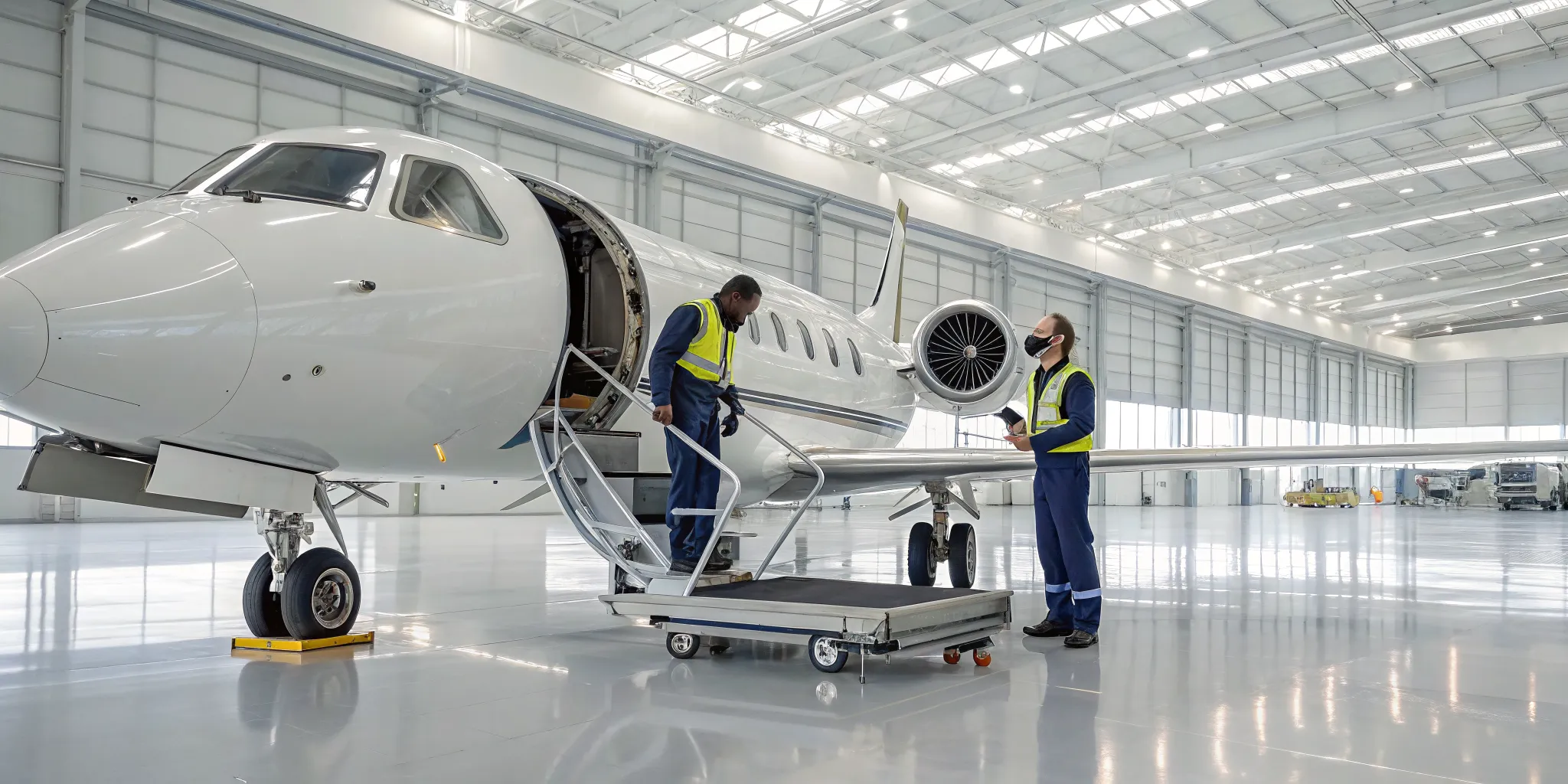
The classic image of a mechanic with a wrench and a paper manual is quickly fading. The reality of aviation maintenance today is far more high-tech. Hangars are becoming smarter, with technicians swapping manuals for tablets and using drones for inspections. This isn't just about new tools; it's a fundamental shift making aircraft maintenance safer and more precise. So, what is aviation maintenance in this new era? It's a field powered by predictive software and data. We'll explore how this technology is transforming aircraft upkeep, from AI-powered analytics to the rise of mobile apps on the shop floor.
At its heart, aviation maintenance is the comprehensive process of inspecting, repairing, and servicing aircraft to ensure they are safe to fly. It’s what keeps every plane, from a small private jet to a massive commercial airliner, in a state of airworthiness. This means the aircraft meets all the required safety and performance standards set by aviation authorities. Think of it as the foundation that makes modern air travel one of the safest ways to get around.
This process isn't just about fixing things when they break. It involves a proactive and highly organized system of checks and services. Maintenance activities are generally broken down into a few key categories: line maintenance, which includes routine checks performed between flights; heavy maintenance, which involves extensive, in-depth inspections and overhauls that can take a plane out of service for weeks; and component maintenance, which focuses on repairing and testing individual parts.
Managing these different maintenance schedules, tracking parts, and ensuring every task is documented and compliant is a massive logistical puzzle. Effective aircraft maintenance management is what keeps fleets operational, minimizes downtime, and guarantees that every aircraft is ready for its next safe journey. It’s a critical function that requires precision, expertise, and a deep commitment to safety.
The primary goal of aviation maintenance is, without a doubt, safety. Every single task performed by a maintenance technician is a critical step in protecting the lives of crew members and passengers. These professionals are the guardians of airworthiness on the ground, responsible for identifying and fixing any mechanical or electrical issues before they can become a problem in the air.
Their work is governed by strict standards and procedures. Aircraft mechanics inspect, repair, and replace everything from engine components and landing gear to the aircraft’s body and control systems. Every action is meticulously documented, creating a complete history for each aircraft. This proactive approach ensures that potential issues are caught early, and the aircraft remains in peak condition, ready to perform safely under all circumstances.
Aviation maintenance doesn't happen in a vacuum. It’s a highly regulated industry governed by strict rules to ensure universal safety standards. In the United States, the Federal Aviation Administration (FAA) sets the rules, while the European Union Aviation Safety Agency (EASA) oversees aviation safety in Europe. These two bodies are the most influential aviation authorities in the world, and their regulations often form the basis for standards in other countries.
These agencies dictate everything, from the specific procedures for a repair to the qualifications required for technicians. For example, the FAA requires mechanics to be certified with an Airframe (A) and/or Powerplant (P) license, commonly known as an A&P license. Keeping up with these ever-evolving regulations and maintaining perfect records is a major challenge. Proper aircraft document management is essential for MROs and airlines to prove compliance and ensure every maintenance action meets the required legal and safety standards.
Aviation maintenance isn't a single, monolithic task. It’s a spectrum of activities, from quick daily checks to complete aircraft overhauls. Think of it like this: you might check your car's tire pressure before a road trip, but you'll take it to a specialist for a full engine rebuild. Similarly, aircraft require different levels of attention depending on their flight hours, age, and the specific tasks needed. Understanding these categories helps MROs and airlines plan schedules, allocate resources, and maintain compliance.
Breaking maintenance down into distinct types ensures that every part of an aircraft receives the right level of care at the right time. This structured approach is fundamental to safety and operational efficiency. The three main categories you'll encounter are line, heavy, and component maintenance. Each plays a unique and critical role in keeping an aircraft airworthy and ready for service.
Line maintenance includes the routine, everyday tasks performed on an aircraft to keep it ready for its next flight. This is the work you see happening on the tarmac or at the gate between flights. It’s all about speed and efficiency to ensure on-time departures without compromising safety. Technicians perform pre-flight inspections, top up fluids, and handle minor repairs that don't require the aircraft to be taken out of service for long.
According to the FAA, these checks are essential for addressing issues that pop up during daily flight operations. Because these tasks are time-sensitive, having a tool like the SOMA Production App can make a huge difference, allowing technicians to record findings and complete tasks directly from the ramp.
Heavy maintenance involves the more extensive, in-depth inspections and repairs that require taking an aircraft out of service for an extended period. These are the major scheduled events, often called C-checks or D-checks, that happen at set intervals in an aircraft's life. During heavy maintenance, technicians perform comprehensive structural inspections, major repairs, and system modifications inside a dedicated hangar or MRO facility.
This level of work is far too complex to be done at the gate. It requires meticulous planning and robust aircraft maintenance management to coordinate the teams, parts, and documentation involved. These checks are critical for ensuring the long-term airworthiness and structural integrity of the fleet.
Component maintenance is all about focusing on specific, individual parts of the aircraft. Instead of looking at the plane as a whole, this type of maintenance zeroes in on repairing and overhauling removable components like engines, landing gear, and avionics systems. This work can happen either on-wing or, more commonly, at a specialized workshop after the part has been removed from the aircraft.
Effectively managing the lifecycle of these high-value parts is key to controlling costs and ensuring reliability. As the IATA notes, strong component maintenance practices are vital for maintaining the safety and performance of critical aircraft systems while keeping operations running smoothly and predictably.
At its core, the job of an Aviation Maintenance Technician (AMT) is to keep aircraft safe and ready to fly. These are the highly skilled professionals who inspect, repair, and maintain everything on an airplane, from the engines and landing gear to the electrical systems and fuselage. They are the first and last line of defense in aviation safety, ensuring every component functions exactly as it should. Their work is governed by strict regulations, and every task, no matter how small, must be performed with precision and documented thoroughly.
AMTs diagnose mechanical or electrical problems, replace parts, conduct scheduled inspections, and keep detailed records of all their work. It’s a hands-on job that requires a deep understanding of complex machinery and a serious commitment to safety. Whether they're working on a small private plane or a massive commercial jet, their expertise is what allows passengers and crew to fly with confidence. Modern tools and software for aircraft maintenance management have become essential for helping technicians track repairs, manage parts, and ensure every aircraft remains compliant and airworthy.
An AMT’s workday is rarely the same twice, but it’s always centered on the aircraft. You’ll likely work in a hangar, on the airfield, or in a repair shop, environments that can be noisy and demand physical stamina. The job often involves climbing, bending, and working in tight spaces to access different parts of the aircraft. You might start your day troubleshooting a reported issue from a flight crew, then move on to performing a routine scheduled inspection on another plane.
A huge part of the job is meticulous record-keeping, which is why robust aircraft document management is so critical. Every repair, inspection, and part replacement must be logged to maintain a complete history of the aircraft. The work is deadline-driven and comes with the pressure of knowing that safety is paramount.
To be a successful AMT, you need a specific blend of technical and personal skills. Being incredibly detail-oriented is non-negotiable; overlooking a small detail could have major consequences. You also need strong manual dexterity for handling tools and small components with precision. A natural curiosity for how machines work and excellent problem-solving abilities will help you diagnose and fix complex issues effectively.
According to the U.S. Bureau of Labor Statistics, physical strength and observation skills are also key. You have to be able to spot subtle signs of wear or damage and have the stamina for a physically demanding job. It’s a career that rewards those who are methodical, patient, and dedicated to getting the job done right every single time.
As an AMT, your toolbox is an extension of your expertise. While MROs and airlines typically provide the large, specialized equipment, you'll be expected to have your own set of high-quality hand tools. This includes the basics like socket sets, combination wrenches, screwdrivers, and pliers. But the aviation world demands more than just the standard garage toolkit. Precision is everything, so tools like torque wrenches for tightening bolts to exact specifications, digital calipers for precise measurements, and multimeters for diagnosing electrical issues are essential. You'll also need aviation-specific items like rivet guns and dead blow hammers for tasks unique to aircraft structures. Building a solid tool collection is an investment in your career and your ability to perform every job safely and accurately.
Many people think being an AMT is just about fixing things, but there’s much more to it. One common myth is that it’s a standard nine-to-five job. In reality, aircraft need maintenance around the clock, so night shifts, weekends, and holidays are common, especially when you’re new to the field. The work isn’t just about turning wrenches; it requires a deep understanding of federal regulations and complex technical manuals.
Another misconception is that it's a solo job. Maintenance is a team sport. You'll constantly communicate with other technicians, supervisors, and flight crews. While the work is hands-on, technology plays a huge role. Technicians use sophisticated diagnostic equipment and mobile tools like the SOMA Production App to access data and log tasks directly from the shop floor.
Becoming a certified aviation maintenance technician is a structured process that opens the door to a rewarding career. It all starts with the right education and training, followed by obtaining your official license from the Federal Aviation Administration (FAA). Think of it as building your foundation. You’ll learn the theory, get hands-on experience, and then prove your skills to earn the credentials that show you’re ready for the job. This path ensures that every technician has the knowledge to keep aircraft safe and operational. Let’s walk through the key steps you’ll need to take to get certified and start your career.
Your first step is to get the right education. While some technicians learn through military service or on-the-job training, most attend a formal program after high school. The gold standard is a certificate from an FAA-approved program. These schools, known as Part 147 schools, have curricula that are specifically designed to meet FAA standards for training. Attending one of these programs is the most direct route to qualifying for your certification exams. They provide the structured, hands-on experience you need to build a strong foundation in everything from aircraft structures to engine systems, preparing you for a successful career.
Once you’ve decided to pursue a career as an AMT, the next big decision is where to get your training. Not all programs are created equal, and the path you choose can impact your finances, your job prospects, and the quality of your education. It’s worth taking the time to research your options thoroughly. Consider factors like cost, the type of credential you’ll earn, and whether the program offers hands-on experience and job placement assistance. Making a smart choice here sets the stage for your entire career.
Many community colleges offer excellent two-year aviation maintenance programs that lead to an Associate's degree. These programs are often more affordable than private alternatives and provide a well-rounded education that goes beyond just passing the certification exams. Plus, they typically have resources to help with job placement after you graduate. On the other hand, you should be cautious with some private for-profit schools. While they promise a fast track to certification, they can be significantly more expensive and may not provide the same depth of knowledge or career support as a community college program.
A quality training program will prepare you to become a federally-licensed aircraft mechanic through a mix of classroom instruction and extensive hands-on learning. Look for programs that offer an Associate in Applied Science degree or specialized certificates. To get in, you'll generally need a high school diploma or GED. Most schools will also want to see that you have a solid grasp of mathematics, which you can often prove with your high school transcripts or by passing a placement test. This foundational knowledge is critical for understanding the complex systems you'll be working on every day.
A traditional classroom isn't the only route to becoming an AMT. If you're eager to get into the workforce and prefer learning by doing, an on-the-job training (OJT) program or an apprenticeship could be the perfect fit. These pathways allow you to earn a paycheck while you gain the practical experience required to sit for your FAA certification exams. It’s a fantastic way to build your skills in a real-world environment, working alongside experienced technicians on active aircraft. This approach combines work, education, and income into one streamlined path.
Some MROs and aviation companies offer paid apprenticeship programs that are designed to build their future workforce from the ground up. In these programs, you are a full-time employee from day one, earning a competitive wage and receiving benefits like health insurance and a 401K. You’ll receive structured training that combines hands-on work with technical instruction, giving you everything you need to launch a successful career. It’s an incredible opportunity to get paid to learn your trade without accumulating student debt, making it a highly attractive option for many aspiring technicians.
Major airlines are also getting directly involved in training the next generation of technicians. Some have created their own specific career paths, such as an Aircraft Support Mechanic program, where you can start in an entry-level role and gain the necessary experience over time. These programs provide a clear, internal track to earning your A&P license while you are already employed by the airline. This can be a strategic way to get your foot in the door with a major employer and build your career from within the company.
If you have a military background, you may already have a significant head start on a civilian career in aviation maintenance. The technical skills, discipline, and attention to detail honed in the armed forces are highly valued by MROs and airlines. Your experience working on military aircraft can often be directly translated into the requirements for civilian certification. This path allows you to leverage your service into a stable and rewarding career, building on the world-class training you’ve already received.
Serving as an aircraft mechanic in a branch like the Air Force, Navy, or Army provides an incredible foundation of knowledge and hands-on skill. The FAA recognizes this and has a defined process for military members to use their experience to qualify for the A&P license exams. You will need to present your training and service records to the FAA to get approval to take the tests. Many companies actively seek out veterans because they know they bring a strong work ethic and proven technical abilities to the hangar floor.
As a veteran, you have access to valuable educational benefits that can make your transition into a civilian career even smoother. You can use your benefits, like the GI Bill, to cover the costs of an FAA-approved training program at a college or technical school. These benefits can also be applied to apprenticeship programs, sometimes providing a housing allowance while you complete your on-the-job training. Be sure to connect with a Veterans Services Office at your chosen school or program to ensure you’re taking full advantage of the benefits you’ve earned through your service.
When you look at training programs, you’ll generally find two main options: a certificate program or an associate's degree. A certificate program focuses purely on the technical training required for your license and can often be completed more quickly. An associate's degree, typically offered at community colleges, combines that technical training with general education courses. Many people find that an associate's degree offers great value. These programs are often more affordable than private schools and provide you with a college degree, which can be beneficial for long-term career advancement. Plus, many have job placement assistance to help you land your first role.
One of the biggest advantages of earning an associate's degree is that it keeps your options open for the future. It’s not just a final destination; it’s a launchpad. Many community colleges have agreements that allow you to seamlessly transfer to other colleges and apply your credits toward a bachelor's degree in aviation management or a related field. This path allows you to get into the workforce and start earning sooner, while still setting yourself up for future leadership roles. A bachelor's degree can be a major asset if you eventually want to move into a management position, oversee a maintenance department, or take on other advanced responsibilities within an MRO or airline.
The Airframe and Powerplant (A&P) license is the essential credential for an aircraft mechanic. It certifies that you have the skills to safely inspect, maintain, and repair aircraft. To earn your A&P license, you must first meet an experience requirement. You can do this either by graduating from an FAA-approved training program or by documenting at least 1,900 hours of relevant hands-on work. Once you qualify, you’ll need to pass a series of three exams for both the Airframe and Powerplant ratings: a written test, an oral exam, and a practical, hands-on test. Passing these demonstrates your expertise and readiness for the job.
The cost of training can feel like a major roadblock, but don't let it stop you. The aviation industry is actively investing in its future workforce, which means there are numerous pathways to get financial support for your education. From company-sponsored programs that pay for your school to scholarships and grants designed specifically for aspiring technicians, you have options. It’s all about knowing where to look. These programs are designed to make a career in aviation maintenance more accessible, helping you gain the necessary skills without taking on a mountain of debt.
Many aviation companies are so eager to find skilled technicians that they're willing to help pay for your training. These company-sponsored programs are a fantastic deal for aspiring AMTs. For example, Piedmont Airlines offers an Aircraft Maintenance Technician (AMT) Tuition Payment Program that covers tuition and testing costs for chosen candidates at partner schools. The best part? These programs often come with a conditional job offer, giving you a clear and direct path from the classroom into a full-time career. It’s a smart way for companies to build their teams and a great opportunity for you to start your career on solid financial footing.
Beyond direct company sponsorships, you can find significant financial support from government programs and industry foundations. The U.S. government established the Aviation Maintenance Technical Workforce Grant Program to help grow the next generation of technicians by funding educational initiatives. Additionally, organizations like the AEA Educational Foundation offer substantial support; its scholarship program has awarded over $1.5 million to students pursuing careers in aviation maintenance and electronics. Exploring these grants and scholarships can dramatically reduce the cost of your education, making it easier to focus on your training and launch your career.
Earning your A&P license is a huge accomplishment, but it’s not the final step. The FAA requires that all aircraft and avionics equipment mechanics and technicians remain current. While you don’t have to re-test, you do need to show recent experience to exercise the privileges of your certificate. This means you must have worked as a mechanic for at least six months within the last two years. This rule ensures that technicians stay active and familiar with current practices. Most employers prefer to hire mechanics who hold both the Airframe and Powerplant ratings, so maintaining your A&P certification is key to a long and successful career in aviation maintenance.
Let’s talk about one of the most practical questions you probably have: how much can you actually make as an aviation maintenance technician? The good news is that this career offers a solid, competitive salary with plenty of room for growth. Your earning potential isn't just a single number; it’s a range that grows with your experience, skills, and the choices you make throughout your career.
Unlike some fields where salaries can plateau quickly, aviation maintenance rewards expertise and dedication. As you build your skills and take on more responsibility, your income can increase significantly. It’s a field where your hard work directly translates into financial rewards. We’ll break down what you can expect to earn when you’re just starting out versus when you have years of experience under your belt. We'll also explore the key factors that can help you command a higher salary, from certifications to the type of company you work for. This information will help you map out not just a job, but a financially rewarding career path.
When you're just starting out, you can expect an entry-level salary somewhere between $45,000 and $55,000 per year. This is your starting point as you begin to apply your training in a real-world hangar environment. As you gain a few years of experience and become more proficient, your pay will naturally increase. Mid-level mechanics often see their annual earnings climb to around $59,000.
The real jump in pay comes with experience. The median annual wage for aircraft mechanics is approximately $78,860, but top earners can make much more. Highly experienced technicians, especially those working for major airlines or with specialized skills, can earn from $90,000 to over $120,000 annually, particularly when you factor in overtime opportunities.
Let’s put some real numbers to this. Picture a newly certified A&P technician starting her career at a regional airline, with an initial salary of around $52,000. In her first few years, she masters the daily demands of line maintenance, learns the specific aircraft of the fleet, and establishes herself as a dependable team member. After about four years, she’s a go-to technician earning closer to $65,000. Fast forward another five years, and she’s made the jump to a major carrier. Now a lead technician, she earns over $95,000 a year. Her pay reflects her deep expertise and the responsibility of overseeing complex checks and using advanced software for aircraft maintenance management. This path is a clear example of how your income grows as your skills and value to the team increase.
Several key factors can directly influence your salary. Experience is the most obvious one; the more time you spend in the field, the more valuable you become. Location also plays a big role. Technicians in states with major aviation hubs, like California or Texas, often earn more because the demand is higher.
Certifications are another major factor. Earning your FAA A&P license can increase your salary by 15% to 20% right away. Specializing in a high-demand area, like engine repair or avionics, will also make you a more attractive and higher-paid candidate. As technology evolves, proficiency with modern tools for aircraft maintenance management is also becoming a highly valued skill that can set you apart and support your career growth.
If you’re considering a career in aviation maintenance, you’re looking at a field with a bright and stable future. As global demand for air travel continues to rise and aircraft become more technologically advanced, the need for skilled technicians to keep fleets safe and operational has never been greater. This isn't just a job; it's a career path with significant room for growth, specialization, and long-term success.
The industry's expansion means a steady demand for qualified professionals. For MROs and airlines, this highlights the importance of creating an environment that attracts and retains top talent. For aspiring technicians, it means your skills will be highly valued. Let’s look at what the data says about industry growth and what your career path could look like once you’re in the field.
The numbers paint a very positive picture. According to the U.S. Bureau of Labor Statistics, jobs for aircraft and avionics mechanics are projected to grow by 5% over the next decade. That’s faster than the average for all occupations and translates to about 7,300 new job openings each year.
What’s driving this demand? It’s a combination of factors. More people are flying, which means airlines are expanding their fleets. At the same time, many experienced technicians are nearing retirement age, creating openings for a new generation to step in. This consistent need for skilled professionals makes aviation maintenance a secure and promising field to build a career in.
Earning your A&P license is the first step in a long and rewarding career, not the final destination. The skills you develop are a foundation for a wide range of opportunities both inside and outside the hangar. As the aviation industry continues to expand, the need for mechanics with a solid A&P background will only increase, creating a strong job market for those with the right qualifications.
Your A&P license can also be a launchpad into specialized fields. For example, you could pursue a career as an avionics technician, working on the complex electronic systems that are the brains of modern aircraft. These specialized roles often come with higher earning potential and clear paths for advancement into leadership positions like lead technician, maintenance supervisor, or even management.
If you're aiming for a career at a major airline, there's one word you'll hear over and over: seniority. In this environment, seniority is everything. It’s determined by your start date, and it dictates nearly every aspect of your job. Your seniority number affects your schedule, giving you the power to bid for day shifts and weekends off as you move up the list. It also provides a significant layer of job security, as junior employees are typically the first to be furloughed during industry downturns. Most importantly, it maps out your career progression and pay. As you accumulate years of service, you not only gain access to better assignments and promotions but also see your earning potential grow. Getting your foot in the door at a major airline early can define the entire trajectory of your career.
Like any job, a career as an aviation maintenance technician has its unique set of challenges and rewards. It’s a field that demands a lot from you, but it also gives back in significant ways. Understanding both sides of the coin can help you decide if this is the right path for you. Let's get real about what you can expect.
First, let's talk about the work environment. It’s not your typical office job. You can expect loud settings due to running aircraft engines, and the work is often physically demanding. You might find yourself climbing, reaching, or maneuvering into tight spaces to get the job done. The pressure is also real; you’ll be working with strict safety rules and deadlines, which can be stressful. Many technicians, especially when they're new, work night shifts to keep aircraft flying on schedule. It’s a demanding role that requires resilience and a commitment to precision, no matter the conditions.
When you’re weighing your options, it’s natural to compare aviation maintenance to other skilled trades like welding or automotive repair. While they all offer rewarding, hands-on work without requiring a four-year degree, the similarities often end there. The core difference is the immense responsibility. In aviation, the primary goal is always safety, which brings a level of regulatory oversight and personal accountability that is simply unmatched. You’re not just fixing an engine; you’re ensuring the lives of hundreds of people are protected. This high-stakes environment is also driving a massive technological shift, making the work of an AMT less about greasy rags and more about interpreting data from sophisticated diagnostic software on a tablet. This blend of critical responsibility and advanced technology is what sets the career apart, leading to greater stability and higher earning potential than many other trades.
Now for the good stuff. An aviation maintenance career offers excellent stability and financial rewards. The job outlook is strong, thanks to growing air travel and increasingly complex aircraft that require expert care. With experience, technicians can earn a great living, and the pay often depends on more than just years on the job. The path to getting started also provides a strong return on investment. Training programs are much shorter and more affordable than a traditional four-year degree, yet the aircraft mechanic salary is often comparable or even better than many jobs that require a bachelor's. It’s a career where your skills directly translate to job security and solid earning potential.
The financial stability is a huge plus, but the benefits don't stop there. Many leading aviation employers understand that supporting their teams means looking after their overall well-being. It’s common to find comprehensive benefits packages that cover health, finances, and work-life balance. For example, top companies often provide robust medical, dental, and vision plans, along with a 401(k) with a company match to help you plan for the future. They also recognize the importance of time away from the hangar, offering paid time off, holidays, and even paid parental leave. Some, like Aviation Technical Services, also invest in your growth with tuition assistance for further education and certifications, showing a real commitment to your long-term career.
The world of aviation maintenance is undergoing a significant transformation, driven by technology that makes the job safer, faster, and more efficient. Forget the old image of technicians buried under piles of paper manuals. Hangars and shop floors are becoming high-tech hubs. These advancements aren’t just about flashy gadgets; they represent a fundamental shift in how we approach aircraft upkeep, moving from reactive fixes to proactive strategies. By integrating smart software, advanced hardware, and mobile tools, maintenance teams can ensure aircraft remain compliant and operational with fewer disruptions. This evolution helps everyone from technicians on the floor to managers in the control room make better, more informed decisions that keep fleets flying safely.
Predictive maintenance is one of the biggest game-changers for the industry. Instead of waiting for a part to fail or replacing it on a fixed schedule, this approach uses artificial intelligence and data analysis to forecast potential issues before they happen. Aircraft are equipped with thousands of sensors that generate a constant stream of data. AI algorithms analyze this information to spot subtle patterns that indicate a component is wearing down. This allows maintenance teams to schedule repairs at the most convenient time, preventing unexpected downtime. According to a report from McKinsey, this proactive method can reduce maintenance costs by a significant margin while also increasing aircraft availability. It’s all about using predictive insights to work smarter, not harder.
New hardware is also making a major difference on the ground. Drones equipped with high-resolution cameras can perform detailed visual inspections of an aircraft’s exterior in a fraction of the time it would take a human team. This reduces inspection times and improves safety by eliminating the need for technicians to work at height. Meanwhile, augmented reality (AR) gives technicians digital superpowers. By wearing AR glasses or using a tablet, they can see digital instructions, diagrams, and data overlaid directly onto the aircraft components they’re working on. This helps improve accuracy and reduce errors during complex tasks. These tools, along with digital twins (virtual replicas of an aircraft), are key to streamlining operations and making maintenance more precise than ever.
The days of paper-based work orders and logbooks are quickly fading. Mobile applications are putting critical information directly into the hands of technicians right on the shop floor. Instead of walking to a desktop terminal to look up a manual or log a task, technicians can use a tablet or smartphone to access everything they need. This includes technical documents, inventory levels, and work assignments. The SOMA Production App, for example, allows for real-time task management and communication between teams. This shift to mobile not only speeds up workflows but also dramatically improves data accuracy, as information is captured digitally at the source. It ensures everyone is on the same page, leading to better maintenance outcomes and a more connected workforce.
To make this digital shift practical, you need tools that connect the entire team. This is where specialized apps come into play, creating a seamless link between technicians on the floor and managers overseeing the operation. For instance, a technician can use an application like the SOMA Production App on a tablet to receive work orders, document tasks in real-time, and sign off on completed jobs right at the aircraft. That information is then instantly available to a supervisor using the SOMA ControlHUB App, which provides a high-level view of all ongoing maintenance activities. This real-time data flow eliminates communication delays, reduces paperwork errors, and gives leadership the visibility they need to manage resources effectively and keep operations on schedule.
Choosing the right aviation maintenance software is a major decision for any MRO. It’s more than just a digital logbook; it’s the central nervous system for your entire operation. The right platform can streamline workflows, ensure compliance, and provide insights that keep your fleet flying safely and efficiently. But with so many options out there, how do you pick the one that’s right for your team? It comes down to focusing on a few key areas: the core features, how it handles your data, the support you’ll get, and its ability to grow with you.
Your software’s primary job is to make life easier for your team, not harder. Look for a platform with a clean, intuitive interface that technicians can use without needing a computer science degree. The system should offer comprehensive aircraft maintenance management, allowing you to track everything from scheduled checks and AD compliance to individual part histories with ease. If your team spends more time fighting the software than fixing aircraft, you’ve chosen the wrong tool. The goal is to reduce paperwork and administrative tasks so your technicians can focus on what they do best: ensuring aircraft are safe and airworthy. A user-friendly system reduces training time and helps your entire team work more productively from day one.
Moving to a new system can feel daunting, especially when you think about all your existing data. A good software partner will have a clear, proven process for migrating your historical records without losing a single entry. Beyond migration, consider how the software integrates with other parts of your business. Can it connect with your purchasing and inventory control to automate parts ordering? Finally, don't overlook security. Your maintenance and operational data is highly sensitive. Ensure the software has robust security measures, like encryption and user-based access controls, to protect your information from unauthorized access and ensure you remain compliant with industry regulations.
A new software tool is only as good as the team using it. That’s why training and support are critical. Before you commit, ask potential vendors what their onboarding process looks like. Do they offer comprehensive training for everyone, from technicians to managers? Is their support team responsive and knowledgeable about aviation maintenance? Beyond formal training, look for software that’s designed for the reality of the hangar floor. Modern tools like the SOMA Production App put powerful features in the palm of a technician's hand, making adoption feel less like a chore and more like a genuine upgrade to their daily workflow. Involve your team in the selection process to build buy-in from the start.
The MRO you are today might not be the MRO you’ll be in five years. Your software needs to be a partner for the long haul. Look for a scalable solution that can grow with your business, whether that means adding more aircraft, expanding to new locations, or incorporating more complex operations. Customization is also key. A rigid, one-size-fits-all system will eventually create bottlenecks. The best software allows you to tailor workflows and reports to your specific needs. You’re not just buying a solution for today’s problems; you’re investing in a platform that can adapt to your future flight operations and keep you competitive for years to come.
How long does it actually take to become a certified A&P mechanic? The timeline really depends on the path you choose. If you attend an FAA-approved school, you can typically complete the required training for your Airframe and Powerplant (A&P) license in about 18 to 24 months. If you opt for the on-the-job experience route, you'll need to document at least 30 months of full-time, hands-on work. After meeting either requirement, you still need to pass your written, oral, and practical exams, so be sure to factor in some study time.
Is an aviation maintenance career a good choice if I don't want a four-year college degree? Absolutely. This is one of the biggest advantages of the career. You can get into a well-paying, stable job with a much shorter and more affordable training period compared to a traditional bachelor's degree. The skills you learn are in high demand, and the salary potential grows significantly with experience, often rivaling or exceeding that of many jobs that require a four-year education. It's a fantastic path for anyone who is mechanically inclined and wants a direct route to a rewarding profession.
What's the single biggest change technology is bringing to the hangar floor? The most significant change is the shift from paper to mobile. For decades, technicians relied on massive paper manuals and filled out physical logbooks. Now, mobile apps and tablets put everything they need right in their hands. They can access technical diagrams, log their work in real time, and communicate with their team instantly without ever leaving the aircraft. This move to digital not only makes the job faster but also drastically improves the accuracy of maintenance records.
Can I use my FAA A&P license to work in other countries? While the FAA A&P license is the gold standard in the United States, it is not a universal passport for working abroad. Most countries and regions, like Europe with its EASA regulations, have their own distinct licensing requirements. However, holding an A&P license is a huge advantage. It often serves as a strong foundation that can help you qualify for or convert to a foreign license more easily. You will just need to research the specific process for the country where you hope to work.
For MROs, what’s the most overlooked aspect when choosing new maintenance software? The most commonly overlooked factor is user adoption. It’s easy to get caught up in a long list of features, but the most powerful software is worthless if your technicians find it clunky or difficult to use. The key is to prioritize a system with an intuitive design and to ensure the vendor provides excellent training and support. Involving your technicians in the selection process can also make a huge difference, as it helps ensure the tool you choose actually works for the people who will use it every day.