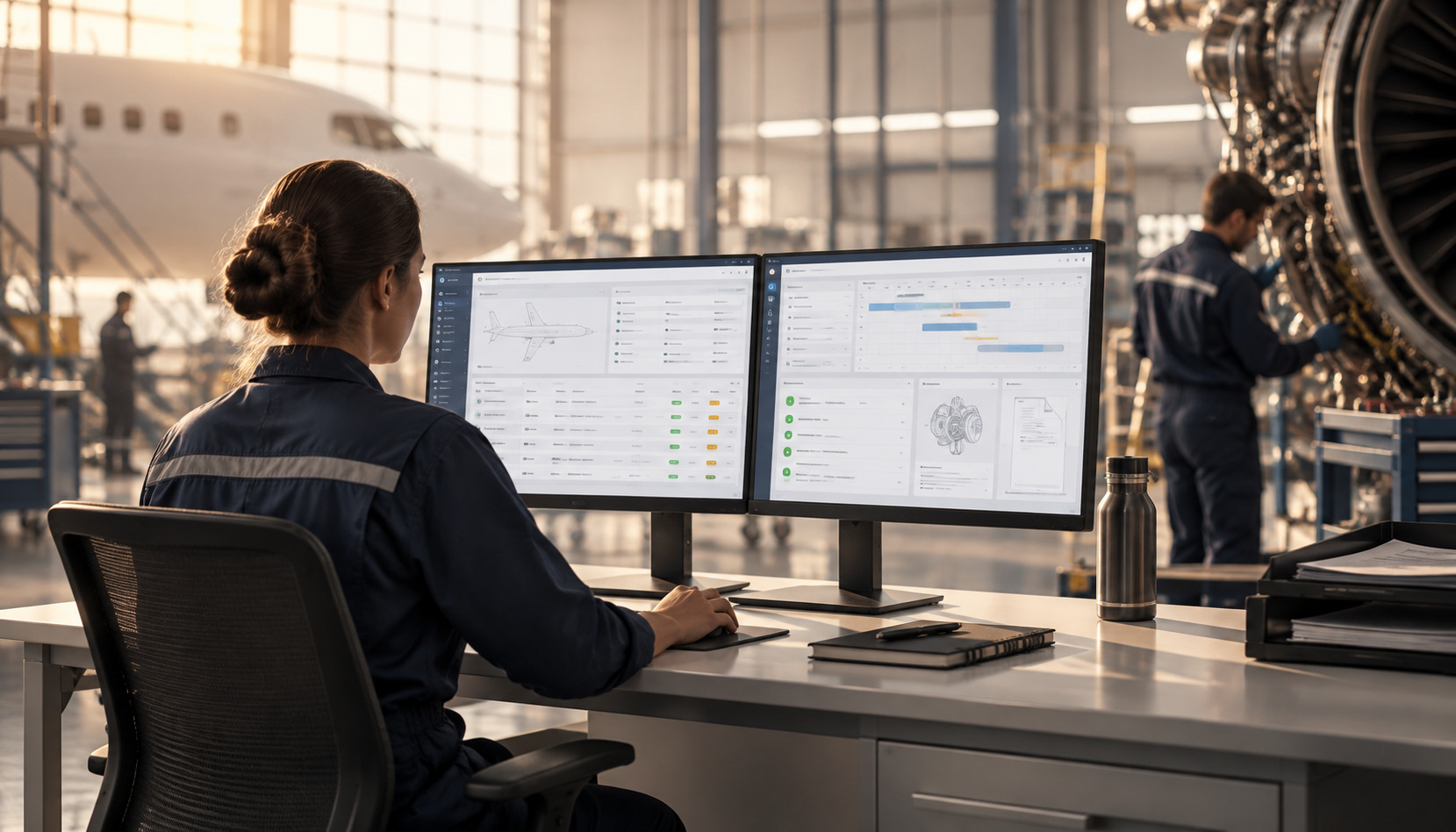
Maintenance, repair and overhaul operations depend on accurate information moving across teams, aircraft, components and records.
For regulated aviation organizations, that information also needs to remain traceable, accessible and consistent throughout the maintenance process.
SOMA provides an integrated aviation MRO software environment where operators and maintenance organizations can manage technical activity with greater visibility across maintenance, components and continuing airworthiness.
Aviation maintenance involves more than completing a work order.
Teams need to understand what work is required, which aircraft or component is affected, what parts are involved, what documentation supports the task and how every action affects the wider maintenance picture.
Effective MRO software brings those elements together.
SOMA helps maintenance teams manage operational information within a structured environment designed around aviation workflows instead of relying on disconnected systems or manual reconciliation.
Every maintenance event generates information that may need to be referenced later.
When work orders, component histories, inventory records and technical documentation are managed separately, teams spend additional time rebuilding the context behind each maintenance action.
SOMA helps connect those elements so technical teams can maintain a clearer view of the work being performed and the information supporting it.
Maintenance teams need to know what is open, what has been completed and what requires attention next.
A centralized MRO environment provides a more consistent operational view, helping teams coordinate maintenance activity and reduce dependence on manually updated files.
Components move through installation, removal, inspection, repair and replacement cycles.
Maintaining a reliable history throughout that lifecycle is essential for technical control.
SOMA helps teams connect component information with maintenance records, making it easier to understand status, history and the context behind each movement.
Regulated maintenance environments require information to be documented and reconstructible.
Teams may need to demonstrate what work was performed, when it occurred, which component was involved and which records support the activity.
SOMA helps organize maintenance information in a structured environment, supporting stronger traceability and reducing the amount of manual work required when technical records need to be reviewed.
The goal is greater audit readiness and operational control while maintaining clear responsibility for the regulatory decisions of each organization.
Maintenance execution and continuing airworthiness are closely related.
A maintenance event can affect aircraft status, component history, planning requirements and future technical decisions.
Managing these areas in disconnected systems makes it harder to maintain a reliable operational picture.
SOMA brings maintenance, MRO and airworthiness information into the same environment, allowing teams to work with greater continuity across technical functions.
For small and mid-size aviation organizations, that integration can reduce unnecessary system complexity and make critical information easier to access.
Parts availability can directly affect maintenance schedules and aircraft availability.
Maintenance teams need visibility into the components and materials required to complete planned work, while inventory teams need enough operational context to understand upcoming demand.
Connecting maintenance and inventory information helps organizations anticipate requirements earlier and reduce the operational impact of missing parts or disconnected records.
SOMA supports that relationship by keeping maintenance and component information closer to the workflows where it is actually used.
SOMA is designed for aviation organizations that require structured maintenance control without the complexity of large enterprise systems.
It is particularly suited to:
Aircraft downtime becomes more difficult to manage when technical teams cannot quickly understand the status of maintenance activity.
Greater visibility helps teams identify pending work, review component information and anticipate requirements that could affect aircraft availability.
Aviation MRO software should make that operational picture easier to understand.
SOMA helps bring relevant maintenance information together so teams spend less time reconstructing records and more time managing the work required to keep aircraft available.
Aviation software needs to reflect the operational environment where it will be used.
Maintenance organizations work with specific terminology, regulatory requirements and technical processes that differ significantly from generic maintenance operations.
SOMA's support model includes aviation professionals who understand those workflows and can work with maintenance teams in their own technical language.
That expertise helps organizations configure the platform around real operational requirements instead of forcing aviation processes into a generic software structure.
If your maintenance organization is working across spreadsheets, disconnected systems or legacy software, SOMA can help centralize the information required to manage a more
traceable and controlled MRO operation.
Explore how SOMA connects maintenance, components, records and airworthiness for regulated aviation teams.
Request a quick quote or start your free trial today!
Aviation MRO software is a system used to manage maintenance, repair and overhaul activities for aircraft and components.
It can help teams organize maintenance work, technical records, component histories, inventory information and other operational data within a centralized environment.
MRO stands for Maintenance, Repair and Overhaul. The term covers the activities required to inspect, maintain, repair and overhaul aircraft and aircraft components throughout their operational lifecycle.
Aviation MRO software is designed around aviation-specific processes such as aircraft maintenance programs, component traceability, technical records, airworthiness requirements and regulated maintenance workflows.
Generic maintenance systems may not provide the same level of aviation-specific structure.
MRO software can help regulated organizations maintain structured maintenance records, component histories and traceable workflows. It supports audit readiness and information control, while regulatory compliance and approval remain the responsibility of the operator or maintenance organization.
Small and mid-size operators should evaluate usability, maintenance planning, component traceability, inventory visibility, technical records, airworthiness integration and the level of aviation expertise available during implementation and support.