Aircraft don’t just go out of service because of mechanical failure—they’re often grounded by something as simple as a missing part. When a plane is stuck on the tarmac, it's a direct hit to your bottom line. The real challenge in the inventory management in the airline industry isn't just stocking parts, but predicting what you'll need and where. This is why robust airline inventory control is non-negotiable. A smart airline inventory management system transforms your parts from a potential liability into a strategic asset, preventing costly groundings and keeping your fleet in the air.
Across commercial aviation, outdated tools, siloed systems, and disjointed workflows between maintenance and procurement teams lead to preventable downtime. But what if inventory control wasn’t just a back-office task, but a core driver of on-time performance?
This blog explores how modern aviation inventory management software like SOMA can transform operations by uniting maintenance, purchasing, and warehouse teams under a single digital platform.
When you hear “airline inventory,” your mind probably jumps to a warehouse filled with spare parts. While that’s a huge piece of the puzzle, the true scope of aviation inventory is much broader. It covers everything from the raw materials used in repairs to the very seats passengers book for their flights. Each category presents unique challenges and demands a specific management approach. Thinking about inventory holistically is the first step toward building a more resilient and efficient operation, where every team, from procurement to maintenance, is working from the same playbook.
Understanding these distinct types of inventory is crucial because you can’t manage what you don’t define. A strategy for managing high-turnover consumables won’t work for high-value rotatables, and neither will apply to the complex world of seat allocation. By breaking down your assets into clear categories, you can apply the right tools and processes to control costs, ensure availability, and keep your fleet flying. This is where a unified digital platform becomes essential, providing visibility across all inventory types and connecting the dots between supply, demand, and operational readiness.
To get a real handle on your assets, it helps to break them down into four main groups. Each one plays a distinct role in your operation and requires its own management strategy. From the smallest bolts to the seats that generate revenue, tracking everything accurately is key. Good inventory management software is designed to do just that, helping airlines maintain smooth operations by ensuring parts and supplies are where they need to be, when they need to be there. Let's look at the four core types of inventory you're juggling every day.
This is the foundational layer of your MRO inventory. It includes everything from sheet metal and wiring to the thousands of nuts, bolts, and fasteners used in routine maintenance and repairs. While individual items may seem low-cost, their collective value is significant, and their absence can halt a critical task. Effectively managing these components means having a precise system to keep track of parts accurately. This prevents both overstocking, which ties up capital, and stockouts, which can leave a plane grounded waiting for a simple component. Centralized software helps you monitor usage trends and automate reordering for these essential items.
Work in Progress, or WIP, refers to assets that are currently undergoing maintenance, repair, or overhaul. This isn't just about parts on a shelf; it includes entire engines being serviced, landing gear being refurbished, or avionics components being tested. Tracking WIP is vital for maintaining an efficient workflow and accurate production schedules. Without clear visibility into the status of these assets, you risk bottlenecks in the repair cycle, leading to longer turnaround times and a potential shortage of ready-to-install components. A robust system provides real-time updates, so you always know the status of every asset in the pipeline.
For an airline, the ultimate "finished good" is a seat on a flight. This is perhaps the most perishable type of inventory in any industry—once a plane takes off, the value of an empty seat is lost forever. Managing this inventory is a complex science focused on maximizing revenue. As one MIT study highlights, the goal is to optimize how many seats are sold at different price points across an entire flight network. This involves sophisticated forecasting and dynamic pricing to prevent unsold seats while avoiding situations where demand outstrips supply, ultimately helping airlines secure more revenue from each flight.
MRO supplies are the lifeblood of aircraft maintenance. This category includes everything from high-value rotatables like engines and landing gear to consumables like hydraulic fluid and lubricants. The primary goal here is to ensure airworthiness and minimize Aircraft on Ground (AOG) time. With the airline industry spending billions on spare parts annually, effective management is a direct path to cost savings. An integrated aircraft maintenance management system is critical, as it connects the needs of the maintenance floor directly with the inventory warehouse, ensuring that the right parts are available to keep flights on schedule and reduce costly delays.
Simply tracking your inventory isn’t enough; you need a strategy to control it. Smart inventory control is about making deliberate, data-driven decisions to optimize stock levels, reduce costs, and improve aircraft availability. It means moving away from a reactive "firefighting" approach—where you’re constantly scrambling for parts—to a proactive one where you anticipate needs before they become urgent problems. This shift requires a deep understanding of your inventory's behavior and value, allowing you to focus your resources where they will have the greatest impact on your operation's bottom line and on-time performance.
Adopting strategic principles allows you to prioritize your efforts effectively. Not all inventory items are created equal; a missing engine component has a far greater impact than a shortage of cleaning supplies. By applying proven methodologies, you can identify which parts are most critical to your operation and build a management strategy around them. This ensures that your team isn't wasting time and energy managing low-impact items with the same rigor as high-impact ones. Instead, you can focus on optimizing the inventory that truly keeps your aircraft in the air and your airline running smoothly.
The Pareto Principle, or the 80/20 rule, is a powerful concept for MRO inventory. It suggests that 80% of your problems—like delays or high costs—are likely caused by just 20% of your inventory items. A significant cause of flight delays or cancellations is the unavailability of the right spare part at the right time. By identifying that critical 20% of parts—the ones that are most frequently needed, have the longest lead times, or are most expensive—you can focus your management efforts where they matter most. This small fraction of your inventory holds the key to making the biggest positive impact on your operational reliability and financial health.
Putting this principle into action means using data to pinpoint your "critical 20%." This isn't about guesswork; it's about analyzing historical usage, lead times, and the impact of stockouts on aircraft availability. Modern software can help you do this by providing the analytics needed to identify these high-impact parts. Once identified, you can implement more rigorous control strategies for this group, such as higher safety stock levels or more frequent cycle counts. This targeted approach ensures you’re always prepared for the most common and costly inventory challenges, directly improving your on-time performance.
Aircraft grounded due to unavailable parts is a more common issue than most expect. Whether it's a critical component stuck in customs or a simple gasket that wasn’t reordered in time, the results are the same: flight cancellations, maintenance delays, and unsatisfied customers.
A typical regional airline can lose thousands of dollars per day for each aircraft out of service. These inefficiencies multiply when procurement teams are unaware of pending maintenance tasks, or warehouses can’t forecast demand.
The core issue isn’t a lack of effort—it’s a lack of integration.
This disconnect leads to emergency purchases, overstocking of irrelevant items, and missed compliance windows. Fragmented spreadsheets and outdated legacy systems can’t support the scale or speed modern airline operations require.
While MRO inventory focuses on the physical parts that keep an aircraft flying, there's another type of inventory that's just as critical to an airline's bottom line: seats. A seat is a perishable asset. Once a flight takes off, any unsold seat represents revenue that is lost forever. Effective seat inventory management is the art and science of ensuring each flight departs with the optimal mix of passengers and fares, maximizing revenue on every single departure. It’s a complex puzzle involving pricing, demand forecasting, and distribution across a global network of sales channels.
Just as integrated software transforms how maintenance teams manage parts, modern commercial strategies rely on sophisticated systems to manage seat availability. The goal is to move beyond simply selling seats to strategically controlling access to them. This involves deciding which fares to offer, when to offer them, and to whom. A study on airline network seat inventory control highlights that the core objective is to help airlines make more money by improving how they manage seat sales across their entire network. This strategic approach to commercial operations is a key part of a holistic view of flight operations, where every decision, from maintenance scheduling to ticket pricing, impacts profitability.
Traditionally, airlines managed seat inventory on a "leg-by-leg" basis. This means the inventory for a flight from New York to Chicago was managed independently from a connecting flight from Chicago to Los Angeles. This approach is simple, but it often leaves money on the table. A modern strategy uses network-level control, which looks at a passenger's entire journey. This method allows an airline to make smarter decisions, like reserving a seat on the short New York-Chicago leg for a passenger who is also booking a high-fare, long-haul flight to Los Angeles, rather than selling it to a local traveler on a deeply discounted fare.
The shift to network-level control has a direct and significant impact on revenue. By optimizing for the entire passenger journey, airlines can more accurately balance demand and maximize the value of each seat. Research shows that these advanced, network-based methods can generate substantially more revenue for airlines compared to older, leg-based systems. It’s about seeing the bigger picture—understanding that the value of a seat on one flight is often tied to a passenger's connecting travel plans. This holistic view prevents selling a low-fare seat that blocks a future high-fare, multi-segment booking, directly contributing to higher overall profits.
A modern airline inventory system is much more than a simple booking tool. It's a dynamic platform that serves as the central nervous system for an airline's commercial strategy. These systems are designed to automate complex decisions, distribute availability across the globe, and provide a seamless experience for both customers and travel partners. Key features work together to manage pricing, availability, and sales rules in real-time, ensuring the airline can adapt to market changes instantly and effectively. From forecasting demand to preventing overbooking, these tools are essential for competing in the modern aviation market.
At the heart of any modern seat inventory system is the ability to predict the future. These platforms use sophisticated algorithms to forecast demand by analyzing historical sales data, seasonality, competitor pricing, and even major world events. This forecast is the foundation for dynamic pricing, which allows airlines to adjust fares in real-time. If demand for a flight is higher than expected, prices may rise; if sales are slow, the system might automatically release a lower fare class to stimulate bookings. This ensures the airline is always selling its seats at the best possible price based on current market conditions.
For an airline's inventory to be valuable, it must be accessible. That's where Global Distribution Systems (GDS) like Amadeus, Sabre, and Travelport come in. These are the massive networks that connect airlines with tens of thousands of travel agents and online travel agencies (OTAs) around the world. Seamless GDS integration is non-negotiable for any airline with global ambitions. It ensures that when a travel agent in Tokyo or an OTA in Brazil searches for a flight, they see accurate, real-time availability and pricing, allowing them to book directly into the airline's system.
Air travel is a global business, and a seat inventory system must reflect that. Beyond GDS, airlines sell through their own websites, mobile apps, and call centers. A robust system provides multi-channel support, ensuring consistent information across every touchpoint. Furthermore, it must cater to an international audience by supporting multiple languages and currencies. This makes the booking process easy and transparent for customers everywhere, whether they're paying in dollars, euros, or yen. This functionality is crucial for building trust and reducing friction for international travelers.
Nothing frustrates a customer more than showing up for a flight they paid for, only to find it was overbooked. While strategic overbooking is a common practice, accidental overbooking due to system errors is a costly mistake. A key feature of a centralized inventory system is its ability to prevent selling the same seat twice. When a seat is booked through any channel—be it the airline's website, a GDS, or an OTA—the system instantly updates the total availability across all other channels. This single source of truth eliminates the risk of duplicate sales and ensures inventory counts are always accurate.
While airlines are the primary users, they are far from the only ones. The entire travel ecosystem relies on access to accurate seat inventory. Online Travel Agencies (OTAs) like Expedia and Booking.com plug into these systems to power their flight search engines. Tour operators bundle flights with hotels and activities, relying on real-time availability to create their packages. Even metasearch engines like Google Flights and Kayak, which compare prices from hundreds of sites, depend on data fed from airline inventory systems. This interconnected web of users underscores the importance of a reliable, accessible, and standardized platform for managing one of aviation's most valuable assets.
The solution? SOMA Software—a platform that brings visibility, automation, and smart planning to the entire operation.
It integrates every step of the supply chain—from initial forecast to final installation—into a centralized system. Features like predictive analytics, intelligent alerts, and real-time dashboards help teams:
Want to reduce aircraft downtime by optimizing your parts workflow?
Download our Fleet Inventory Control Checklist for Regional Airlines →
Not all inventory tools are created equal. For airlines and MROs, the right solution should:
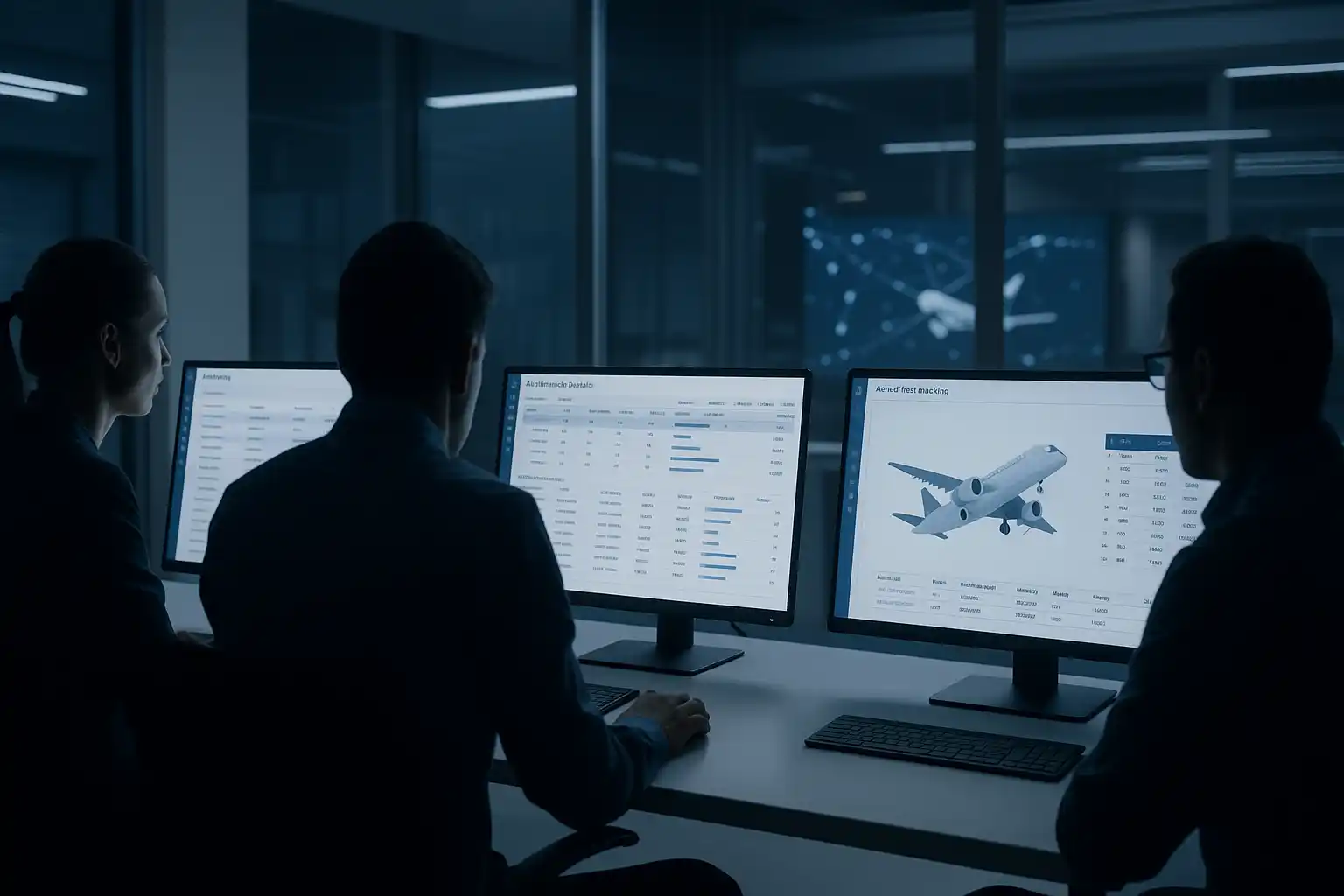
In aviation, scattered information is a recipe for delays. When the maintenance team works from one spreadsheet and the procurement team uses another, it’s easy to end up with duplicate orders or, worse, a grounded aircraft waiting for a part that was never ordered. A modern inventory system functions as a "single source of truth," ensuring everyone sees the same, up-to-date information. This means a technician in the hangar can instantly see if a needed component is in stock, while the purchasing manager has a clear view of consumption rates and reorder points. This unified approach eliminates guesswork and aligns departments, turning your purchasing and inventory control from a reactive task into a strategic advantage.
Your aircraft parts inventory is a significant financial asset, and it should be managed like one. The best inventory software doesn’t just track parts; it connects directly with your company's accounting and financial programs. This integration automates the flow of information, eliminating the need for manual data entry and reducing the risk of human error. When your inventory system and financial software communicate, you gain a real-time understanding of your spending, track the cost of repairs accurately, and simplify budget forecasting. This ensures that every department, from maintenance to finance, operates with the same correct data, providing leadership with a clear and accurate picture of the operation's financial health.
Having data is one thing; being able to use it is another. An effective inventory management system must generate clear, easy-to-understand reports that support everything from daily operations to long-term strategic planning. These reports are critical for passing regulatory audits, as they provide a complete, traceable history for every part. Beyond compliance, strong reporting helps you identify trends, forecast demand, and optimize stock levels to reduce carrying costs. With customizable dashboards, leadership can quickly see key metrics like inventory value, turnover rates, and part consumption, enabling smarter decisions that keep your fleet flying and your budget on track. This is a core function of any comprehensive aircraft maintenance management platform.
Aircraft maintenance happens in the hangar and on the flight line, not at a desk. A system that tethers your team to a computer is a bottleneck. That’s why practical mobile functionality is non-negotiable. Technicians should be able to use a tablet or smartphone to scan barcodes, issue parts, update inventory counts, and look up component histories right at the aircraft. Apps like the SOMA Production App put the full power of the inventory system in the hands of the people who need it most, wherever they are. This real-time access speeds up maintenance tasks, dramatically improves data accuracy, and ensures your inventory records are always current, reflecting what’s actually on the shelves.
SOMA clients like LANHSA and MASAir have already seen measurable results:
In 2025 and beyond, airlines must move beyond reactive inventory management. With rising passenger demand, tighter regulations, and growing fleets, operational efficiency isn’t just nice to have—it’s essential for staying competitive.
If your teams are still working in silos, struggling with out-of-stock parts, or losing flight hours to avoidable errors, it’s time to rethink your inventory strategy.
Book a demo with SOMA Software and discover how centralized, AI-powered inventory management can elevate your operations—fleet-wide.
How is managing MRO parts different from managing airline seats? Think of it this way: MRO inventory management is about ensuring operational readiness, while seat inventory management is about maximizing revenue. With MRO parts, your goal is to have the right component available at the right time to keep your aircraft airworthy and avoid costly downtime. With seats, your goal is to sell a perishable asset (an empty seat on a flight) for the highest possible price before its value disappears at takeoff. Both are critical, but they solve two very different business problems.
My operation is small. Is a comprehensive inventory system overkill for us? Not at all. In fact, a smart inventory system can be even more valuable for a smaller team. When you have fewer people, each person wears multiple hats, and the risk of something falling through the cracks is higher. An integrated system automates many of the tedious tasks like tracking stock levels and creating purchase orders. This frees up your team to focus on more critical work instead of getting bogged down in spreadsheets, ultimately preventing expensive mistakes that can hit a smaller operation much harder.
What's the first practical step to applying the 80/20 rule to my inventory? Start by looking at your data. Your first step is to identify which 20% of your parts are causing 80% of your headaches. Pull reports on part usage and maintenance delays from the last year. Look for the components that are ordered most frequently, have the longest lead times, or have been the direct cause of an AOG event. Don't try to overhaul your entire warehouse strategy at once; just focus on establishing tighter controls and better forecasting for that small group of high-impact parts first.
How does an integrated system actually prevent an Aircraft on Ground (AOG) situation? An integrated system connects the dots between maintenance planning and your supply chain. For example, the system can use flight hours and maintenance schedules to predict that a specific component will need replacement in three weeks. It then automatically checks your inventory. If the part isn't in stock or is running low, it alerts the procurement team to order it with a standard lead time, not an emergency one. The part arrives well before the aircraft is scheduled for maintenance, turning a potential AOG crisis into a routine, planned event.
What does a "single source of truth" look like in practice for my teams? It means your maintenance technician in the hangar and your purchasing manager in the office are looking at the exact same, real-time information. When a technician uses a mobile app to issue a part for a repair, the inventory count is updated instantly across the entire system. The purchasing manager sees that change on their dashboard without needing an email or phone call. This eliminates confusion, prevents duplicate orders, and ensures that decisions are based on what's actually happening on the ground, moment by moment.