
In aviation, one missing document can ground an aircraft—even if it's brand new. It's a costly headache. Whether you run a major airline or a maintenance shop, tracking every part is non-negotiable. This process, aircraft parts traceability, is your key to keeping flights safe and legal. It’s about more than just paperwork; it’s about meeting strict FAA parts traceability requirements with an unbroken chain of custody. A robust aerospace MRO traceability system makes this possible. This guide will show you exactly how to build a system that protects your aircraft and your operation.
This article explains what parts traceability is, why it matters, and what records you need to keep. You'll learn how to track parts from the moment they're made until they're removed from the aircraft.
Aircraft parts traceability means keeping a record of where each part came from, how it was used, and when it was installed or removed. It helps make sure that every part of the aircraft is safe, approved, and ready to use. If a problem ever happens, these records help teams know exactly which parts were involved.
To do this, you need to write down important details like part numbers, serial numbers, and when the part was made. You also need to keep track of how long the part has been used and if it has had any repairs.
Aviation authorities like the FAA (in the U.S.) and EASA (in Europe) require these records to make sure aircraft are safe. If the records are missing or incomplete, the part can't legally be used, even if it's working perfectly. Good traceability is not just about staying organized; it's a key part of keeping aircraft flying safely.
In aviation, tracking every part's full history isn't just a best practice—it's required. If you don't have the right documents for a part, you can't use it.

Fake or unapproved parts are a serious threat in aviation. They may be built with poor materials, lack proper testing, or be falsely labeled. These parts can cause unexpected failures and put lives at risk. By keeping complete records, you can prove that a part came from an approved source and was installed, maintained, and removed properly.
The counterfeit parts market is a massive problem, with estimates suggesting over $2 billion in fake and unapproved components are sold each year. These parts might look right, but they haven't passed the strict quality and safety checks required for aviation. Using them can lead to catastrophic failures, ground your aircraft, and bring on heavy fines from regulators. This is where strong traceability becomes your best line of defense. By maintaining a clear, verifiable history for every single part, you can prove its authenticity and airworthiness from the moment it leaves the manufacturer until it's installed on your aircraft.
For a long time, the industry relied on paper, but those records are a major weak point. Paper documents are easy to forge, damage, or simply lose, creating gaps that counterfeiters love to exploit. A misplaced file or a forged signature can allow a dangerous part to slip into your inventory, while a simple coffee spill can make a perfectly good component unusable. Finding a fake part during receiving saves a huge amount of time and money compared to finding it after it's already been installed. Digital tracking makes this verification process faster and far more reliable than digging through file cabinets.
Modern software gives you a single, secure place for all your records. With a system like SOMA's purchasing and inventory control, your team can instantly pull up a part's history, review its documentation, and confirm it's genuine before it ever gets near an aircraft. This digital approach does more than just protect you from counterfeit parts; it streamlines your entire receiving and inspection workflow. It turns traceability from a manual headache into a clear, manageable process that gives your team the confidence to keep your fleet safe and compliant.
Agencies like the FAA and EASA require operators to maintain full documentation for each part. Auditors will ask for this information during inspections. If it's missing, you may be forced to remove the part or take the aircraft out of service.
Traceability helps you know when a part was installed, how long it's been used, and when it needs to be replaced. This helps prevent failures and reduce downtime.
To keep your aircraft airworthy and legal, every part must have the right paperwork. Without proper records, even a safe, working part can't be used—and missing documents during an audit can lead to delays, fines, or grounded aircraft.
Each document serves as proof that the part meets aviation safety rules. These records show where the part came from, how it's been used, and if it has passed all required checks.

Here are the key documents you need for each part:
These documents must be kept in a safe place and ready to access during inspections or audits. If anything is missing, the part may have to be replaced, even if it's working.
Keeping digital copies helps you stay organized and respond fast when regulators ask for information. Storing everything in one place also makes it easier to manage, especially if you run a large fleet or work in many locations.
Think of the ATA Specification 106 Form as a passport for your aircraft parts. This standard document provides a clear, traceable history of a component, tracking it back to its last owner. It’s essential for confirming a part's journey and condition before it gets installed on another aircraft. The form includes key details like the part number, serial number, and quantity, but its most critical feature is the "non-incident statement." This section certifies the part’s clean history, which is a fundamental requirement for ensuring both traceability and safety in your day-to-day operations.
A Non-Incident Statement (NIS) is your formal guarantee that a used part has not been compromised. This statement certifies that the component was not involved in an accident, subjected to extreme stress or heat, submerged in saltwater, or sourced from a military aircraft. While often included in the ATA 106 form, an NIS can also be a standalone letter. It serves as your assurance of a part's integrity, helping you verify that a component is safe to use and hasn't been exposed to conditions that could cause hidden damage or lead to future failures.
Beyond the official certifications, a collection of commercial documents tells the full story of a part's life. This paper trail includes invoices, packing lists, warranties, and bills of sale. These records offer a complete history, detailing the part number, serial number, manufacturer, and production date, which are vital for maintaining a clear chain of custody. Keeping these documents organized is key for smooth audits and operational readiness. Using a centralized aircraft document management system ensures this information is linked directly to the part's record, making traceability straightforward and reliable.
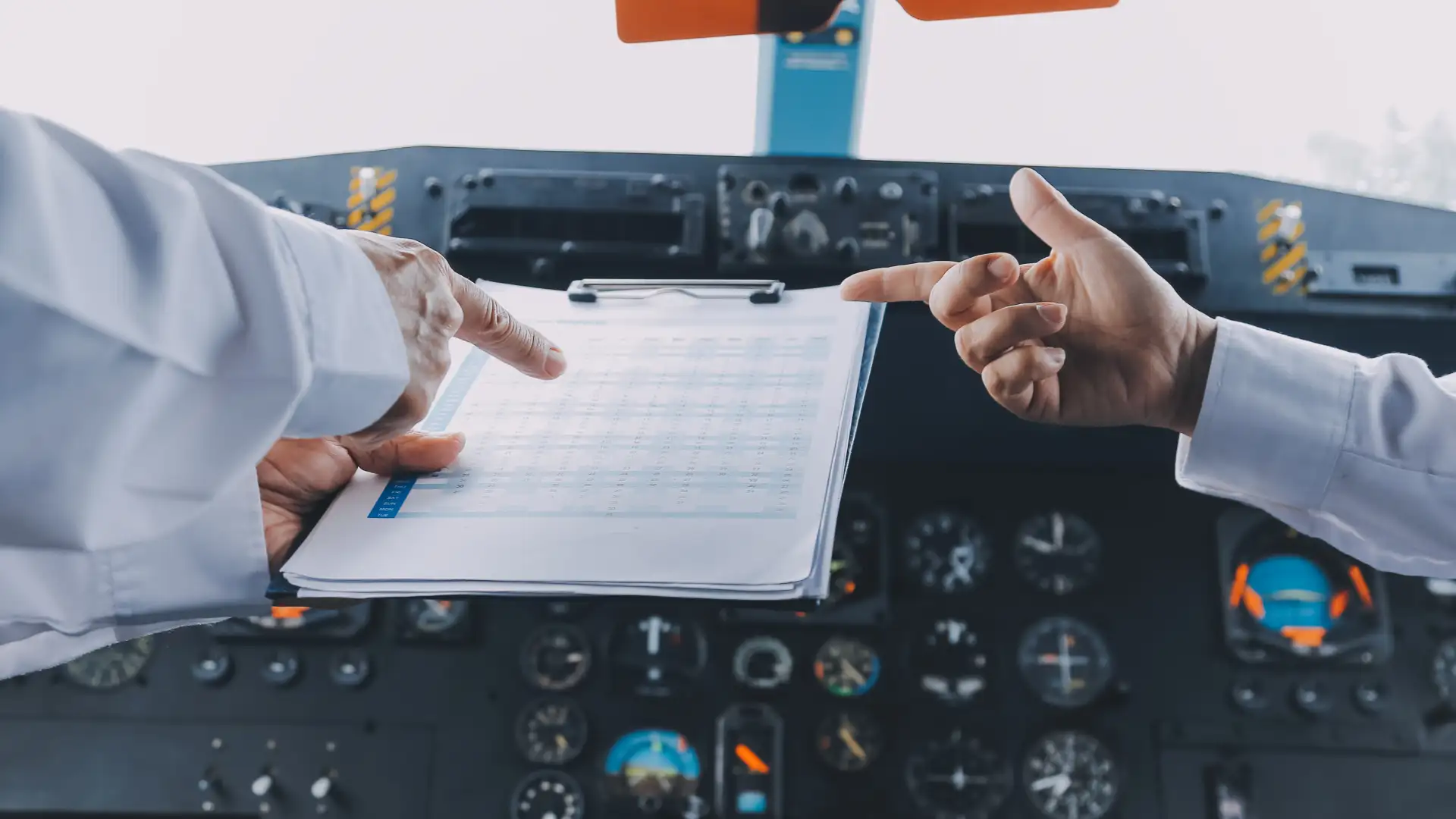
To fully trace a part's history, you need to track specific information for every component in your system. These records show where a part came from, how long it's been used, and what maintenance has been done.
Each record helps prove the part is safe and approved for use. It also helps your team decide when to repair, replace, or inspect it.
Here's what you should record for each part:
Keeping this information accurate and up to date reduces risk and speeds up audit preparation. It also increases the resale value of the part and helps avoid compliance issues.
For some critical components, a standard history isn't enough. This is where "Back to Birth" (BtB) traceability comes in. It’s a complete, unbroken record of a part’s entire lifecycle, starting from the day it was made. This detailed history is mandatory for "life-limited parts" (LLPs)—components like engine disks or turbine blades that have a fixed operational life measured in flight hours or cycles. Because these parts must be retired after a specific amount of use, regulators require a perfect, gap-free history to ensure they are removed from service on time. The BtB record includes everything from the original manufacturer's certificate to every installation, repair, and removal log. This level of detail helps you manage documentation effectively and proves the part has a clean history, free from incidents or unapproved modifications.

Good traceability means more than just saving documents; it also means using trusted quality standards. These rules help make sure the parts you use come from safe, approved sources.
One important standard is AS9120B, which is used by companies that sell aircraft parts. This standard checks that suppliers have the right processes in place to keep good records and handle parts the right way.
When you buy parts, it's a good idea to ask your supplier if they follow quality standards like AS9120B. You can also ask for a copy of their certification. Keeping a copy in your records shows that you're doing your part to follow safety rules.
Having these documents ready helps you during audits and inspections. It also shows that you care about safety and quality in your operation. Standards like this make it easier to trust the parts you buy.
Moving away from paper records and spreadsheets to a dedicated digital system is one of the most effective ways to manage parts traceability. While paper trails can get the job done, they are slow, difficult to search, and prone to human error. A digital platform centralizes all your documentation, making it easy for your entire team to access and update records in real time. This not only simplifies compliance but also creates a more efficient and reliable maintenance operation from the ground up. It transforms traceability from a reactive, paper-chasing exercise into a proactive strategy that supports safety and operational readiness.
One of the biggest advantages of a digital system is how much time it saves. Instead of spending hours digging through filing cabinets for a specific maintenance record or airworthiness certificate, your team can find what they need with a simple search. Using digital systems to store and manage these records helps teams stay organized, find information quickly, and be ready for audits at any time. This frees up your technicians to focus on maintenance tasks rather than paperwork, which directly impacts your bottom line by reducing labor costs and minimizing aircraft downtime. It's a straightforward switch that pays off by letting your most skilled people do what they do best.
When an auditor arrives or an AOG situation occurs, speed is everything. Digital tracking makes checking parts much quicker than using paper, allowing you to produce complete traceability records in minutes, not days. This rapid response helps you resolve compliance questions on the spot and get aircraft back into service faster. With a centralized aircraft document management system, your team can instantly pull up a part’s entire history—from installation dates to maintenance logs—ensuring decisions are made with complete and accurate information. This level of readiness builds confidence with regulators and reduces the stress associated with unexpected inspections.
Your receiving dock is the first line of defense against unapproved or counterfeit parts entering your supply chain. A digital system allows your team to verify documentation the moment a part arrives. Finding a fake part early saves a lot of money and prevents safety risks compared to finding it later. By integrating traceability with your purchasing and inventory control, you can immediately flag discrepancies and prevent questionable components from ever making it onto your shelves, let alone onto an aircraft. This proactive approach protects your fleet's integrity and your company's reputation from the very start.
Good documentation helps you track part history and avoid errors. Digital tools make it easier by reducing paperwork and keeping everything in one place. A strong traceability system also saves time and helps you pass audits.
Clear organization helps your team find records fast and avoid confusion. It also makes audits and AOG situations easier to manage.
Here are the best ways to keep your documents organized:
A centralized system keeps documents safe, easy to find, and simple to update. It also reduces the risk of missing or outdated records.
To keep your records easy to access, follow these practices:
Used parts need strict tracking to prove they are safe and approved. A strong chain of custody prevents fake or damaged parts from entering your fleet.
These steps help you control used-part history:
Regular checks help you avoid surprises during inspections. Strong digital tools make it easier to stay compliant year-round.
Follow these best practices to keep your records audit-ready:
Even with the best internal processes, your traceability is only as strong as the information you receive from your suppliers. Taking the time to vet who you work with and what they send you is a non-negotiable step in protecting your fleet, your reputation, and your passengers. This means looking beyond the part itself and carefully examining the source and the paperwork that comes with it.
The best time to catch a documentation issue is before the part ever enters your inventory. Always check that trace documents come from a trustworthy source by researching the supplier to confirm their legitimacy and track record. A solid process at the receiving dock, supported by your purchasing and inventory control system, is your first line of defense. Before accepting any component, verify that the paperwork is complete, the serial numbers match, and the airworthiness certificates are valid. This proactive check prevents problems from making their way into your stockroom, where they can become much harder to resolve later.
It's important to remember that paperwork alone isn't foolproof. Just because a part arrives with the expected forms doesn't mean it's automatically airworthy. Documents can be forged, and using unapproved or counterfeit parts creates serious safety risks that can lead to accidents, major fines, and grounded aircraft. This is where a centralized aircraft document management system adds another layer of security. By creating a clear, digital chain of custody from the moment a part is received, you make it much harder for unapproved components to slip through the cracks and onto an aircraft.
Tracking aircraft parts is about more than passing audits. It's a way to improve safety, reduce downtime, and build trust with regulators and customers. When traceability is done right, it becomes a valuable part of your operation—not just another task to manage.
SOMA Software helps you take control of parts tracking and documentation. With SOMA, you can store all your records in one place, connect parts to maintenance events, and generate audit-ready reports anytime. You don't have to worry about missing files or outdated logs.
Instead of chasing paperwork, your team can focus on what matters: keeping aircraft flying safely and on time. Whether you're managing one aircraft or a full fleet, SOMA makes traceability simple, fast, and reliable.
Get a quote today and see how SOMA Software turns documentation from a burden into a competitive edge.
The FAA requires aircraft parts to be traceable back to their origin, with full documentation of manufacturing, maintenance, repairs, and installation. Key requirements include proof of airworthiness (e.g., Form 8130-3), compliance with ADs and SBs, and accurate records of serial numbers, service time, and removal/installation dates.
The FAA's 51% Rule applies to amateur-built aircraft and states that the builder must complete more than 50% of the construction tasks. This ensures the aircraft qualifies as "experimental" and is not factory-built or mass-produced. It does not apply to commercial or certified aircraft parts traceability.
Airworthiness Directives (ADs) are mandatory regulations issued by the FAA to correct known safety issues. Service Bulletins (SBs), on the other hand, are manufacturer-recommended updates or fixes. SBs only become mandatory if referenced in an AD or required by the operator's maintenance program.
The 5 P's stand for Plan, Plane, Pilot, Passengers, and Programming. This checklist helps pilots assess and manage risk during flight planning and operations by focusing on each critical area before and during the flight. It supports proactive decision-making in line with SMS principles.