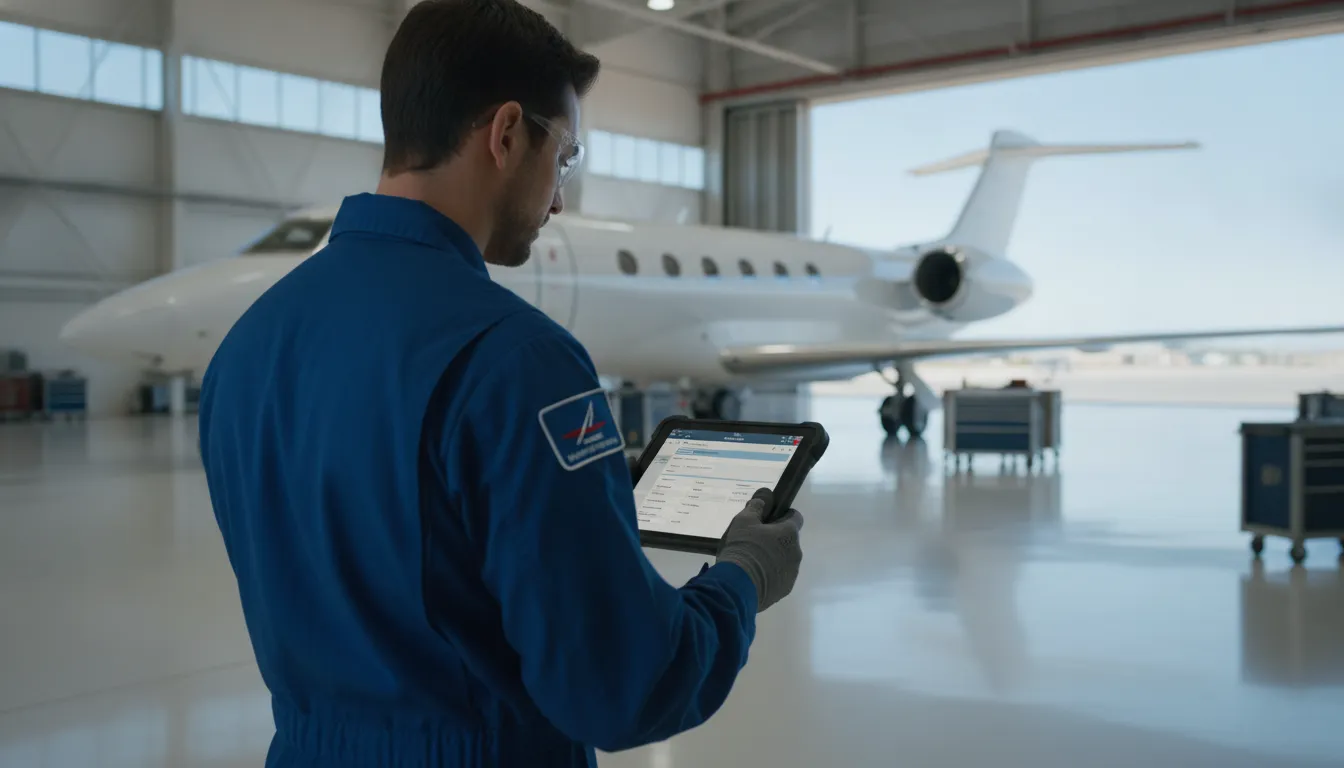
Electronic aircraft logbook software is a digital tool that replaces paper-based maintenance records with a secure, cloud-hosted database accessible from any location. By digitizing flight logs, defect reports, repair sign-offs, and component histories, aviation teams eliminate the risk of lost or damaged paper records while giving every stakeholder real-time visibility into aircraft status. The FAA requires that these digital systems meet strict standards under 14 CFR part 43 and N 8900.368 for electronic signatures and record retention. Maintenance directors who adopt digital logbooks gain the ability to mine historical data for predictive decisions, streamline audits, and protect the long-term residual value of their fleet.
Regional airlines, MRO facilities, and cargo operators across Latin America have already made this transition. When Aruba Airlines replaced its paper-heavy maintenance workflows, the carrier cut delays and improved aircraft availability by centralizing logbook data across its Airbus A321 and CRJ200 fleet. Similarly, MasAir integrated its electronic logbook with existing ERP systems to streamline repair processes across two A330 freighters. These real-world deployments show that digital logbook software is not a future concept but a proven operational tool used by hundreds of operators today.
Start your free trial of SOMA Software's electronic aircraft logbook platform and see how digital records simplify compliance, reduce AOG risk, and keep your fleet flying.
Electronic aircraft logbook software is a specialized digital platform that replaces manual paper recordkeeping with a secure, searchable database for all aircraft maintenance events. This software serves as the single source of truth for flight hours, scheduled inspections, defect logs, component replacements, and airworthiness directive compliance across an entire fleet. Unlike generic document management tools, aviation-grade logbook software is purpose-built to meet the regulatory requirements of 14 CFR part 43, FAA Advisory Circulars, EASA regulations, and regional aviation authorities.
Try the SOMA platform free and experience how a unified digital logbook transforms your maintenance operations.
The core function of electronic logbook software is secure, centralized storage of maintenance records. Paper logbooks are vulnerable to fire, water damage, and simple misplacement. A single lost binder can ground an aircraft until its maintenance history is reconstructed. Digital platforms eliminate this risk by storing records in redundant cloud infrastructure with automated backups. Search functionality lets maintenance teams locate any record in seconds by tail number, date, component part number. Or work order, transforming a process that could take hours in a paper filing system.
Aircraft logbook management best practices emphasize that centralized digital storage also simplifies audit preparation. Instead of pulling binders from multiple hangars, a maintenance director can generate a complete maintenance history for any aircraft with a few clicks. This capability proved critical for LANHSA, the Honduran carrier that used SOMA's platform to consolidate scattered maintenance data into a single, auditable system.
Cloud-based electronic logbooks allow every stakeholder to access the same data simultaneously, whether they are on the hangar floor, in the operations office, or at a remote station. When a mechanic signs off a repair, the maintenance director sees the updated status immediately. This real-time visibility eliminates the communication lag inherent in paper systems, where logbooks must physically travel between bases. It also enables comprehensive fleet maintenance tracking across multiple locations with a shared operational picture.
A common point of confusion is the distinction between an electronic technical logbook (eTLB) and a digital pilot logbook. A pilot logbook tracks an individual pilot's flight hours, training, and certifications. An eTLB, by contrast, tracks the aircraft itself: every maintenance action, defect report, component change, and inspection required to maintain continuing airworthiness under FAA and EASA regulations. Operators need both, but the eTLB carries regulatory weight for airworthiness determinations and is subject to the strictest recordkeeping rules.
The operational and financial case for replacing paper logbooks with digital systems grows stronger each year as fleet complexity increases and regulatory scrutiny tightens. Operators who have made the switch report measurable improvements in aircraft availability, audit efficiency, and data integrity. SOMA's customers across Latin America and the Caribbean have demonstrated that digital logbooks deliver consistent, quantifiable returns.
Paper logbooks are irreplaceable. Fire, water damage, theft, or simple human error can destroy years of maintenance history, creating regulatory exposure and devaluing the aircraft. Digital records stored in the cloud are protected by redundant backups, encryption, and access controls that exceed what any paper system can offer. FAA N 8900.368 specifically outlines the requirements for electronic recordkeeping systems that can legally replace paper, including provisions for data security and disaster recovery.
One of the most expensive consequences of paper-based recordkeeping is the AOG event caused by waiting for documentation to arrive at the maintenance base. Digital logbooks eliminate this delay. When a defect is logged at the line station, the maintenance control center receives the alert immediately and can pre-position parts and personnel before the aircraft lands. Aruba Airlines reduced operational delays significantly after implementing SOMA's digital maintenance modules, precisely because real-time defect reporting enabled faster decision-making and reduced time spent tracking down paper records.
A paper logbook exists in one place at one time. For operators with multiple bases, international routes, or outsourced MRO providers, this creates a scheduling and coordination bottleneck. Cloud-based electronic logbooks allow the director of maintenance in one city, the shift supervisor in another. And the line mechanic at a third location to all work from the same data set simultaneously. This shared operational picture is essential for operators like MasAir, which manages cargo operations across Mexico with tight turnaround schedules.
Not all electronic logbook platforms deliver the depth required for real-world aviation operations. Teams evaluating software should prioritize features that directly impact airworthiness, operational efficiency, and regulatory compliance. The fleet maintenance software that succeeds in production environments combines mobile functionality, automated compliance tracking, and robust audit trails into a unified interface.
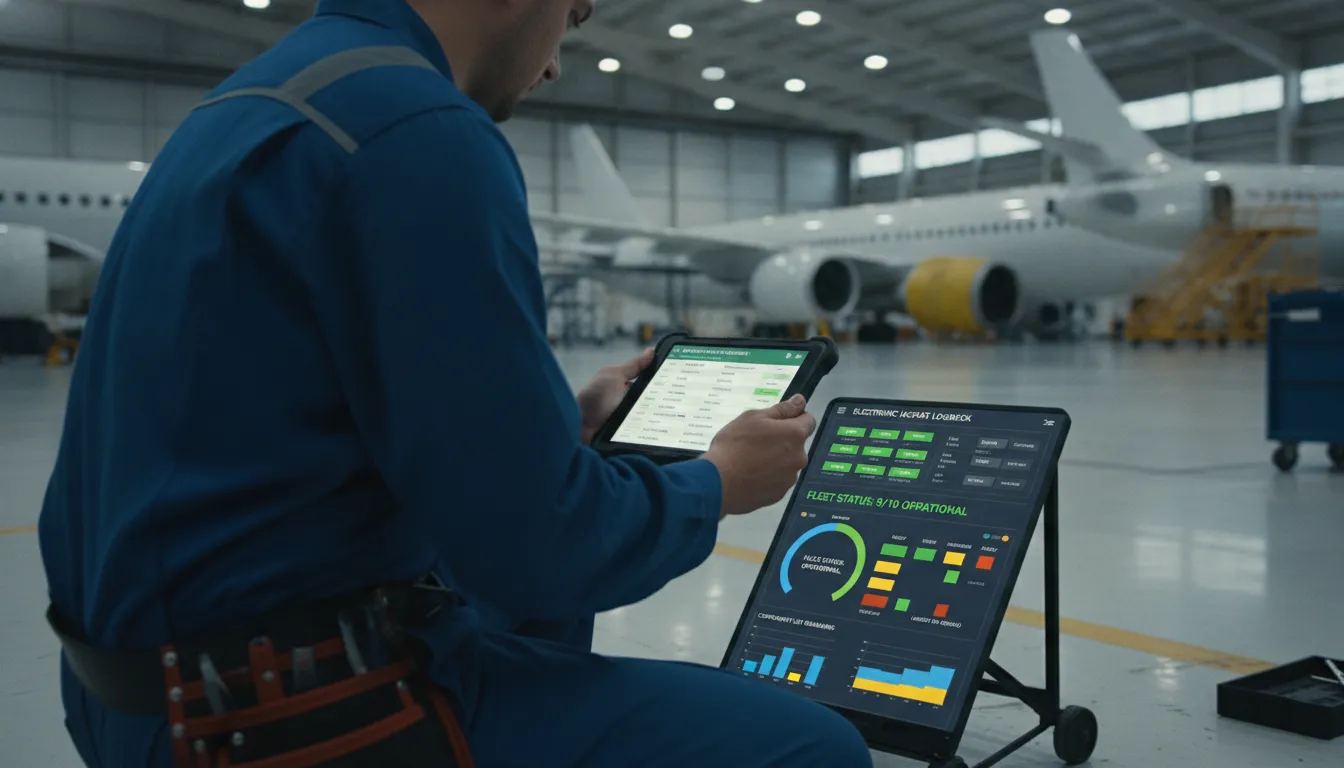
Maintenance technicians need to record defects and sign off work at the aircraft, not at a desktop terminal. Mobile-enabled electronic logbooks let mechanics report faults as they find them, upload photos of damage, and initiate the parts-ordering workflow without leaving the hangar floor. This immediacy is what differentiates a responsive maintenance operation from one that accumulates paperwork backlogs. Operators who deploy mobile logbook tools see faster turnaround times because the data flows directly from the technician's tablet into the maintenance planning and inventory systems.
Airworthiness directives (ADs) and manufacturer service bulletins create a continuous stream of compliance obligations that must be tracked against flight hours, cycles, and calendar time. A capable electronic logbook system automates this tracking by ingesting AD data, matching it against the fleet, and generating alerts when a compliance action is due. SOMA's platform, for example, uses flight-hour data from the logbook to forecast upcoming maintenance events weeks in advance. Giving planning teams time to schedule hangar space, order components, and assign certified technicians.
| Feature | Operational Impact | Real-World Benefit |
|---|---|---|
| Mobile defect reporting | Faults logged at the aircraft | Parts ordered before the mechanic leaves the hangar |
| Automated AD tracking | Compliance monitored in real time | No missed airworthiness directive deadlines |
| Flight-hour-based forecasting | Future maintenance planned proactively | Hangar space and parts reserved weeks ahead |
| Digital signatures with audit trail | Accountable, tamper-evident sign-offs | FAA-validated return-to-service records |
| ERP integration | Maintenance and inventory data synchronized | No duplicate data entry between systems |
| Multi-base data sharing | All stations see the same aircraft status | AOG risk drops across the entire network |
The FAA requires that digital maintenance records be tamper-evident and traceable to the individual who performed and approved each action. Electronic logbook software meets this requirement through cryptographically signed audit trails that record every entry, modification, and sign-off. These digital signatures carry the same legal weight as handwritten signatures under FAA N 8900.368 when the system meets specified security criteria. A maintenance director can present a complete, verified maintenance history to an FAA inspector in minutes rather than hours or days.
Yes, electronic aircraft logbook software can be FAA compliant, but compliance depends on the specific capabilities and implementation of the system. The FAA has not certified any particular logbook software as compliant. Instead, the agency sets performance standards under 14 CFR part 43 and Advisory Circular 43-9C. And it is the operator's responsibility to validate that their chosen system meets those standards. Document management platforms built for aviation simplify this validation by building compliance features into the core architecture rather than adding them as afterthoughts.
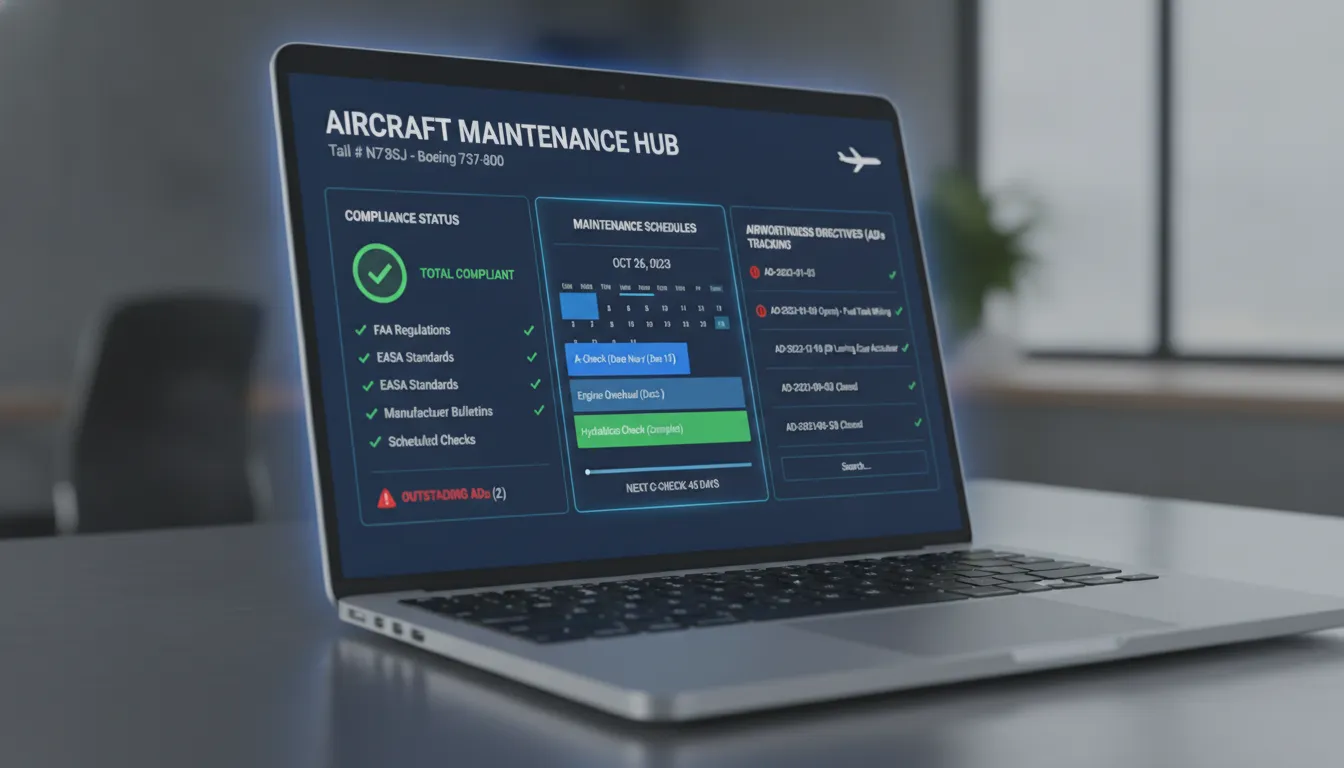
The FAA's guidance for electronic maintenance records focuses on four core requirements: data integrity, security, retrievability, and auditability. The system must prevent unauthorized alterations, maintain a complete record of who made each entry and when. Allow FAA inspectors to search and retrieve records efficiently, and ensure that records remain readable for the full retention period required by regulation. Operators using systems that meet these requirements can legally transition from paper under the provisions of N 8900.368. SOMA's platform was specifically recognized by the Aruba Civil Aviation Department as meeting AUA-OPS 1.920 certification standards, demonstrating compliance rigor at the regulatory level.
Electronic signatures in aviation maintenance must meet the same legal standard as wet signatures: they must uniquely identify the signer. Be affixed only by that individual, and be linked to the record in a way that makes post-signature tampering detectable. FAA N 8900.368 specifies that digital signature systems must use secure authentication, create tamper-evident records, and maintain signature integrity throughout the record retention period. Modern electronic logbook platforms implement these requirements through multi-factor authentication, timestamped signature events, and immutable audit logs that satisfy FAA inspection criteria.
Every FAA Part 121 or Part 135 operator faces periodic inspections that require immediate access to complete, accurate maintenance histories. Digital logbooks transform the audit experience from a days-long paper chase into a systematic records review. An inspector can search by tail number, component serial number, or work order date and pull the complete chain of records for any maintenance event. Systems like SOMA's maintain a detailed audit trail showing who approved each step. When the work was performed, and what inspection findings or part numbers were associated with the action. This level of traceability is practically impossible to maintain at scale with paper records.
Selecting an electronic logbook platform is a fleet-level decision with long-term operational and compliance implications. The right choice depends on fleet size, operational complexity, existing ERP infrastructure, and regulatory jurisdiction. Operators who approach the selection process methodically evaluate software against documented requirements rather than feature checklists alone.
A Part 91 operator with three aircraft has fundamentally different needs than a Part 121 regional airline with twenty airframes. The evaluation should start with a clear understanding of fleet size, aircraft types, operational bases, and the volume of maintenance events per month. SOMA's customer base illustrates this range: Air Century manages Bombardier CRJ200s and ATR cargo aircraft across Dominican Republic routes, while ATSA Airlines in Peru uses the platform to maintain consistent compliance across its Peruvian operations. Each operator needed a different configuration, but both benefited from a platform that could scale with their specific operational footprint.
The software must track every maintenance action against regulatory requirements and integrate with the operator's existing ERP, inventory, and flight operations systems. Standalone logbook tools that create data silos can introduce more workflow friction than they eliminate. SOMA's aeronautical engineers work directly with each operator during the digital migration process to make sure the electronic logbook connects to inventory management, purchasing, and document control modules. This creates a unified data environment rather than another disconnected system.
Audit your current workflow. Map every handoff between maintenance, inventory, and operations to identify where paper logbooks create bottlenecks or data loss.
Validate regulatory coverage. Confirm the software supports the specific regulations governing your operations (FAA Part 43, EASA Part 145, or regional equivalents) with appropriate audit-trail and digital-signature capabilities.
Test integration readiness. Ensure the platform can exchange data with your ERP, MRO management, and flight operations systems without custom middleware.
Evaluate vendor domain expertise. Choose a provider whose team includes aeronautical engineers who understand the operational realities of aircraft maintenance, not just software development. SOMA's engineers serve as operational partners, not just support contacts.
Plan for data migration and training. The migration of historical paper records and the training of maintenance staff are the two most commonly underestimated phases of a digital logbook transition. A structured implementation plan with dedicated onboarding support ensures these phases do not derail the project.
Migrating decades of paper maintenance records to a digital platform is a significant operational project, but it is one that dozens of operators have completed successfully. The key is a phased approach that maintains regulatory continuity throughout the transition. SOMA's 4-to-8-week implementation framework has been refined across hundreds of deployments and follows a predictable sequence designed to minimize operational disruption.
The first phase involves auditing every paper record for each airframe and engine in the fleet. This inventory identifies gaps, missing signatures, or illegible entries that need resolution before digitization. Operators who invest the time to clean their paper records during this phase avoid propagating errors into the digital system. Aircraft records management software provides the structured framework needed to classify, organize, and validate these records before ingestion.
Paper records are scanned at high resolution, indexed by tail number and work order, and verified against the original physical files. A quality-control step ensures that every scanned record is legible, complete, and correctly tagged. This process builds the foundation for a searchable digital archive that retains the legal standing of the original paper documentation. SOMA's engineering team provides guidance on scanning specifications and validation workflows based on experience with operators of all sizes across Latin America.
The most successful implementations start with one or two aircraft before expanding to the full fleet. This controlled rollout allows the maintenance team to build confidence with the digital workflow while paper records remain available as a fallback. SOMA's aeronautical engineers provide hands-on training for each shift and role. From the line mechanic who needs to log defects on a tablet to the director of maintenance who monitors fleet-wide compliance through the dashboard. Operators who invest in comprehensive training during this phase see faster adoption and fewer data-entry errors once the system goes live across the full fleet.
The final phase ensures that all operational teams, including flight crews, maintenance planners, inventory managers, and MRO partners, are working from the same digital dataset. This unified data environment eliminates the coordination overhead of paper systems where each base maintained its own set of records. When pilots, mechanics, and inventory managers all reference the same electronic logbook, the operator gains a single source of truth for aircraft status across the entire network. This coordination is what enables the operational improvements reported by SOMA customers across different fleet types and operational contexts.
Yes. Digital logbooks eliminate the delay caused by waiting for paper records to reach the maintenance base. When a defect is logged electronically, the system alerts the maintenance control center immediately, enabling pre-positioning of parts and personnel before the aircraft lands. MasAir and Aruba Airlines both reported reduced operational delays after adopting SOMA's digital maintenance platform, as real-time data eliminated the information lag that causes many AOG events.
A pilot logbook records an individual pilot's flight time, training events, and certifications. A maintenance logbook (or technical logbook) records the aircraft's maintenance history: every inspection, repair, component replacement, and airworthiness directive compliance action. The maintenance logbook is the document that regulators inspect to determine whether an aircraft is airworthy, making its accuracy and completeness a direct safety and compliance concern.
Yes. Aircraft with complete, well-organized digital maintenance histories command higher resale values because the records are verifiable, searchable, and resistant to loss. Prospective buyers can audit years of maintenance data in hours rather than weeks. A clean digital history signals that the aircraft has been maintained to a high standard, which reduces buyer due diligence risk and supports a premium transaction price.
Yes. Modern electronic logbook platforms support scanning and importing legacy paper records for aircraft of any age. The scanned records are indexed by tail number and work order, creating a searchable digital archive that preserves the regulatory validity of the original paper documentation. This process is especially valuable for operators with mixed-age fleets who want a single digital system covering all airframes.
Yes. Cloud-based electronic logbooks are designed for concurrent multi-user access. A maintenance technician can log a defect from a tablet on the hangar floor. The maintenance director reviews the same aircraft's compliance status from the operations office. And the inventory manager checks the parts requirements from the warehouse. This real-time coordination is one of the primary operational advantages of digital over paper systems.
SOMA's aeronautical engineers provide end-to-end support for the migration process, including data assessment, scanning workflow design, system configuration, and hands-on team training. The typical implementation follows a 4-to-8-week phased plan that starts with a pilot aircraft and expands to the full fleet. SOMA also provides ERP integration support to ensure the digital logbook connects with the operator's existing inventory, purchasing, and flight operations systems. Customer case studies document successful migrations across airlines, MROs, and cargo operators in multiple countries.
Paper-based aircraft logbooks create operational risk that no modern aviation operator can afford. Lost records, delayed maintenance decisions, and audit preparation stress are all symptoms of a system that has not kept pace with fleet complexity. The transition to electronic logbook software is a proven operational improvement, demonstrated by hundreds of operators across Latin America and the Caribbean who now manage their maintenance data digitally.
SOMA's aeronautical engineers act as your operational partners throughout the process, from initial data assessment through full fleet deployment. We bring aviation domain expertise, not just software implementation skill, to ensure your digital logbook meets regulatory requirements and delivers measurable operational improvements from day one.
Start your free trial or request a personalized quote and move your fleet to a compliant, audit-ready digital logbook system.